Fiji has appealed to the Global Fund for a managed transition in health funding, warning that the country cannot tackle its escalating HIV epidemic without continued international support.
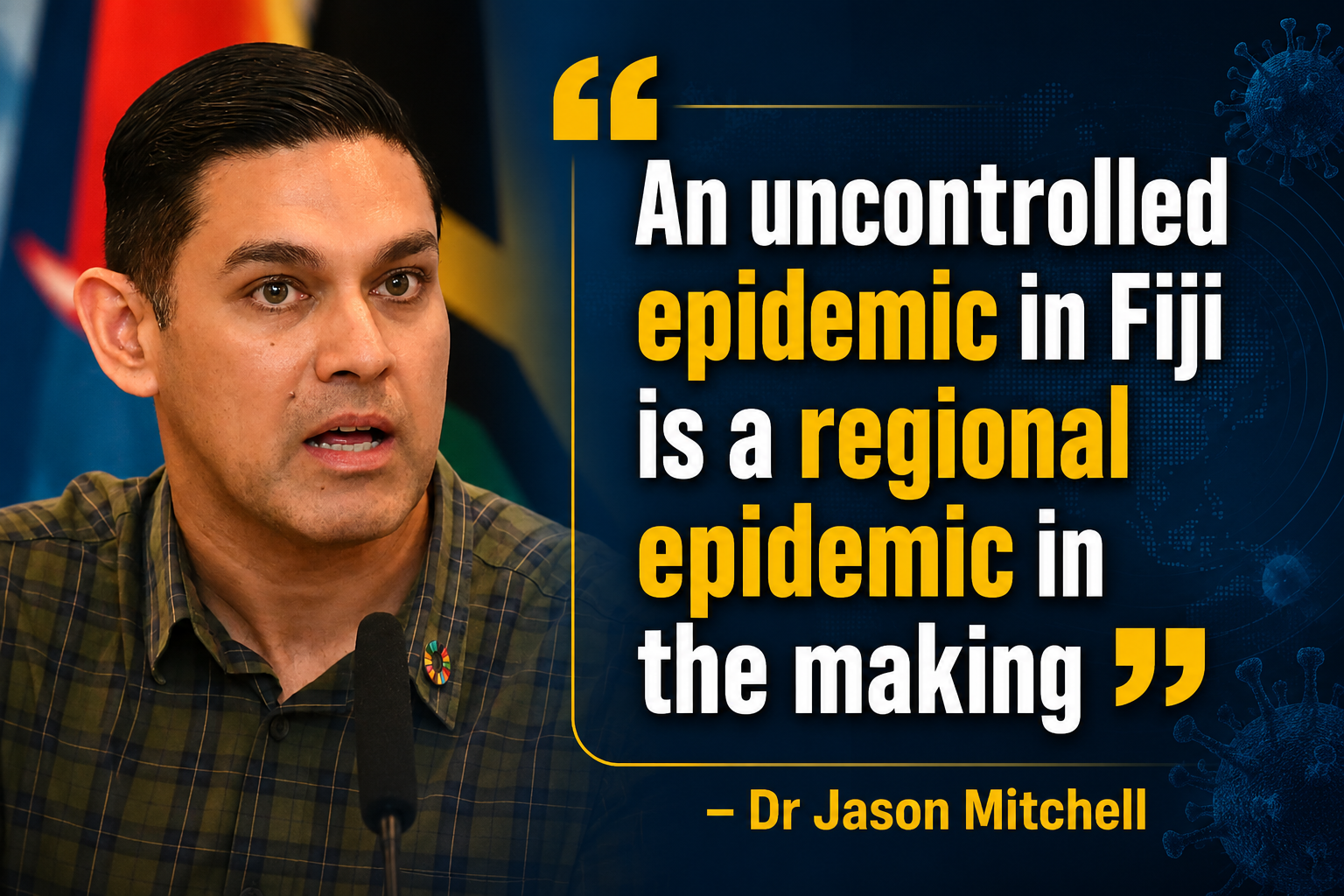
Speaking at the 55th Global Fund Board Meeting in Geneva, Chair of Fiji’s National HIV Outbreak Task Force, Dr Jason Mitchell, urged the board to reconsider its decision to end regional funding.
Representing Fiji and the Western Pacific, Dr Mitchell said the move did not reflect the severity of the situation.
“Fiji is currently experiencing an unprecedented surge in HIV transmissions, moving from what was a low-level outbreak to a generalised epidemic.”
He revealed that Fiji recorded 2,016 new HIV diagnoses in 2025, a dramatic increase from 245 cases in 2022. An estimated 9,100 people are now living with HIV, with adult prevalence rising to 1.6 per cent.
Dr Mitchell said while Fiji has significantly increased its own investment in the HIV response, the scale of the outbreak continues to overwhelm the health system.
Government funding rose from US$89,000 in 2024 to US$4.5 million in 2025, while international partners, including Australia, New Zealand and India, contributed a further US$10 million.
Despite this, major challenges remain. Only 39 per cent of people living with HIV have been diagnosed, just 22 per cent are receiving treatment, and only five per cent have achieved viral suppression.
HIV-related deaths have also increased sharply, rising from 25 in 2021 to 117 last year.
Injecting drug use now accounts for 48 per cent of known HIV transmissions, yet Fiji still has no formal harm reduction programmes.
Dr Mitchell warned that the outbreak poses a wider regional threat, noting Fiji’s role as a major education and transport hub for the Pacific.
“An uncontrolled epidemic in Fiji is a regional epidemic in the making. Leaving this crisis unchecked poses a direct threat to the health security of neighbouring island nations in the Pacific.”
Fiji’s appeal received support from UNAIDS, the Communities Delegation and the Canada-Switzerland-Australia voting bloc.
Following the board meeting, Dr Mitchell held discussions with Global Fund Executive Director Peter Sands on the possibility of emergency funding.
While the current funding timeline remains unchanged, Dr Mitchell described the talks as encouraging.
“We remain hopeful a flexible, humanitarian path forward can be found to ensure no one in the Pacific is left behind.”