NEXT week, Fiji and its Pacific neighbours will gather for the all-important Pre-COP Summit – a high-level preparatory meeting held one month before the annual United Nations Climate Change Conference of the Parties (COP).
The pre-COP31 Summit will be delivered by Fiji, Tuvalu and Australia with sessions expected to be held from October 5 to October 9 in Nadi and Tuvalu.
For Fiji, however, the stakes are high.
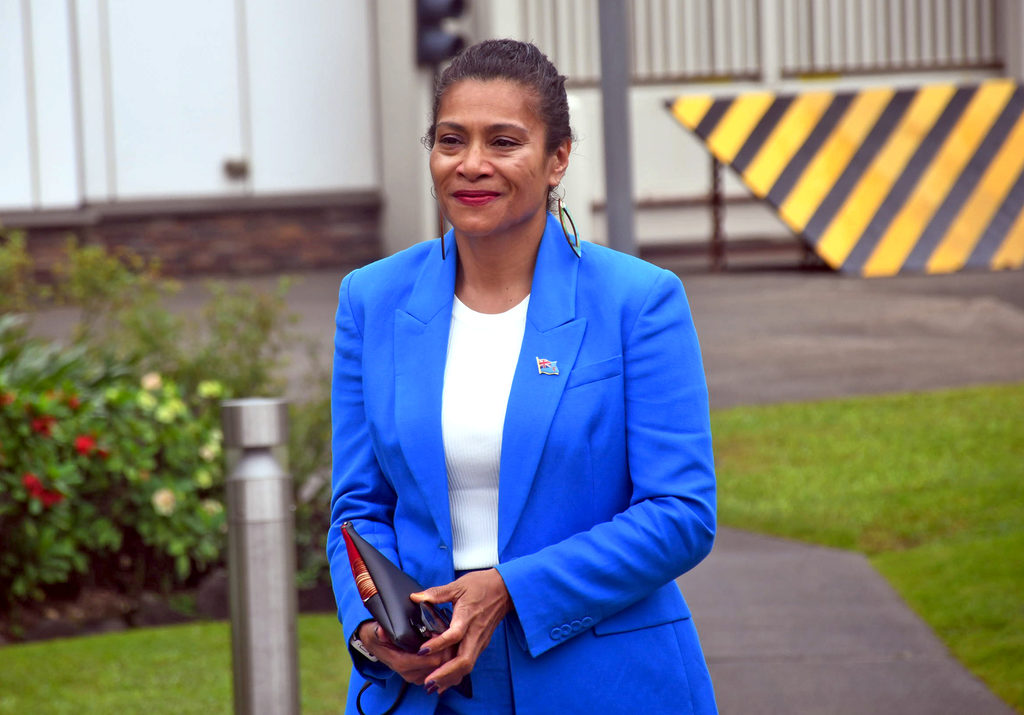
Minister for Information, Environment and Climate Change Lynda Tabuya succinctly put it during a media briefing as “this is our moment”.
“With the three countries hosting Pre-COP, Fiji, Australia and Tuvalu, we as Pacific nations must send a powerful message to the world,” she said.
“We are very mindful of the fact that not every Pacific country may be aptly represented at COP31 in Turkey.
“So, this is our moment.”
Ms Tabuya alongside her regional counterparts will use the platform as a launching pad for the region’s agenda at the COP31 in Antalya, Türkiye.
Her ministry will be part of negotiations for Fiji and its regional neighbours seeking promises for developed countries and donor partners to commit to enabling vulnerable communities to withstand the ongoing onslaught caused by climate change.
The ministry’s negotiations will be based on the comprehensive Pacific Partnership Policy Framework where four key pillars will drive talks.
Pillar 1 – Keeping 1.5°C within reach
“Fiji should defend the 1.5°C goal through the Mitigation Work Program, the Global Stocktake and support IPCC (International Governmental Panel on Climate Change) as the sole authority for basis of Climate Science and Just Transition discussions and reinforced by the International Court of Justice’s recognition that 1.5°C is the Paris Agreement’s agreed primary temperature goal,” Fiji’s position statement said.
“Differences among parties continue to constrain agreement on how to translate global mitigation ambition into implementation.
“For Fiji, limiting warming to 1.5°C is a matter of protecting lives, livelihoods and the future of its islands.
“Faster global emissions reductions would limit the risks Fiji must manage while practical support would help Fiji deliver its own climate commitments.”
The framework then outlines Fiji’s proposed position for the Pre-COP31 under Pillar 1.
These are to keep science and 1.5°C as a non negotiable point in the discussions, build support for the continuation of the Mitigation Work Program and the Global Stocktake, make the global transition away from fossil fuels workable for the Pacific, shape the proposed just transition mechanism around SIDS needs, raise the practical requirements for credible Article 6 (of the Paris Agreement) cooperation and mobilise Partnerships to Implement Fiji’s NDC (Nationally Determined Contributions) 3.0 priorities in support of the 1.5°C.
Pillar 2 -Enhancing access to climate finance
Fiji’s position statement explains the challenges and gaps that exist when funds have been pledged to developing nations.
“The Technical Working Group (TWG) identified barriers between pledges and delivery, demanding accreditation and application processes, limited institutional capacity to secure and manage funding and insufficient transparency on what reaches communities,” the statement said.
“Simplified direct access and stronger national institutions are essential if climate finance is to reach Fiji’s priorities and people at the speed and scale the risks demand.”
The framework highlighted outcomes from the COP30 in which calls were reaffirmed to scale up climate finance from public and private sources to at least triple annually by 2035.
At the pre-COP31 Summit, Fiji is proposing seven key items. These are to keep Article 9.1 (of the Paris Agreement) at the centre, make adaptation finance accountable before 2035, improve access to climate finance for SIDS, targeted ocean financing, turn fund reform into usable access, capitalise loss and damage at scale and finance climate related displacement and planned relocation.
Pillar 3 – Elevating the ocean, climate nexus
Formalising the ocean agenda will be Fiji’s key priority at the pre-COP31 Summit.
Under the policy framework, Fiji plans to move the ocean agenda from recognition and dialogue into formal United Nations Climate Change Conference (UNFCCC) delivery channels to facilitate consensus for ocean to be a permanent agenda item with SIDS support.
“The ocean connects Fiji’s food security, coastal settlements, transport, livelihoods and cultural life,” Fiji’s position statement said.
“The TWG highlighted coastal erosion, coral health and risks to fisheries affect these priorities together while data gaps and inclusive governance hinder an effective response.
“The ICJ’s 2025 advisory opinion recognised the disproportionate climate harm facing small island developing states affirmed that states parties to United Nations on the Law of the sea must exercise stringent due diligence to protect the marine environment and held that co-operation on sea level rise is a legal obligation.
“These findings strengthen Fiji’s call for ocean priorities to shape climate action and support Pre-COP31.”
At the summit, Fiji intends to take a firm position under five key areas. These include leading with Fiji’s ocean priorities, integrate ocean priorities into climate planning and reporting, secure finance and practical support for identified ocean priorities, agree how to carry the ocean dialogue forward and strengthen and advance high seas resilience through BBNJ (Biodiversity Beyond National Jurisdiction) co-operation.
Pillar 4 – Amplifying Pacific voices and leadership
“As a pre-COP31 host, Fiji can help create space for Pacific countries to present shared concerns while retaining their individual national positions,” the framework states.
“TWG participants called for stronger youth involvement, climate education, intergenerational discussion and the inclusion of indigenous, local, faith and community perspectives.
“Their central concern was that people with lived experience should help shape the response, rather than be consulted only after its direction has been set.”
Fiji’s proposed position at the pre-COP31 Summit will be to anchor Pacific voices in 1.5°C ambition and intergenerational equity, coordinate Pacific negotiating work, support meaningful participation, protect and use Pacific knowledge ethically, treat transparency as infrastructure, build a Pacific negotiator and institutional memory pipeline and report back on outcomes.
These four pillars outline a key message for Fiji which her negotiators intend to deliver over the next few days at the summit.
The success of this summit, however, will ultimately be measured by whether developed nations move past rhetorical commitments and deliver tangible support.
For Fiji, keeping 1.5°C within reach, unlocking climate finance, protecting marine ecosystems, and amplifying Indigenous knowledge are not abstract negotiating points but rather they are the baselines for survival.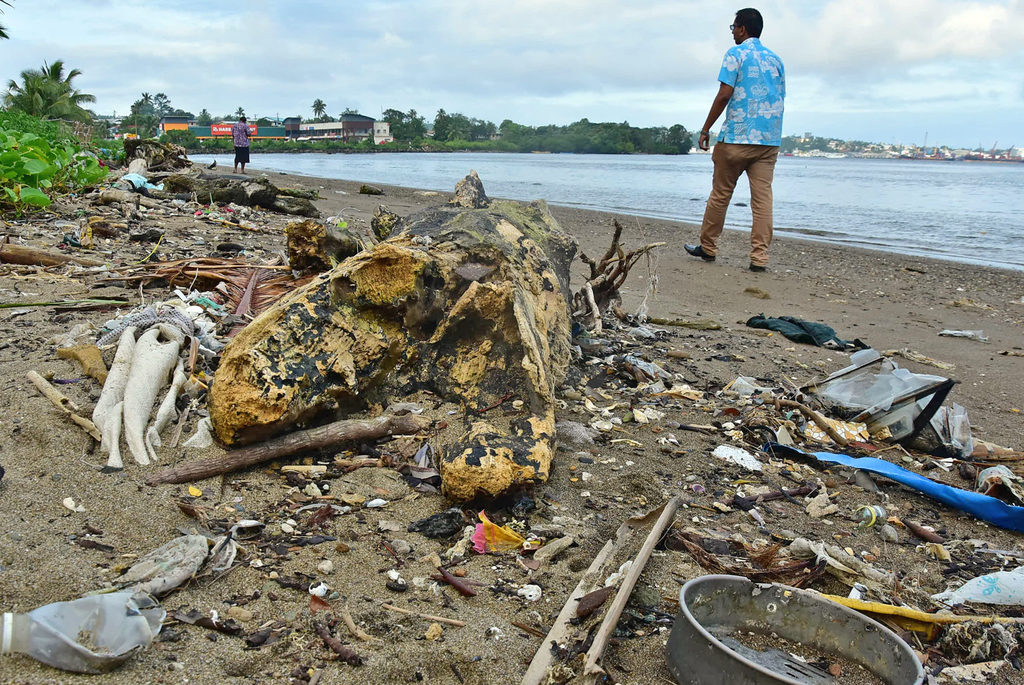
Trash and braches of trees washed ashore from the rise of sea level. Picture: JONACANI LALAKOBAU
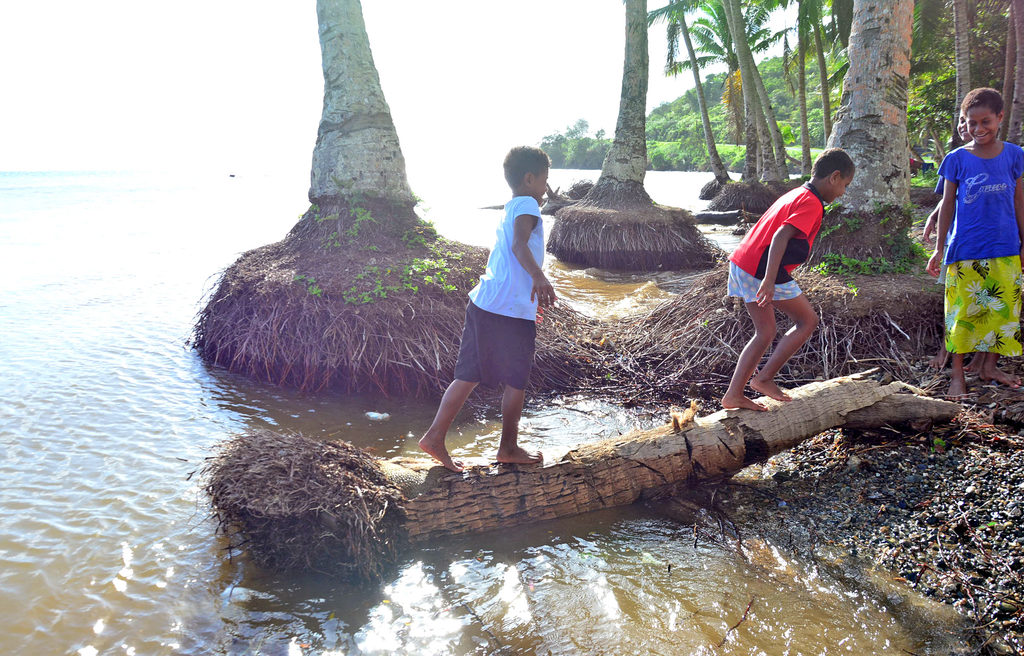
Children playing along the Namatakula beach that is slowly washing away because of the rise in sea level. Picture: FILE/ JONACANI LALAKOBAU