
For decades, successive governments in Fiji have contributed to poor fiscal management by favouring populist and politically driven policies that added to the country’s financial burden.
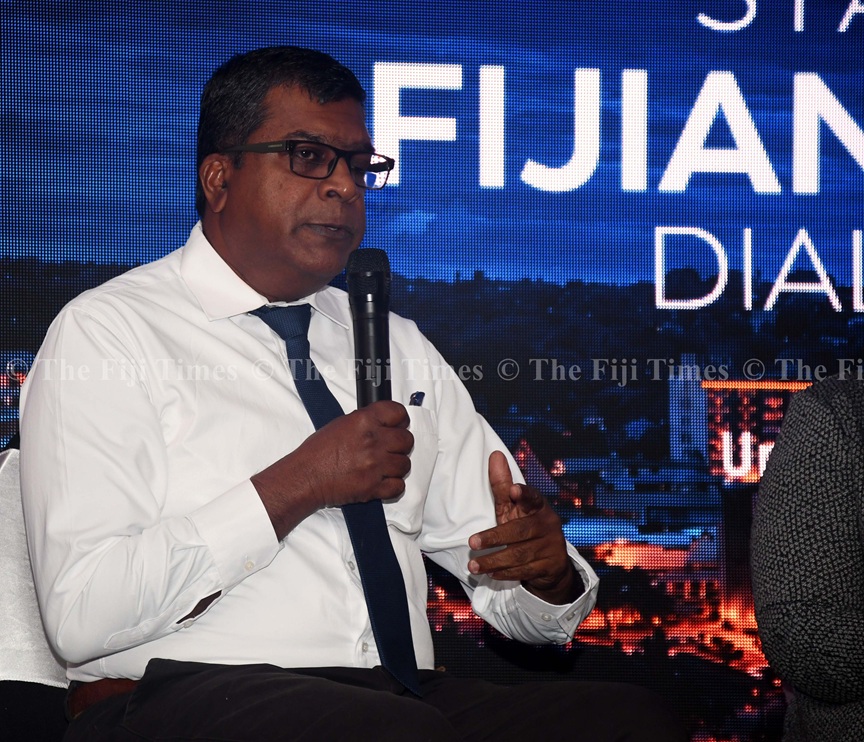
Speaking at the “State of the Fijian Economy” dialogue yesterday, National Federation Party leader and senior economist Professor Biman Prasad said all governments had faced this challenge over the past three to four decades.
“Sometimes, politicians, when in government focus on a lot of populist policies, some political buying policies, and that could add to the fiscal burden on the country,” he said.
Prof Prasad said Fiji had already been facing serious economic pressure before the COVID-19 pandemic.
“We had this issue in 2018 and 2019. In 2019, the economy had almost contracted substantially.
“We were hitting almost negative growth. And then when we got hit by the COVID, we had one of the highest contractions in our economy, about 17 per cent.”
He said Fiji later recovered in 2021 and 2022, but the country had also accumulated debt before and during the pandemic.
Prof Prasad said when the Coalition Government came into office in 2022 and prepared its first budget for 2023-2024, the focus was on fiscal responsibility, while balancing economic growth and social development.
“So we undertook various reforms, whether you call it tax reforms, and we were able to reduce the budget deficit from 7.2 in 2022 to 3.4, 2.5 subsequently.”
He said Government had also reduced the debt-to-GDP ratio from 91.8 per cent in July 2022 to 79 per cent in 2025.
Prof Prasad said while nominal debt remained important, borrowing could still be justified if the economy was growing and the funds were used for key infrastructure, including health and education.
However, he said the improvement in fiscal indicators did not mean Fiji’s financial position had been fully stabilised.
“But these figures do not say to us clearly that our success is complete and that we substantially succeeded in stabilising finances.”

