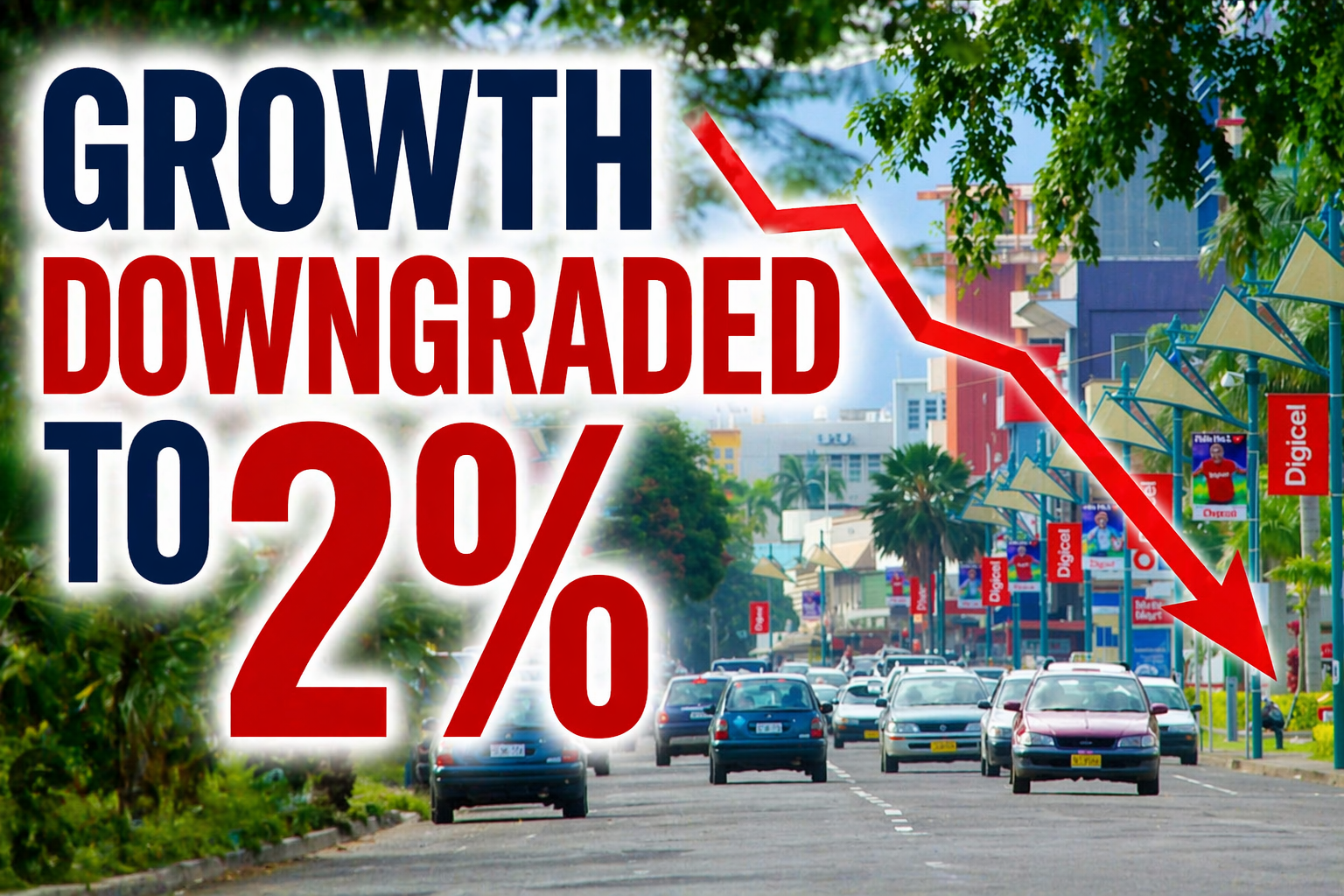
Fiji’s economic growth forecast for 2026 has been downgraded to 2 per cent, reflecting rising global risks and mounting cost pressures, according to the latest Westpac Wave Fiji Economic Update and Outlook released for April 2026.
The revised projection is down from an earlier estimate of 3.3 per cent, with growth expected to rebound to 3.2 per cent in 2027.
The report highlights the impact of the ongoing Middle East conflict, which is driving up fuel prices, transport and shipping costs, and increasing Fiji’s import bill.
Higher input costs are expected to weigh on key sectors, particularly those heavily reliant on fuel and transportation, resulting in a flatter growth outlook across the economy.
Tourism, a major driver of growth, is also facing uncertainty. While the first quarter showed strong visitor numbers, arrivals are expected to remain flat for the rest of the year due to rising jet fuel prices and potential supply disruptions that could affect flights.
The agriculture sector is similarly under pressure from higher fuel and fertiliser costs.
Westpac notes that government spending may provide some support in 2026, with cost-of-living measures likely to be announced in the upcoming June Budget ahead of the general election.
The outlook is further complicated by the risk of slower growth or recession in key markets such as Australia, New Zealand and the United States, which could reduce travel demand and impact Fiji’s tourism sector.
Overall, the report warns that continued fuel-related disruptions could significantly strain economic activity across the country.