
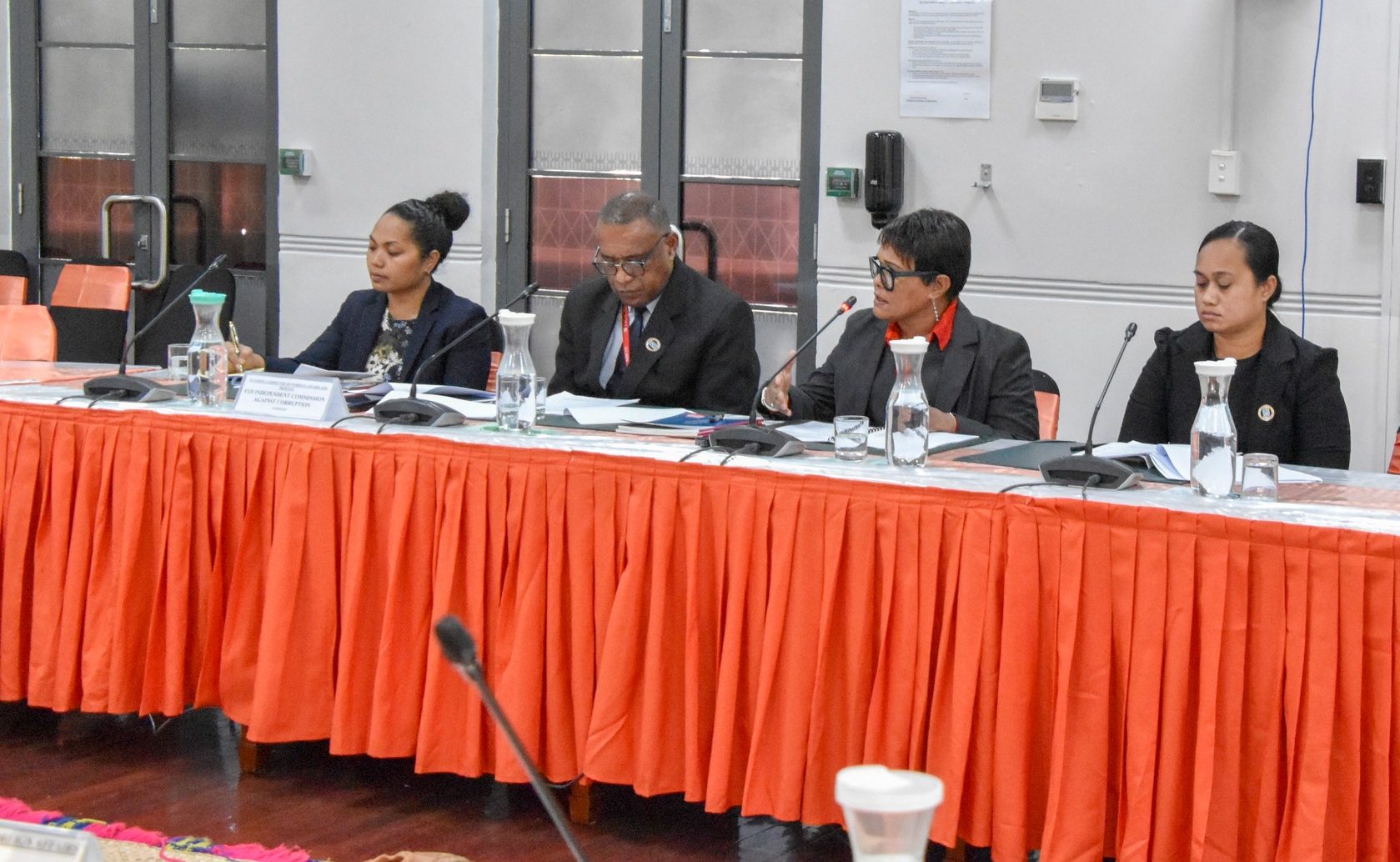
Acting Commissioner of the Fiji Independent Commission Against Corruption (FICAC), Lavi Rokoika, has called for a review of Fiji’s asset restraint and forfeiture processes, saying the current system is too slow and allows suspects to move or hide money before legal action is completed.
Speaking before the Standing Committee on Foreign Affairs and Defence, Ms Rokoika said that under current law, only the Attorney-General’s Office can authorize such actions, creating delays that hinder FICAC’s effectiveness.
“I find it a bit problematic,” she said.
“There’s a different application for restraint and a different application for full forfeiture. The only person who can do this is the Attorney-General’s Office.”
Ms Rokoika told the committee that the process involves multiple layers of approval before any assets can be sold or forfeited.
“Once the Commission writes to the Attorney-General, the Attorney-General will then write back to approve, and only then can a sale take place — but we cannot sell unless there is a restraint order from the court,” she explained.
She added that the current system creates too many “moving parts,” which allows suspects time to hide or transfer funds.
“By the time everything is ready, the suspect is gone with all the money,” Rokoika said.
She urged Parliament to consider simplifying the law, saying, “If the process could be streamlined, it would make our work more effective. Other jurisdictions deal with this more efficiently.”

