
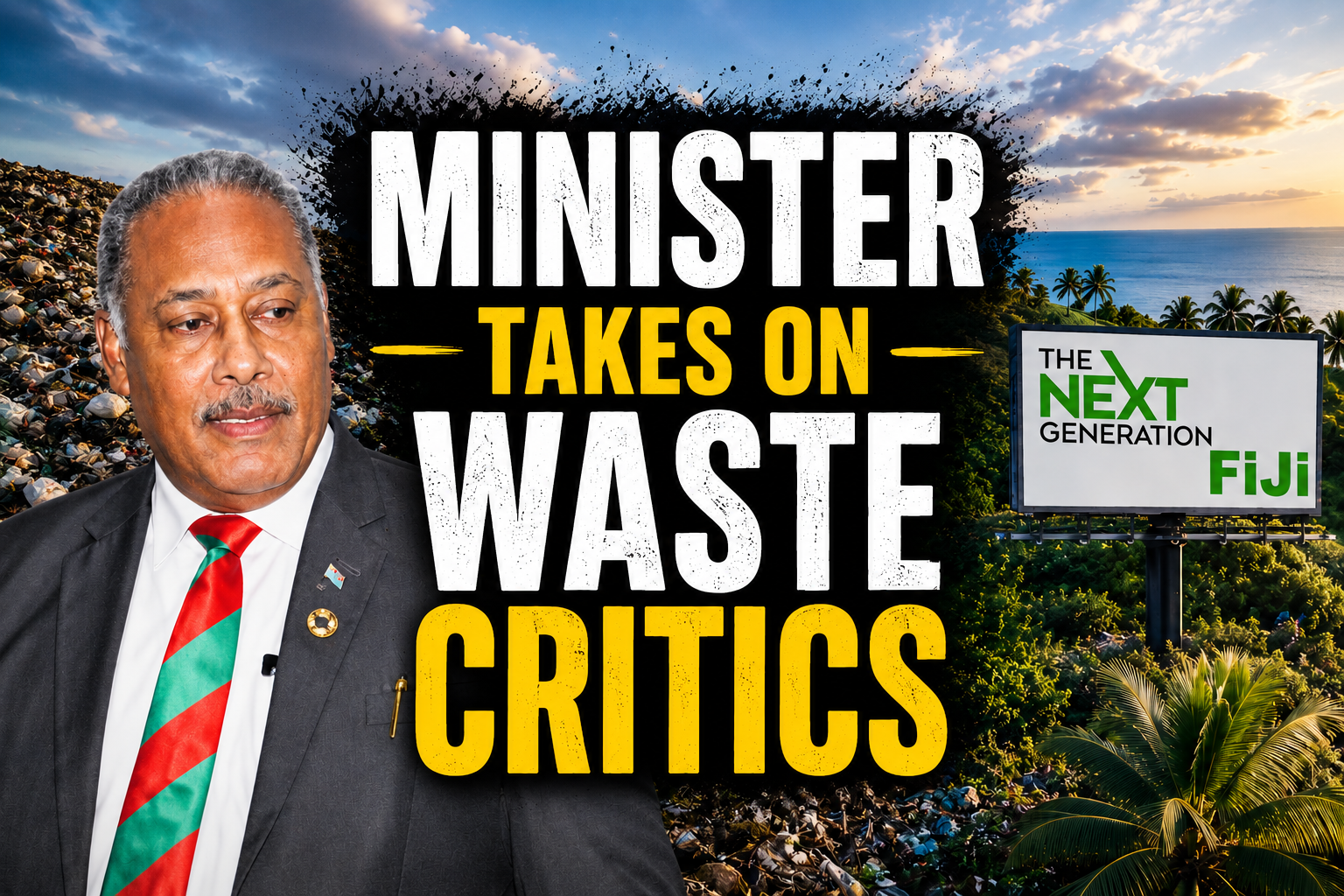
Foreign Affairs Minister Sakiasi Ditoka has defended the need for an evidence-based discussion on waste-to-energy technology, warning against what he described as misinformation and fear-driven opposition to modern waste management solutions.
In a social media post, Ditoka said recent public debate had created the impression that waste-to-energy facilities were little more than large-scale rubbish fires that pollute the environment.
“Some of the commentary would leave one believing that every Waste-to-Energy plant is little more than a giant rubbish fire polluting the environment. That is simply not what I observed.”
The Minister said he had personally visited the TuasOne Waste-to-Energy Plant in Singapore, operated by Mitsubishi Heavy Industries, and witnessed a modern and tightly regulated facility.
“There were no visible emissions from the stacks other than water vapour. There were no noticeable odours standing outside the plant.”
Ditoka said advanced pollution-control systems, scrubbers and continuous monitoring technologies were being used to ensure emissions complied with strict environmental standards.
He noted that Singapore currently operates four waste-to-energy plants as part of its national waste and energy management system, while Japan operates 283 such facilities and China has 38 similar plants.
The Minister also highlighted Australia’s growing investment in the sector, pointing to the Kwinana Energy Recovery Facility in Western Australia, which processes 460,000 tonnes of waste annually, with additional projects planned or under consideration across several states.
However, Ditoka stressed that his comments should not be interpreted as unconditional support for any waste-to-energy proposal in Fiji.
“Does this mean every Waste-to-Energy proposal should automatically be accepted? No.”
He said any proposal would need to undergo rigorous scrutiny covering emissions standards, environmental safeguards, public health impacts, ash management, economic viability, landowner interests and legal compliance.
“Government has a responsibility to ask hard questions about technology, emissions standards, health impacts, environmental safeguards, ash management, economic viability, landowner interests and compliance with both national law and international obligations.”
Despite those requirements, Ditoka said Fiji should remain open to considering technologies that have been successfully adopted elsewhere.
“We should also be careful not to reject technologies simply because they are unfamiliar.”
“Many of the world’s cleanest, most environmentally conscious and technologically advanced countries have chosen to incorporate Waste-to-Energy into their waste management and energy strategies.”
He said the national conversation should be guided by science and evidence rather than fear.
“The debate should therefore be based on evidence, science, engineering, environmental standards and facts.”
“Not fear and not slogans and certainly not misinformation.”
Ditoka also revealed that during his visit to the TuasOne facility, the plant was producing an amount of electricity equivalent to Fiji’s Monasavu hydroelectric scheme despite operating only three of its four furnaces due to maintenance work.
“Fiji deserves a mature discussion based on what is actually happening in countries that are already successfully using these technologies,” he said.

