
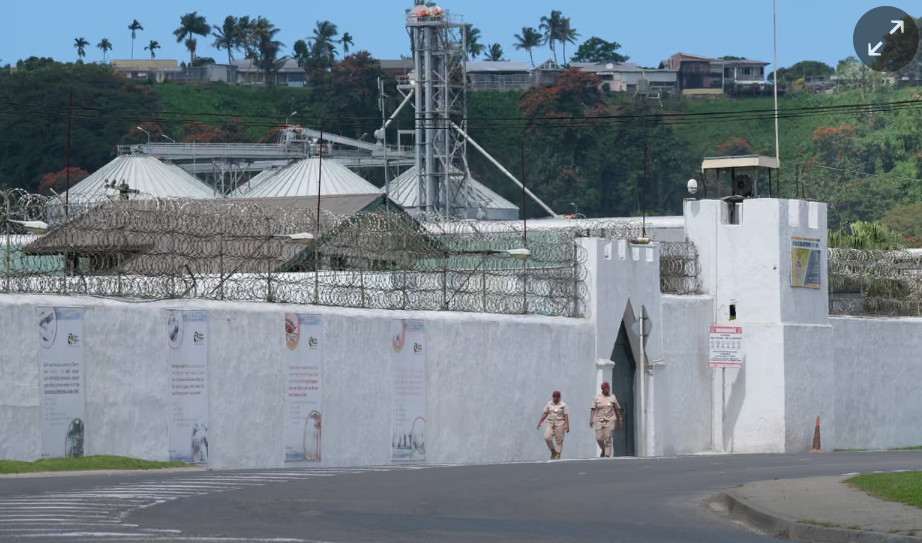
THE Fiji Corrections Service has established procedures to manage hunger strikes in prisons, with Acting Commissioner Auta Moceisuva saying inmates who refuse food are isolated, monitored and provided with medical oversight until the situation is resolved.
In an interview with The Fiji Times online portal The Lens@177, Mr Moceisuva said hunger strikes generally stemmed from prisoners being dissatisfied with particular issues.
“Hunger strike is something that happens in prisons mainly because the prisoners were unsatisfied with something,” he said.
Referring to the recent hunger strike at Naboro Prison, he said the protest was not directed at the Corrections Service.
“I think the recent case that happened in Naboro, it does not have anything to do with us.
“They were complaining about something else, their sentence.”
Mr Moceisuva said the Corrections Service followed strict procedures whenever an inmate embarked on a hunger strike.
“The routine in prison is when a prisoner wants to go through hunger strike, he must be removed, isolated, and supplied with food.
“That is our responsibility. So morning, lunch, and dinner is supplied.”
He said every case was documented and monitored by medical professionals, who would intervene if an inmate’s health deteriorated.
“And we have a register in place to register. Normally the doctors would come around and check.
“So, if the prisoner is not able to sustain his hunger strike, then the doctor will intervene.”
Mr Moceisuva said many prisoner grievances were relatively minor, ranging from concerns over food, bedding and treatment, while others were influenced by prison culture.
“There’s a lot of machoism in prison.
“So, if you are outside of their subculture, you seem to be a weak person.
“So, sometimes they get influenced by other prisoners.”

