
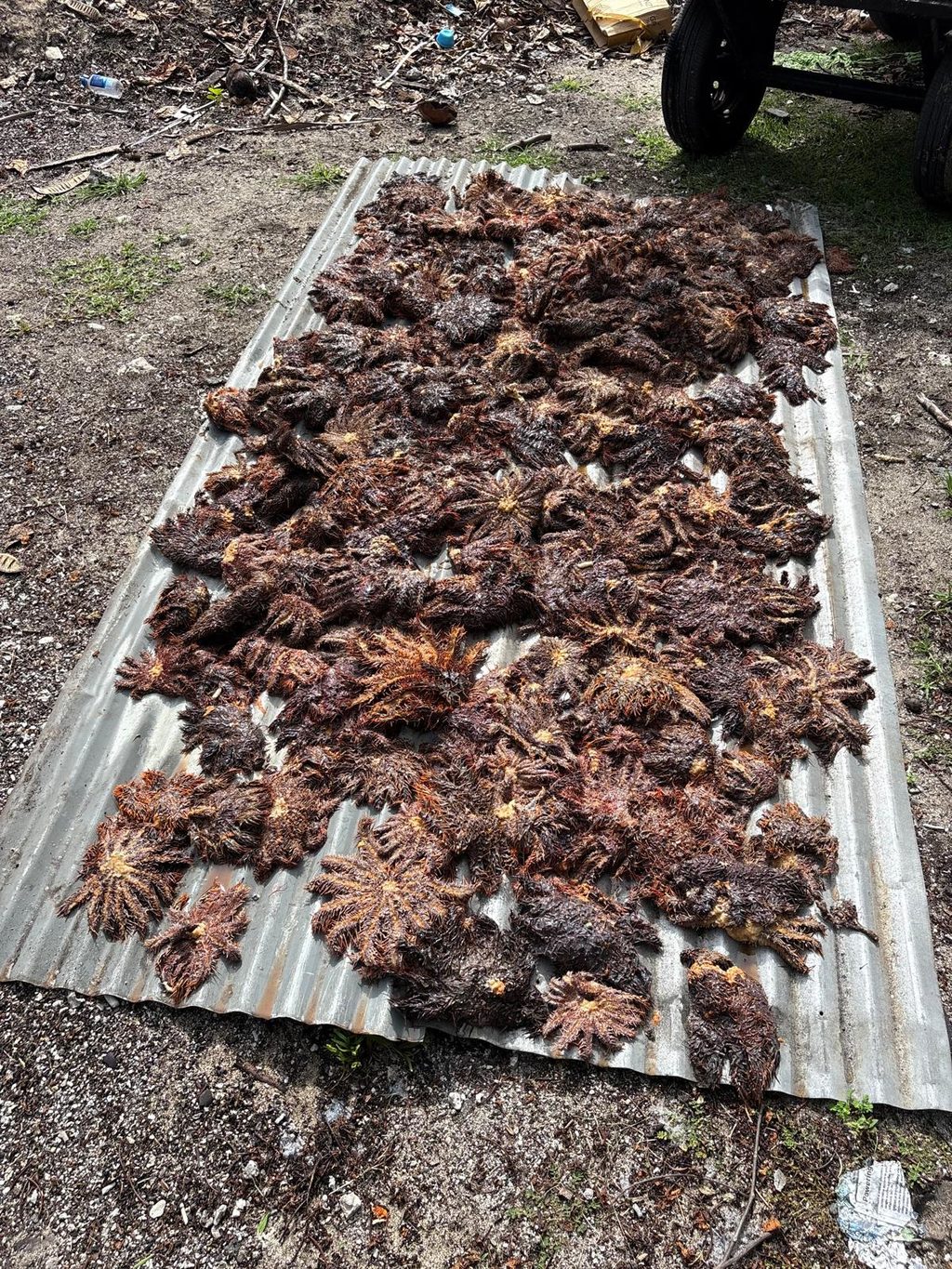
An outbreak of Crown-of-Thorns Starfish (COTS) is currently damaging some of the most economically important coral reefs in Fiji, in parts of the Yasawa and Mamanuca groups.
The COTS are a part of our marine ecosystems. There are some in the scientific community who believe COTS regulate fast growing coral species from overwhelming reefs and maintain biodiversity.
They become the problem we have come to know, when their populations explode because of higher larval survival in optimal environmental and chemical conditions.
The Drawaqa Marine Conservation Trust, which is based at Barefoot Manta Island Resort on Drawaqa Island in the Yasawa group, has responded to the outbreak by putting together a well-equipped team in a dedicated boat to combat the COTS on the reefs.
The team is made up of divers employed by Crystal Blue Reef Safari, which operates out of Barefoot Manta Island Resort, and Barefoot Kuata Island Resort, on Kuata Island, just off Waya Lailai.
Peter Farrell, a director of Crystal Blue Reef Safari and a founding member of the Drawaqa Marine Conservation Trust, said the team removed approximately 4000 COTS in March of 2026, saving almost 1.5 million pieces of coral from destruction.
“On the last day of the month, the Crown of Thorns boat removed 862 COTS,” Mr Farrell said.
“These unbelievably high numbers illustrate the seriousness of the threat.”
Robert Macfarlane, the Head Marine Biologist for Crystal Blue Reef Safari and founding member of the Drawaqa Marine Conservation Trust, said the trust had been monitoring multiple sites in the Yasawa and Mamanuca groups with detailed logs from 2022.
“We started noticing a significant increase in COTS numbers around the Southern Yasawas as well as South Sea Island and the Mamanucas toward the end of 2024,” Mr Macfarlane said.
“In the first quarter of 2026 our team removed or culled over 18,000 starfish; 3,192 in 9 days in the Mamanucas, and 15,406 in 3 months in the Yasawas.”
COTS are natural parts of our reef ecosystems. However, outbreaks in their population are linked to both environmental factors such as higher temperatures and human-induced factors, such as nutrient enrichment and the absence of natural predators such as Davui (Triton’s Trumpet) and Cumu (Triggerfish) due to overfishing (Marine Ecology Fiji, n.d.; Meekan et al., 2025).
The absence of these predators can trigger trophic cascades, reducing predation pressure on juvenile COTS and enabling population outbreaks (Meekan et al., 2025).
Mr Macfarlane said COTS outbreaks were periodic but highly destructive.
“These events are periodic but can rapidly destroy large areas of coral, threatening biodiversity, fisheries, and the livelihoods of coastal communities,” he said.
“The last time we saw a COTS outbreak at this scale was about 10 years ago.”
The COTS team is fighting the outbreak out of Barefoot Manta Island Resort, on Drawaqa Island, Naviti and Barefoot Kuata Island Resort, on Kuata Island, just off of Waya Lailai.
The divers inject the COTS with vinegar, which kills them in seconds. Mr Farrell said the injection method, while more costly, is preferred over physical removal of the COTS from the reefs.
“Physically removing the COTS from the reefs takes longer, requires more people, and divers can be injured by the COTS in the process of removal,” he said.
“The injection method we are using is costly but allows our divers to cover a wider area with every dive, although in some circumstances our divers are physically removing COTS.”
Outbreaks such as these cannot be left to be dealt with by teams such as the one deployed by the Trust. They require a broader effort by all Fijians and stakeholders in Fiji’s ocean space.
Mr Farrell said community engagement was critical and should be mainstreamed in all coastal communities as a marine resource management activity.
“Fijians live on islands and must always remember the importance of properly managing the marine environment and resources not only because of their importance for them but for how activities on land affect them.
“Pollution, environment changes and overexploitation of the resources can all be minimized if the people are empowered to be effective stewards.”
While the work of the Trust is admirable, carrying the load of relieving the pressure that COTS put on our reefs is not something that can be done by the few who are currently doing it. Our local communities’ need training on why and how they need to conduct removals to better protect their sources of livelihood as well as strengthen local reef management capacity are desperately needed.
These initiatives can address the immediate ecological impacts of COTS outbreaks as well as promote long term environmental awareness, stewardship, and resilience among coastal populations (Pacific Blue Foundation, 2016). They must also emphasize the importance of integrated, community-based conservation approaches that combine scientific knowledge with local participation, and provide the context for our people to connect their traditional knowledge with science.
Effective management of COTS outbreaks requires a dual approach that combines immediate control measures (such as removal drives) with long-term ecosystem management, including reducing fishing pressure, rehabilitation of marine habitats and strengthening marine protection.
The integration of scientific research with community-based conservation provides a practical pathway for enhancing coral reef resilience in Fiji and similar contexts (Meekan et al., 2025).
- Dr JOELI VEITAYAKI is a Fijian academic. He is the strategic advisor for the Blue Prosperity Fiji program, and is also engaged as a Community Engagement Consultant for the Drawaqa Marine Conservation Trust.
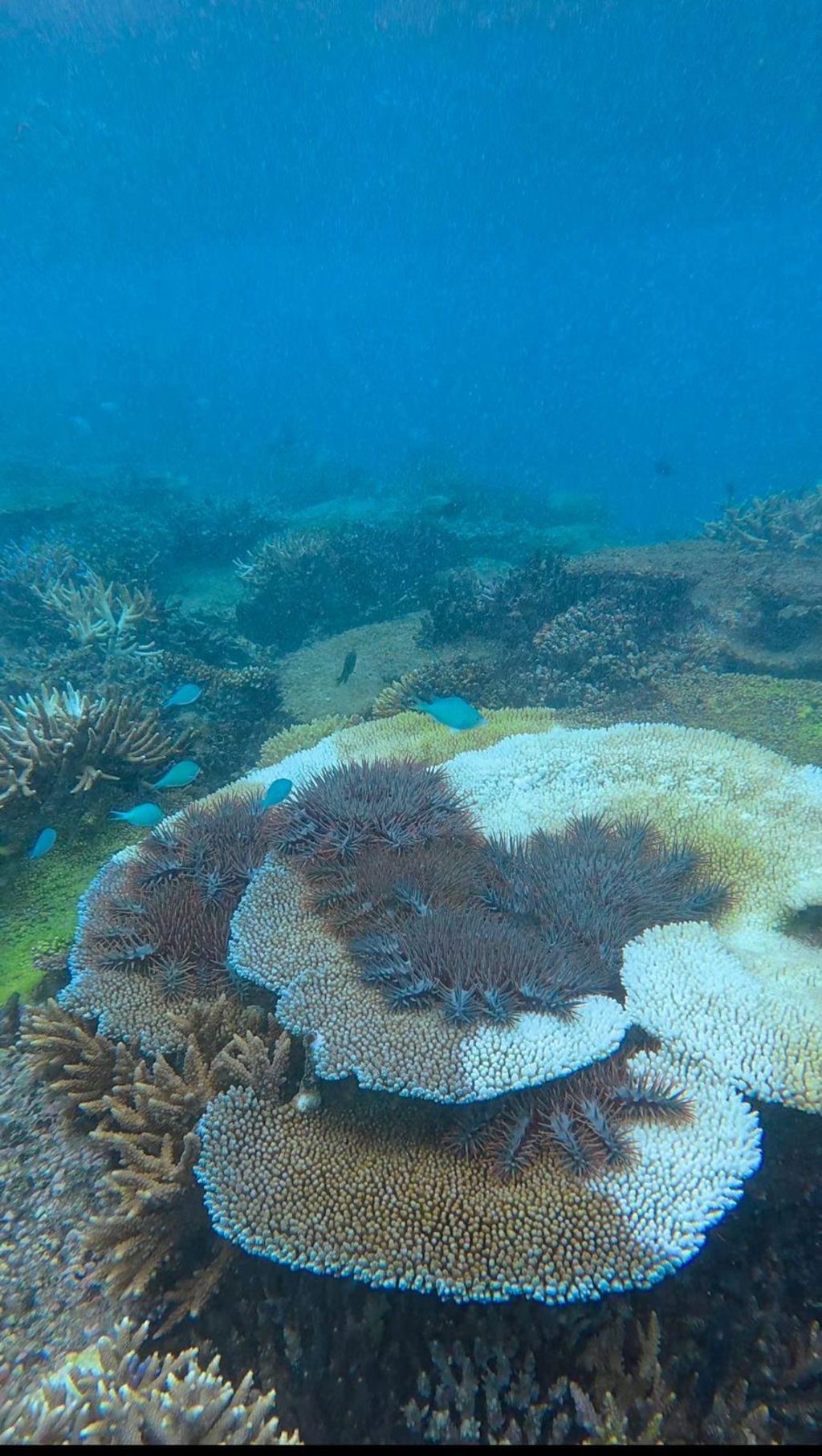
Crown of Thorn starfish latch themselves on plating coral. Picture: SUPPLIED
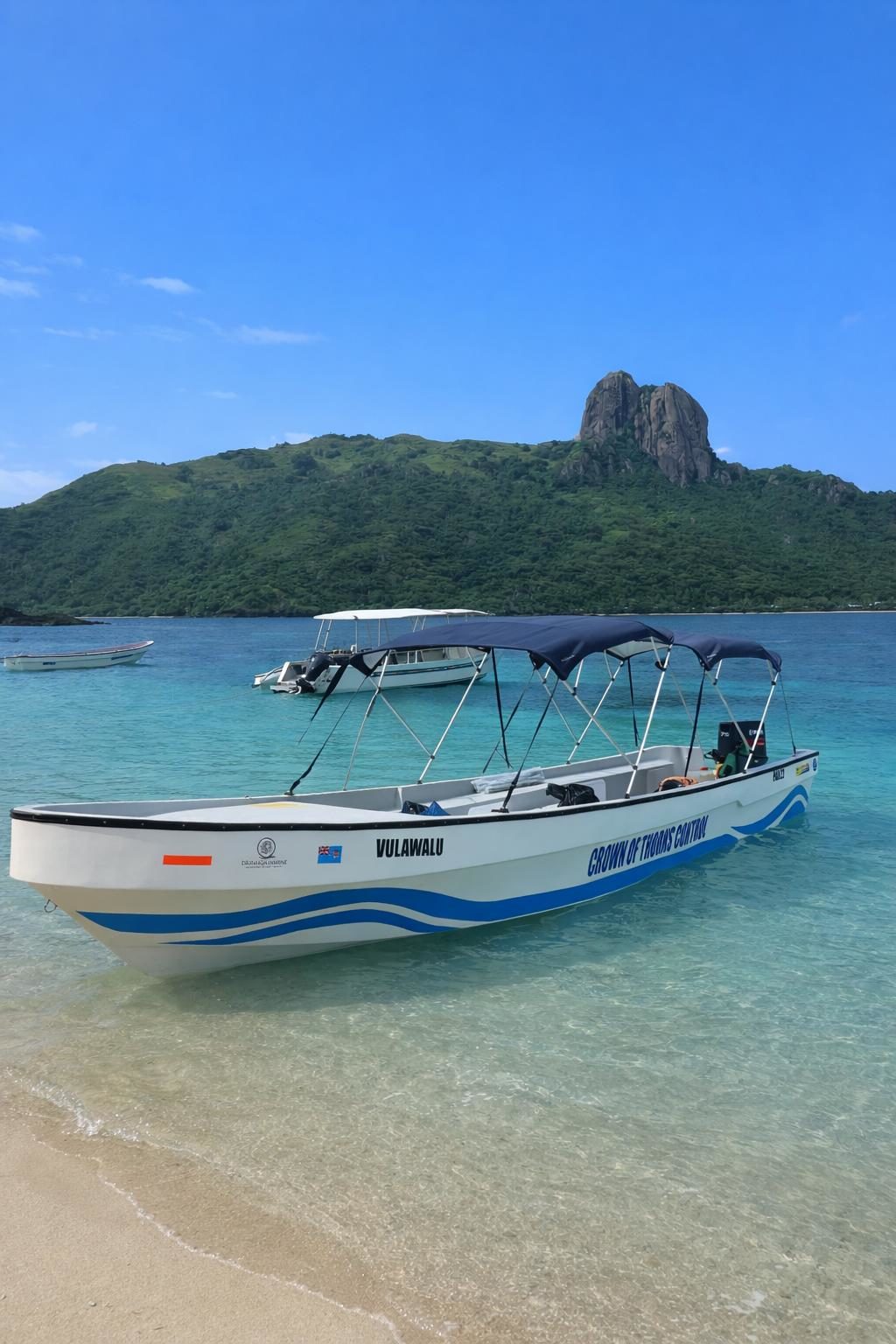
While the work of the Trust is admirable, carrying the load of relieving the pressure that COTS put on our reefs is not something that can be done by the few who are currently doing it. Our local communities’ need training on why and how they need to conduct removals to better protect their sources of livelihood as well as strengthen local reef management capacity are desperately needed. Picture: SUPPLIED
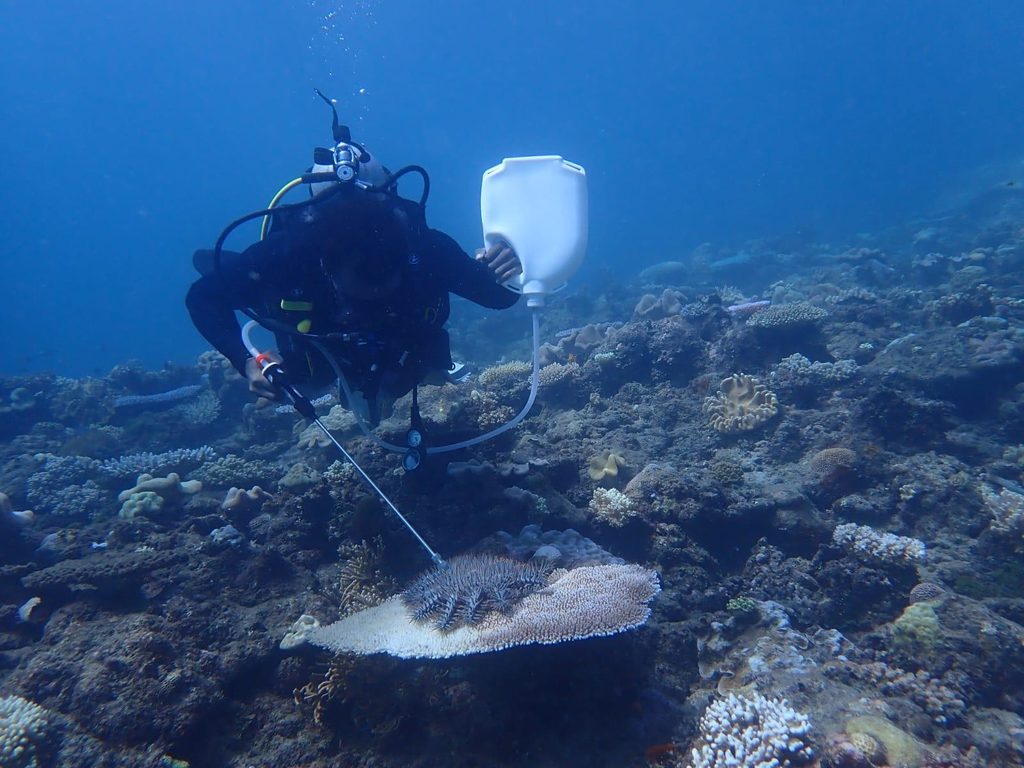
A diver injects a COT starfish with vinegar. Picture: SUPPLIED

