
Sugarcane growing areas across Fiji are expected to experience below-normal rainfall over the coming months as a strong El Niño continues to influence weather patterns.
The latest rainfall outlook for July to October 2026 indicates dry conditions will dominate much of the country’s sugar belt, increasing the risk of prolonged dry spells, water shortages and stress on crops and livestock.
For July, forecasters say there is a 75 percent chance of receiving between 0 and 25 millimetres of rainfall from Olosara to Tavua, while Penang and sugarcane growing areas in Vanua Levu are expected to receive between 25 and 50 millimetres. Dobuilevu has a higher likelihood of receiving between 50 and 100 millimetres.
Dry conditions are expected to persist through August, with similar rainfall patterns forecast across the sugarcane belt.
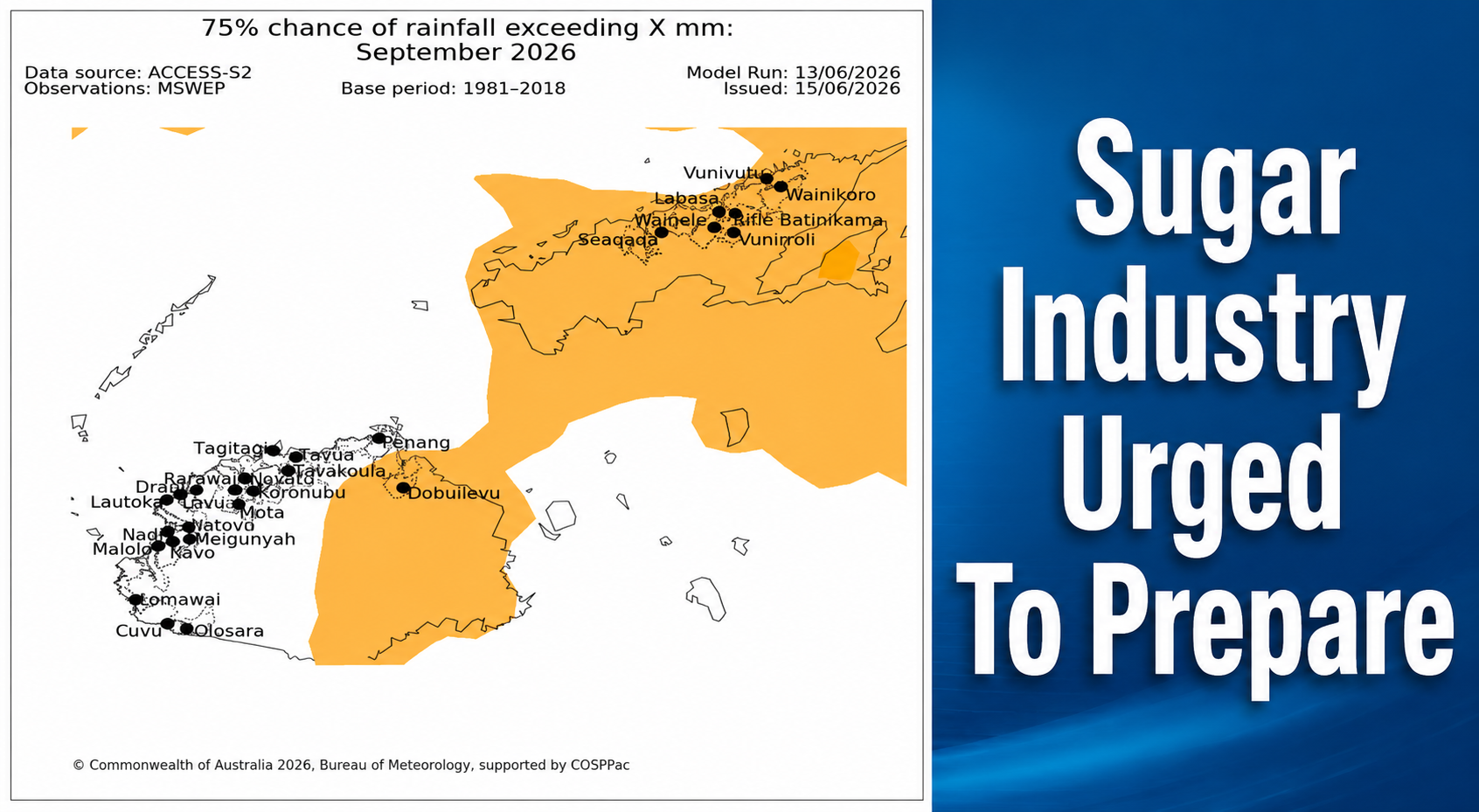
The September outlook also favours dry weather, with Olosara to Penang expected to receive only 0 to 25 millimetres of rainfall, while sugarcane areas in Vanua Levu and Dobuilevu are likely to receive between 25 and 50 millimetres.
Looking further ahead, the August to October outlook indicates a 75 percent chance of 50 to 100 millimetres of rainfall from Olosara to Tagitagi, while Koronubu, Dobuilevu and sugarcane growing areas in Vanua Levu are expected to receive between 100 and 200 millimetres.
The forecast comes as a strong to very strong El Niño remains established across the tropical Pacific, with current projections indicating it is likely to persist through the end of 2026.
During El Niño events, Fiji typically experiences below-normal rainfall, increasing the likelihood of extended dry periods that can affect agriculture, water supplies and livestock production.
Authorities are advising farmers and communities to prepare for continued dry conditions for as long as El Niño persists.

