
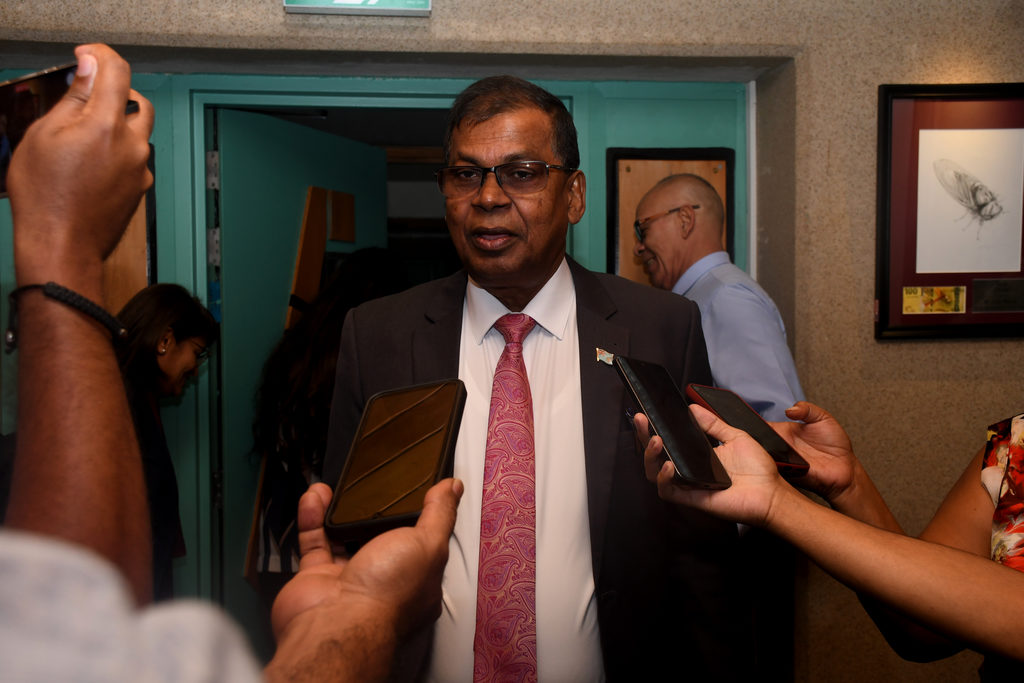
Deputy Prime Minister Professor Biman Prasad’s contention that the FijiFirst administration deliberately ignored the drug trafficking that plagued the country for decades is a damning one.
He claimed there was a deliberate attempt to ignore it because there were people in positions of power and influence who were involved. That is a powerful statement to make, and it is one that should jolt us all into action.
Prof Prasad said the recent surge in drug seizures and drug-related crime was not a sudden development but the unmasking of years of neglect. The drug menace, he claimed, had been building quietly while the public was kept in the dark.
“This thing was exploding. People in the previous government knew it was there,” Prof Prasad claimed. “Obviously, they were turning a blind eye. They didn’t want negative news.”
In saying that, we can’t ignore our drug problem now.
It is tearing families apart, undermining communities and robbing our youth of their future.
We can’t neglect this any longer.
In the face of that, illicit drugs are not only fuelling crime and violence but also feeding a public health crisis. The rise in HIV infections linked to the sharing of needles among drug users is alarming. We are talking about lost productivity and wasted potential. We are also talking about lives and futures destroyed.
Addiction drags down families, leaving children vulnerable and communities fractured.
On top of this, it seems methamphetamine arrests are rising. Meth is in villages, towns, and settlements. It is accessible, and devastating.
This crisis demands honesty. It demands accountability. It demands leadership that will not flinch in the face of hard truths.
Prof Prasad may be right to point out that the problem did not emerge overnight.
He has raised issues that certainly will require some probing.
Tough questions will need to be asked.
It is encouraging to note though that the Government has allocated $10 million to fight the social impact of drugs, with New Zealand pledging support. That is a start.
From here on, we say, every initiative must be transparent.
What we face is bigger than politics. It is bigger than party lines. Drugs do not care about ethnicity, faith, or status. That is why the response must be national, collective, and uncompromising.
The days of pretending that this problem will fade on its own are over.
The fight against drugs must be fought with urgency, with courage, and with integrity. Our nation’s future depends on it.

