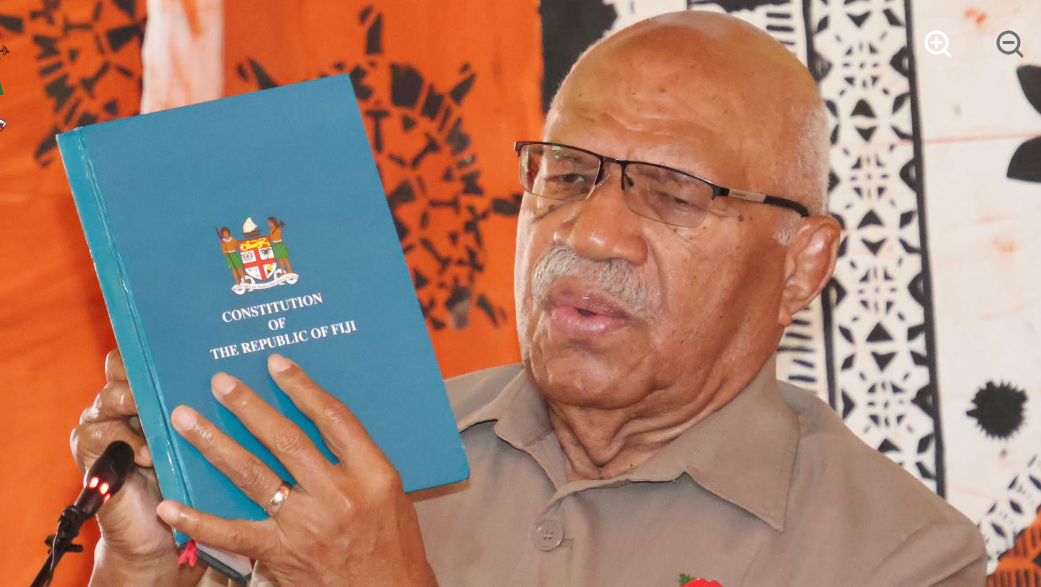
The revelation that Prime Minister Sitiveni Rabuka is seriously considering removing the immunity provision from the Constitution (Amendment) Bill will attract attention. It has been a major part of national discussions in recent weeks.
Now the Prime Minister says Fiji does not need it. The possibility of removing the clause, he said, had always been on his mind as the Government prepares to advance the Bill through its third reading in Parliament.
He now says immunity was unnecessary, pointing out that it was not included in the 1997 Constitution. It is a point noted by prominent Suva lawyer Richard Naidu who says Mr Rabuka is incorrect in suggesting that immunity did not exist under the 1997 Constitution.
Section 195(2)(a), he explained, tucked away towards the back of the document, retained the original immunity provisions under Part 14 of the 1990 Constitution. Those protections, therefore, continued to apply.
Mr Naidu had previously argued that removing immunity might have little practical effect because prosecutions or court proceedings against those involved in past coups might never eventuate.
However, he now believes the issue is also about principle. He says growing public opposition to immunity could reflect a society increasingly aware of the importance of democracy and good governance, and the damage caused by military coups and their consequences.
We say his views carry weight. Mr Naidu was among those who opposed the 1987 coup and experienced the hostility of angry mobs in Suva, who threatened to cook him in a lovo they had prepared. He was beaten by iTaukei militants, his home was set on fire by arsonists, and he was deported to New Zealand by the military regime.
He believes few would object if Mr Rabuka, given his own involvement in the 1987 coup, supports the removal of the immunity clause.
Meanwhile, the G-11 group of independent MPs has pledged its support for the Prime Minister, confirming it will vote in favour of Constitution Amendment Bill No. 32 without reservations.
Group leader and Minister for Policing Ioane Naivalurua said their meeting with Mr Rabuka on Tuesday reaffirmed their confidence in his leadership.
On the other hand, Opposition Leader Inia Seruiratu says the Opposition will neither be pressured nor enticed into supporting the Bill at its third reading. He maintains that any decision will be guided by the interests of the people they represent. He says the Government has not approached the Opposition to discuss the proposed changes.
Adding another dimension, Mr Rabuka has warned National Federation Party and Social Democratic Liberal Party ministers that they risk losing their Government positions if they vote against the Bill. We now wait to see how this latest twist unfolds.
The Army’s submission calling for the removal of the immunity clause adds another dimension to an already complicated debate. Political differences, questions of principle and concerns about our constitutional future are all converging. There is much at stake. The nation deserves clarity, not political brinkmanship. As MPs prepare to make their positions known, the question is whether the Bill will survive its third reading and proceed to a referendum, or whether growing disagreements will bring the exercise to a halt.
Whatever happens, we say we cannot afford to lose sight of the bigger picture. Constitutional reform must strengthen democracy, protect the rights of people and restore confidence in our institutions!