
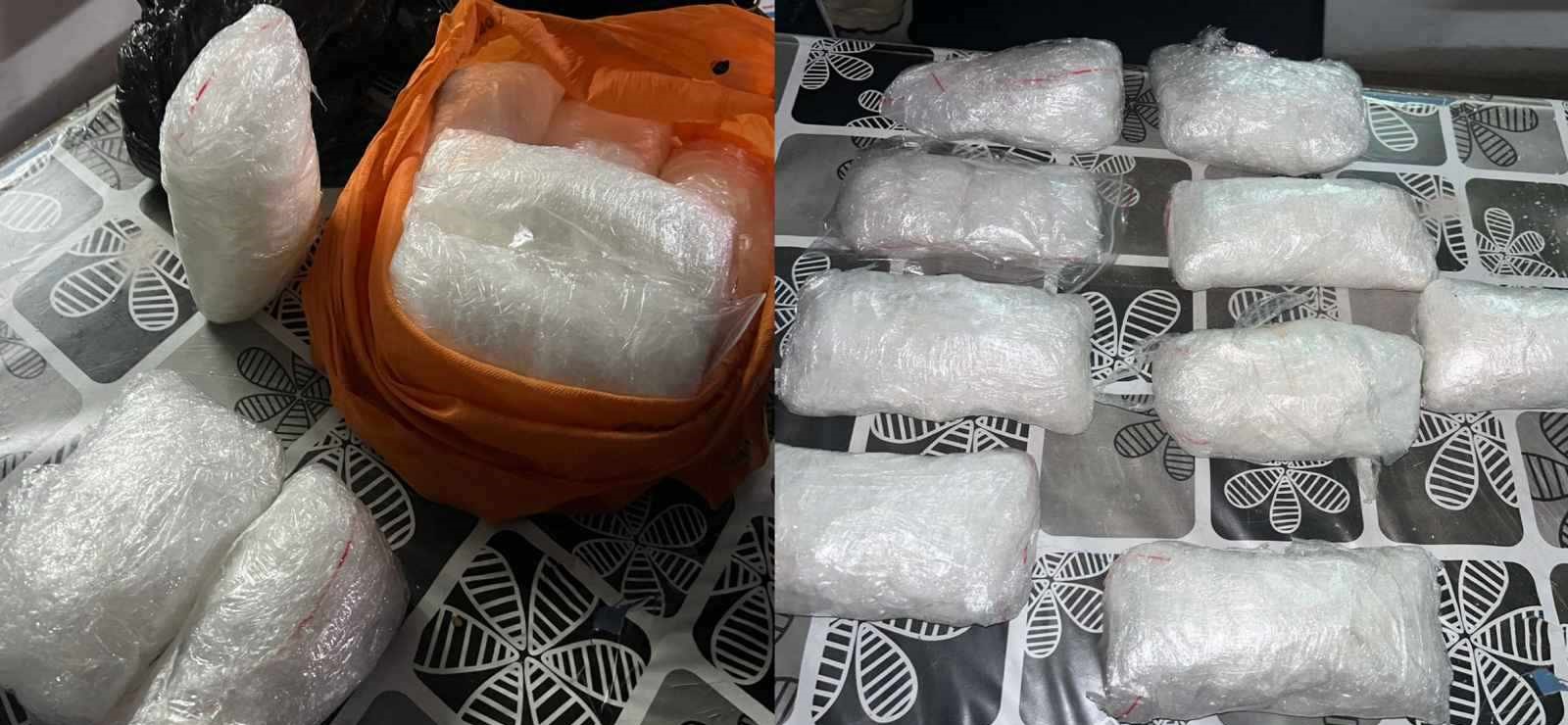
The revelation that Fiji is now the front line of the Pacific’s drug war is a major concern.
The seizure of 4.5 tonnes of methamphetamine with an estimated street value of $3.6 billion in just three years, coupled with warnings from regional security leaders that organised criminal networks have become embedded in Pacific communities, is worrying.
This is pretty serious business. It is scary, and certainly not a challenge we can afford to ignore. Given the statistics we have to work with, the situation is bad and will only get worse if we don’t do anything about it.
The statistics were highlighted this week at the Pacific Peace and Security Dialogue in Suva by Permanent Secretary for Policing Berenado Daveta. They included the seizure of 4.1 tonnes of methamphetamine, a further 2.6 tonnes of cocaine in January alone, and 26.5 tonnes of cannabis valued at $197 million over the same three-year period.
Mr Daveta said the Government is treating this “as almost a national security threat”.
We believe it has already reached that point. We say the situation now demands urgency. We need decisive leadership, stronger enforcement, greater public awareness and closer collaboration with regional and international partners.
That is why our cooperation with agencies such as the US Coast Guard is a welcome development. Criminal organisations operate across borders, and efforts to stop them must be equally coordinated.
The drug crisis has also fuelled a parallel public health emergency. Fiji declared a national HIV outbreak in January 2025 after infections rose by 27 per cent to more than 2000 cases in a year, a dramatic increase from 415 cases in 2023. Much of that rise has been linked to needle-sharing among people who inject drugs.
Regional leaders recognise that the Pacific is no longer just a transit route for illicit drugs destined for the lucrative markets of Australia and New Zealand. It seems our islands are becoming lucrative markets themselves. That demands regional cooperation that is every bit as organised and determined as the criminal networks we face.
Health experts have also stressed that prevention must stand alongside law enforcement. By the time police intervene, many communities have already endured years of hidden harm. Strengthening health services, education and early intervention is therefore critical.
Traditional leadership also has an important role and Great Council of Chiefs chairman Ratu Viliame Seruvakula is right to argue that Government cannot fight this battle alone. Communities, churches, families, chiefs and civil society all have a part to play.
This is a challenge that demands our attention.
This isn’t something we can just will away or bury our heads in the sand and hope it just goes away. We can’t pretend it isn’t there!
The implications are too scary. So, we look up to the powers that be for their attention and urgent action. This is why we have said that institutions like our police force must work very hard on regaining the trust of the people.
Such times demand a united front.

