
It is encouraging to know that Pacific nations are moving toward a coordinated regional response against organised crime.
It is the way to go. And this comes in the wake of growing concerns that criminal syndicates are exploiting weak borders, fragmented laws and limited enforcement capacity across the region.
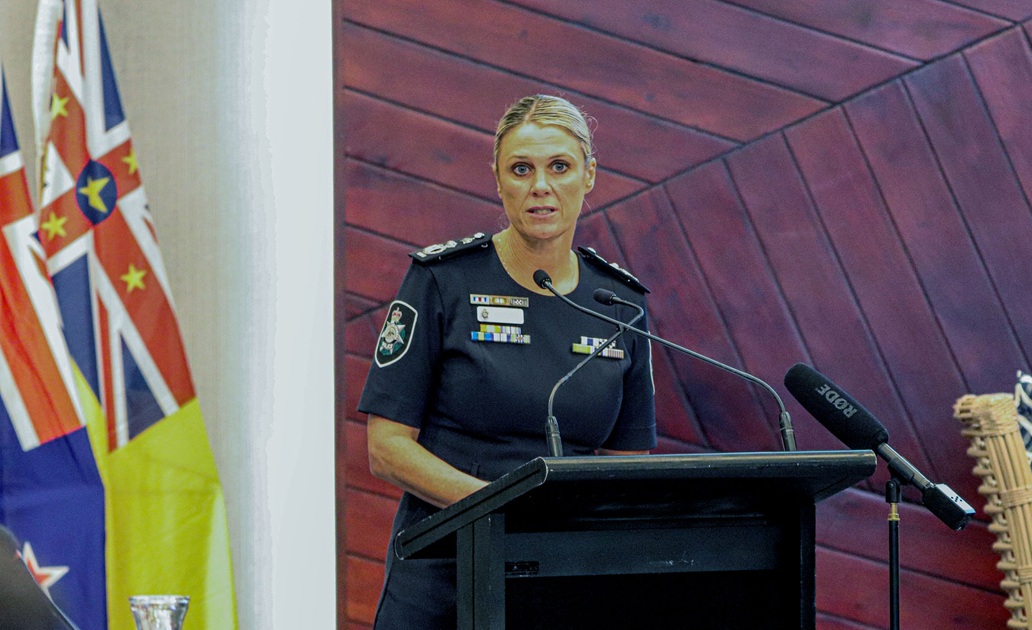
Speaking at the inaugural Pacific Transnational Crime Summit in Nadi, Tony Burke, the Australian Minister for Home Affairs, warned that Pacific countries could no longer tackle transnational crime in isolation.
We will agree with that statement. It is difficult to comprehend the notion of our island countries working in isolation because this is much bigger than what we can see right now.
Mr Burke said the decisions reached at the summit would be taken to the Pacific Islands Forum, stressing that if organised crime operates across borders, then the response must be equally transnational.
The summit brought together regional ministers, police commissioners and security officials amid increasing concerns over drug trafficking, money laundering, cybercrime and illegal maritime activity across Pacific borders.
Discussions, Mr Burke said, centred on strengthening regional law enforcement through better maritime surveillance, improved cyber coordination, intelligence sharing and the harmonisation of laws among Pacific nations. He noted that cooperation must extend beyond tracking criminal movements to include monitoring suspicious financial transactions and money laundering networks.
We have heard security experts warn that the Pacific’s vast ocean boundaries and limited policing resources make the region especially vulnerable to international syndicates seeking routes for drugs, illicit funds and human trafficking.
Mr Burke described the summit as a significant shift, elevating the issue from operational police meetings to direct ministerial engagement.
For years, police commissioners and chiefs have worked together and sought stronger political support to complement their operational efforts, he said.
Fiji’s Minister for Policing, Ioane Naivalurua, said the summit had already produced a mandate for action.
The momentum is now in place, he said, and the region has been given its marching orders.
And that is a good thing.
A couple of things stand out in the face of all of this. The emphasis on a united regional front highlights the scale and seriousness of the challenge before us.
It clearly shows we have a problem in our backyard that must be dealt with urgently.
We obviously have our own challenges here in Fiji. However, we must also accept that we are part of a region increasingly being used as a launch pad to infiltrate the lucrative Australian market.
That means working closely with our neighbouring countries. It means understanding the threats each nation faces and committing ourselves to a coordinated response. This battle is far too large for any one country to fight alone.
In the meantime, on the home front, we cannot afford to ease up in the war against drugs. Every campaign, every seizure, every arrest and every awareness program forms part of the wider regional struggle.
This is about protecting our people. It is about defending our way of life. And it is about ensuring that the Pacific remains a region defined by the collective resolve of nations determined to stand together and fight back.

