FORMER Finance Minister and Deputy Prime Minister Professor Biman Prasad believes rising global fuel costs pose wider economic risks for Fiji, extending well beyond concerns over supply.
He makes sense.
The long-term risks, he suggests, are not just about the possibility of running out of fuel. They stretch into broader economic territory, from imported inflation and pressure on foreign reserves to escalating shipping and freight costs.
These, in turn, could weaken business confidence and erode household purchasing power.
He warns that key sectors, from tourism, transport, agriculture, fishing, construction, and electricity, all feel the ripple effects when fuel prices rise.
It is a familiar pattern. Even when supply is stable, increases in fuel costs quickly filter through to domestic prices, tightening the strain on Fijians.
In raising these concerns, he also suggests a path forward, focusing on fuel security and reducing reliance on imports over time.
That should be the way forward.
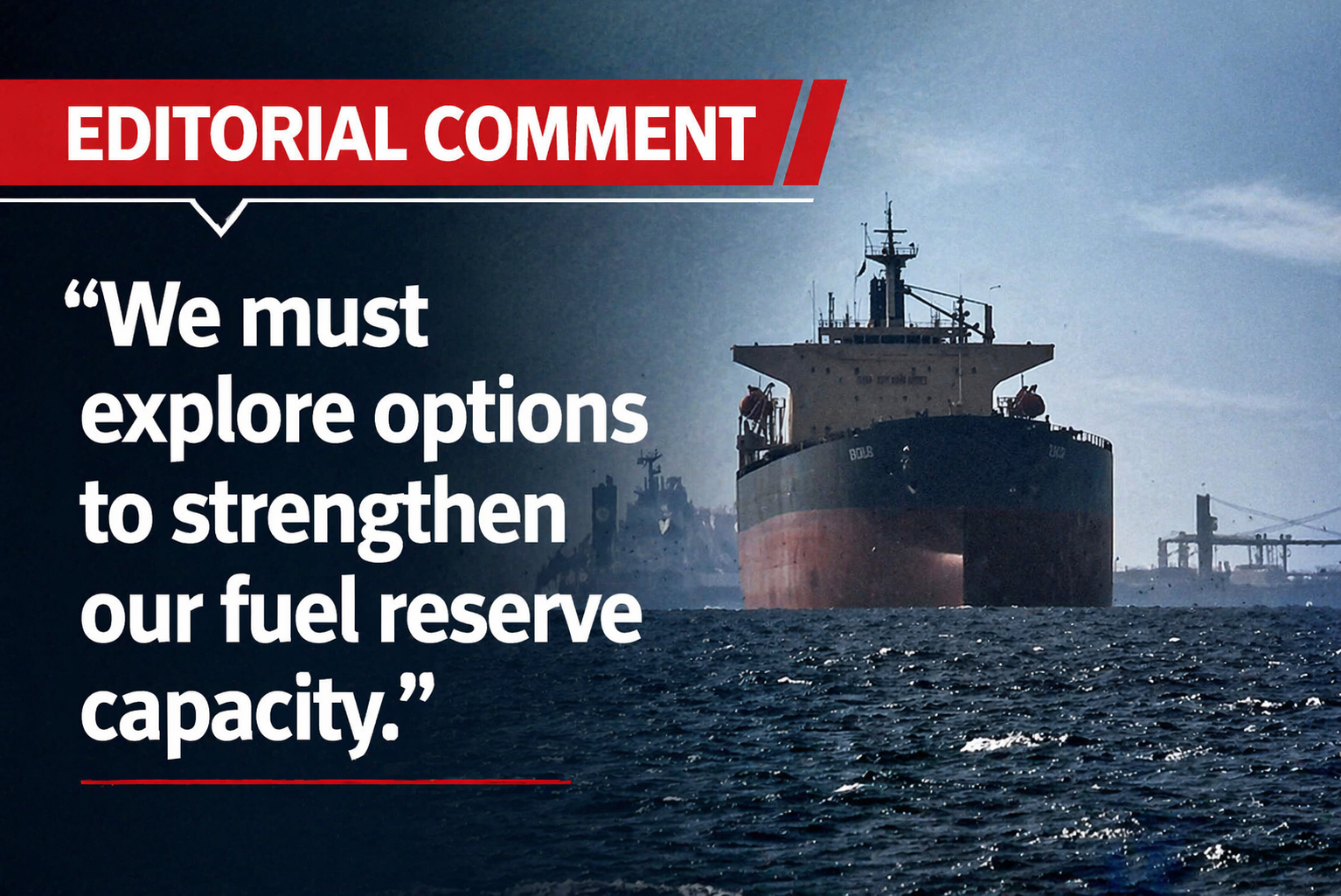
We must explore options to strengthen our fuel reserve capacity. There is also merit in diversifying procurement strategies and supply routes to build greater resilience against external shocks.
But perhaps the most critical point is the need to accelerate the transition to renewable energy sources.
He argues that stronger investment is needed in public transport infrastructure, alongside improvements in maritime logistics, so the economy becomes less fuel-intensive overall.
Using less fuel to generate the same level of output must become a national priority.
At the same time, he acknowledges that Government cannot fully shield citizens from rising global costs. He remains optimistic though, noting that Fiji’s economic fundamentals are sound and, with the right mix of policies, we can navigate through the current challenges. Now that is encouraging.
It is also reassuring that Singapore does not intend to impose restrictions on fuel exports to Fiji, given its role as one of our suppliers. This assurance, delivered by Singapore’s Foreign Affairs Minister during high-level discussions with his Fijian counterpart, offers a measure of stability at a critical time.
Singapore’s commitment to keeping trade routes open and honouring contractual obligations reinforces confidence in the reliability of global supply chains. The shared vision, as expressed, moves beyond short-term crisis management towards building long-term energy resilience for Pacific nations like Fiji.
According to Government, a key outcome of the meeting was an agreement to collaborate on strengthening long-term fuel security.
However, global uncertainty remains. Ongoing tensions in the Middle East, involving major powers, continue to cast a shadow over energy markets and supply stability. We have been warned.
Our challenge now is to anticipate disruptions, plan strategically, and ease the burden where possible. This requires sound policy decisions, public awareness and collective responsibility.
So, let’s remain proactive. Let’s invest wisely, and let’s stay committed to long-term solutions.