It is encouraging to know that roads along coastal communities in the Western and Central divisions will be upgraded through $A3million ($F4.7million) in funding from the Australian Government. We welcome that.
In fact, we put out our hands and embrace it. This is the way to go. We should be grateful that this is going to happen.
We need such infrastructure development.
We learn that infrastructure upgrades will also be provided for Fiji, Papua New Guinea, Kiribati and Tuvalu.
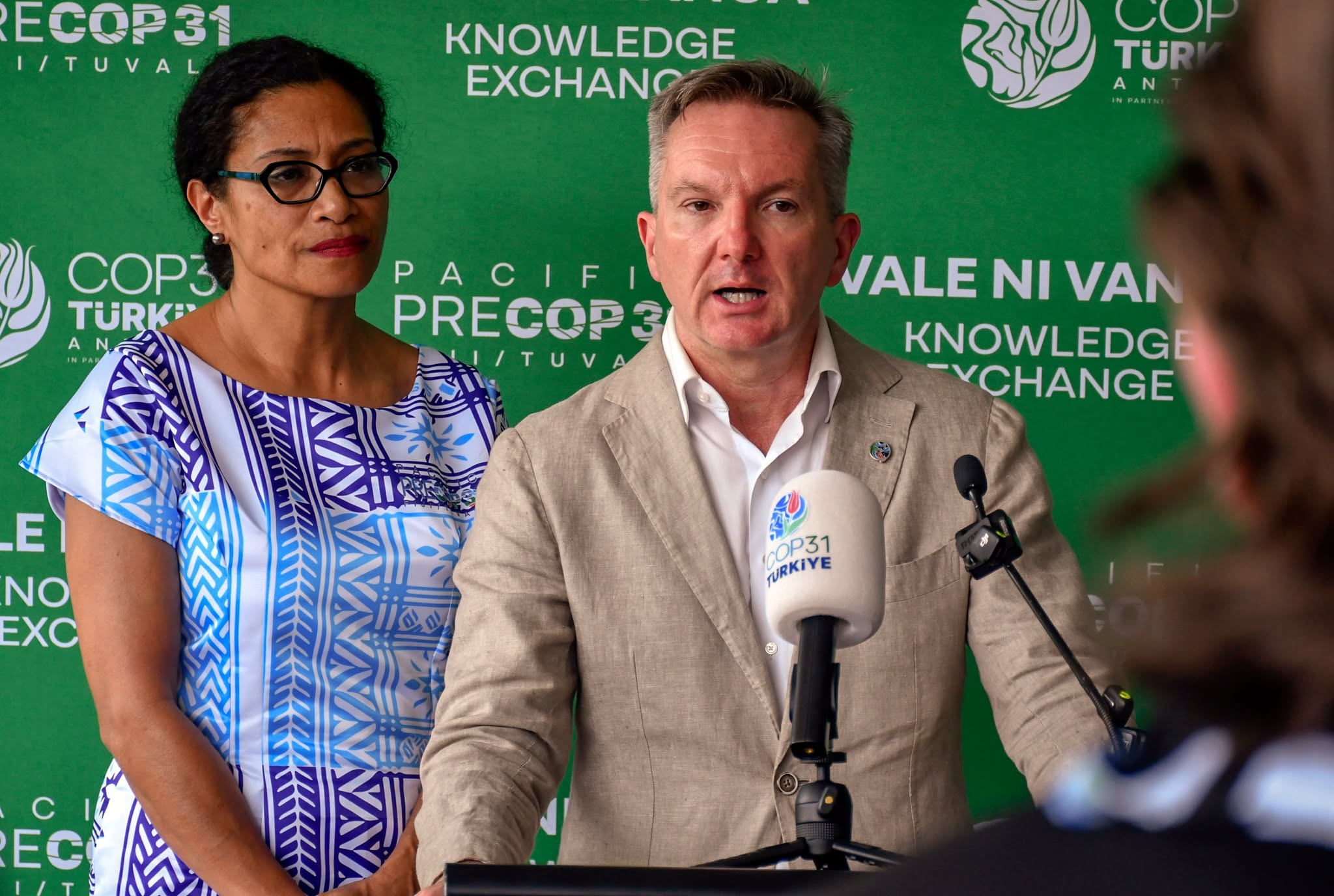
The funding was announced by Australia’s Climate Change Minister Chris Bowen at a Pre-COP31 Summit press conference in Nadi yesterday.
Mr Bowen said Australia was pleased to provide the funding through the Climate Infrastructure for Resilient Coastlines and Riverbanks project, with four projects planned to help Pacific countries strengthen their resilience to climate change.
He said the focus was particularly on the impact of coastal erosion, rising sea levels and increasingly frequent natural disasters.
Infrastructure upgrades, he said, were taking up an increasing proportion of Pacific Island countries’ GDP, both through the cost of disaster recovery and the need to invest in resilience.
Spending on resilience now can help reduce the enormous costs associated with disasters in the future.
Welcoming the funding, Fiji’s Environment and Climate Change Minister Lynda Tabuya said roads along Fiji’s coastal communities needed, in some cases, to be relocated to higher ground.
Now that is well and good, and should be encouraged, we say.
Ms Tabuya pointed to roads that had already been affected by natural disasters and highlighted the reality of rising sea levels across the Pacific.
The threat, she said, was real and could no longer be ignored.
For what it is worth, we say, well and good. Work on our roads is important for us as a nation. They connect our people to the economic opportunities that matter.
They open up development and encourage growth.
So now, while we are at it, let’s go one step further and consider the little connected issues.
Let’s get those road markings in place and cover the potholes that litter our highways on both Vanua Levu and Viti Levu.
Try driving to Savusavu from Labasa and you will find plenty of potholes along the 85km route. It can be quite dangerous driving along roads that are not properly marked.
Try doing that at night along the Nabalebale mountain road. When mist hugs the road, clear white lines become essential, and potholes must be covered.
And try driving through to Nabouwalu at night. The potholes can be dangerous and damage vehicles. The same concerns are evident along the road from Natovi through to Nausori.
Drivers face these challenges every day. It gets worse at night when vehicles approach with extra-bright lights, while narrow roads such as those leading up to the Tabia mountain outside Labasa can be extremely challenging.
So, let’s make this a complete project, please.
Let’s build roads that are not only resilient to climate change, but safer for the people who use them every day. Let’s do it!