
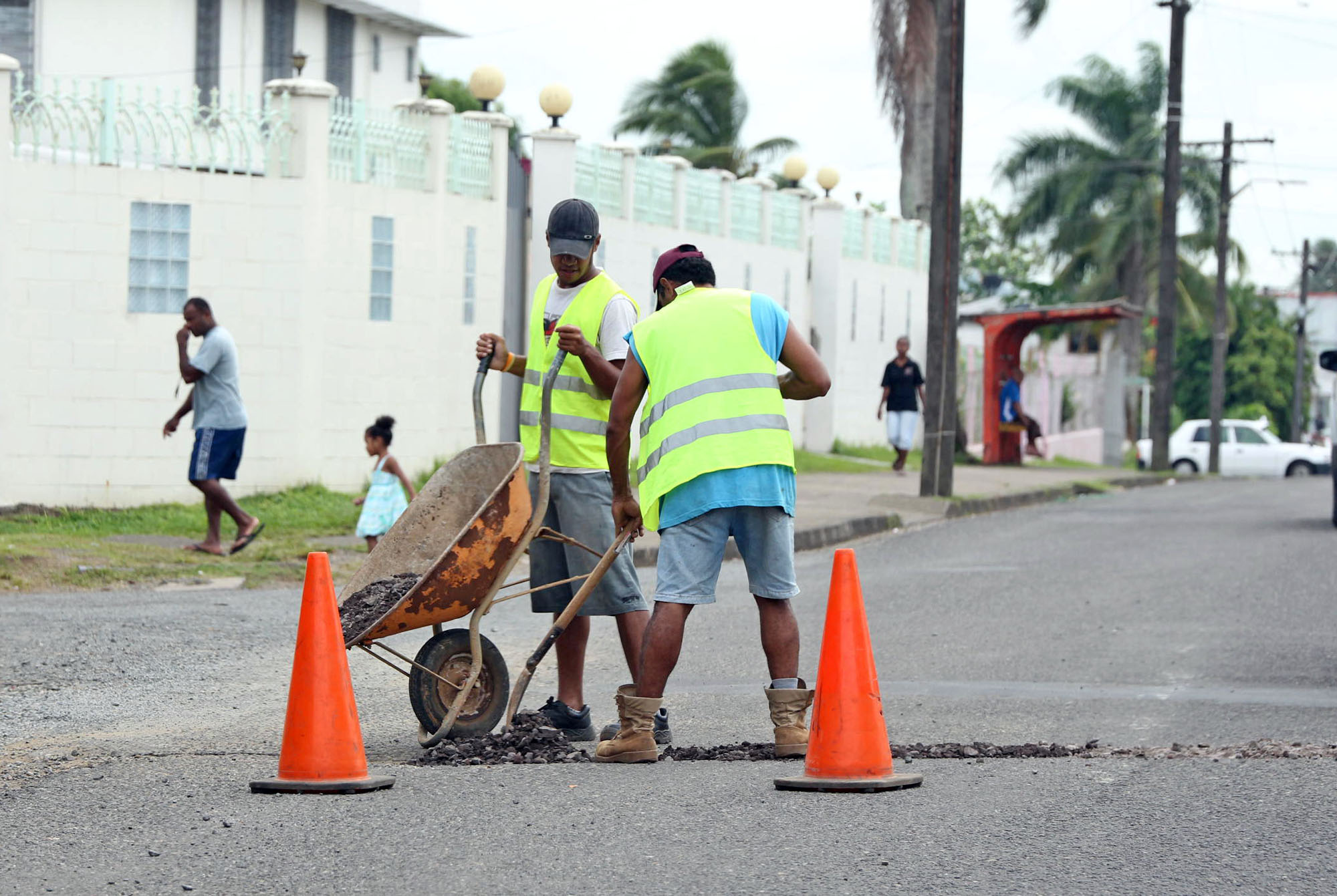
Former Ministry of Works deputy permanent secretary operations Vula Vakacegu made some interesting observations the other day. Continuous repairs of roads that have already been rehabilitated, he said, reflected poor or unsatisfactory workmanship.
The fact that contractors were continuously reworking roads, he insisted, meant the initial repair work had not been done properly.
“It indicates the task carried out was unsatisfactory,” Mr Vakacegu said.
“If the contractors were paid for this substandard work, it is a loss to Government.”
The comments were powerful. They weren’t meant to pacify anyone either. Multiple factors, he pointed out, affected the life span of roads at the construction or maintenance stage and these needed careful consideration.
A lot of factors, he said, needed to be considered when maintaining roads, like ensuring drainage is OK, materials are of reliable quality and there was good workmanship practice.
He raised the issue of quality materials and quality of workmanship in both maintenance and construction of roads.
Quality materials, he said, included the quality of bitumen and road aggregates that should meet the required specifications. In response to his comments, Minister for Infrastructure Jone Usamate said he expected the Fiji Roads Authority board and management would deal with road issues.
Mr Vakacegu’s comments came in the wake of road upgrading works around the Capital City.
After weeks, months and in some cases, years of travelling on roads brimming with potholes and in a shocking state of disrepair, commuters and vehicle owners are now thankful that work is finally underway to bring back some semblance of order.
It is about time too. On July 23, 2013, we wondered whether upgrading works were focused ‘long term’ and whether they were worth the funds directed to them at the time.
On September 12, 2016, as we looked forward to better roads that year, better rides and better access for thousands of commuters, we wondered whether we had the mechanisms in place to ensure our roads were built to last us years before maintenance work was required?
Road construction work that year, we realised, carried high costs. We accepted that we had some very old and heavily travelled roads. In fact people have very high expectations of road conditions.
The powers that be must maintain good road conditions and shorten the turnaround time for repair work every time our roads get bad.
The challenge remains the same, from 2013, to 2016, and now to 2021. Measures must be in place to positively address our ‘bad road’ issues.
We have been travelling on some neglected roads for some time.
They have taken a swipe at vehicles, commuters, and the pockets of many people. But it is encouraging to note the changes taking place now.

