
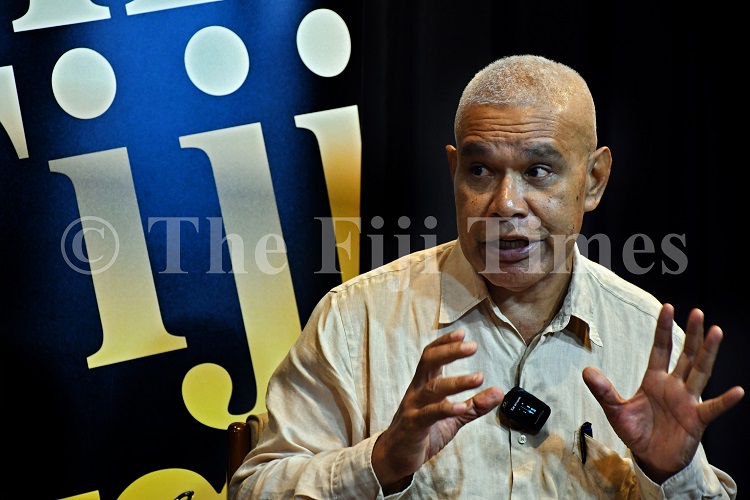
Coup convict Josefa Nata made a telling statement when he appeared before the Truth and Reconciliation Commission (TRC).
His testimony had all the ingredients of a gripping novel or action film.
He spoke about emotionally charged groups, to some extent, probably driven by nationalist sentiments, a touch of determination in some quarters to change the government of the day, alongside specially trained members of the Republic of Fiji Military Forces’ elite Counter Revolutionary Warfare Unit (CRW), also known as the First Meridian Squadron.
He claimed the CRW prevented even greater bloodshed, alleging that planned assassinations were stopped and that other horrific acts, including what he described as “the last cannibal feast”, never came to pass.
Sceptics may suggest the claims sound more suited to a Hollywood script than a chapter in Fiji’s history.
The evidence, however, presented before the TRC demands serious reflection.
Seriously, this is a shocking turnaround from the vibes that anchored the events of 2000, at least in some people’s minds, of a struggle along ethnic lines.
It challenges the narrative that has long surrounded the events of 2000, particularly the perception that the coup was a noble struggle for indigenous rights and recognition.
Instead, Nata talks about merrymaking, revelry, debauchery “and all sorts of chicanery, unbefitting the serious nature of a supposed struggle for improving the lot of the iTaukei”.
It was certainly at odds with their stated objective.
He painted a disturbing picture of the hostage crisis in Parliament, alleging there were discussions about extreme acts and widespread misconduct.
He also tried to explain the role of the CRW, portraying its members as exercising restraint in an increasingly volatile situation, while raising questions about people he believed were directing events from behind the scenes.
Perhaps the most significant part of his testimony was his rejection of the notion that those involved should be remembered as heroes.
He wanted to dismantle the myths surrounding the 2000 coup, arguing that those who took part were not champions of a cause but people who had been mistaken.
He also maintained that the concept of matanitu vanua, which later evolved into a political movement, rested on narrow and ultimately unworkable ideas.
His evidence forms part of the TRC’s effort to examine the causes and consequences of Fiji’s political upheavals and promote national reconciliation.
As the commission continues its work, we must be prepared to confront uncomfortable truths. We say reconciliation cannot come at the expense of accountability or historical honesty.
We need strong laws, resilient democratic institutions and a national mind-set that rejects coups as an acceptable path to political change.
Our future generations deserve a country where governments rise and fall through the ballot box, not at gunpoint.
We cannot afford another coup!

