
AT LEAST 19 per cent of Fijian youth are not in education, employment or training.
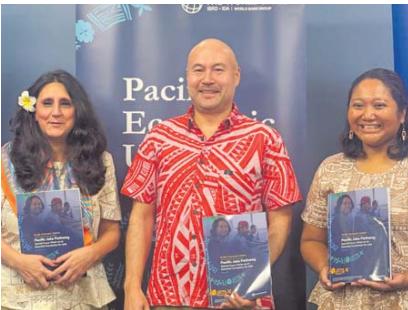
This was revealed by Jakarta-based World Bank Economist Ruth Nikijuluw while presenting findings from the bank’s latest Pacific Economic Update.
Ms Nikijuluw said the issue was significant because Pacific countries had a rare demographic advantage, with young people expected to make up a major share of the working-age population over the next decade.
She said unlike many countries in East Asia and the Pacific that were ageing, Pacific Island countries still had a young population that could support future growth if properly absorbed into the labour market.
“Pacific will really have this potential because the youth will make up roughly a third of the working-age population,” she said.
“So this demographic shift was projected to become more important by 2035, and the government needed to prepare now.
“What we want to emphasize also the wave is coming.”
She said the challenge for governments was to ensure economic policies did not only focus on growth, but also on whether young people could access jobs created by that growth.
World Bank lead economist for the Pacific and Papua New Guinea Ralph van Doorn said failing to connect young people to jobs would be a missed opportunity.
He said employment was important not only for income generation, but also for reducing vulnerability and social risks.
“Jobs themselves, they bring a certain dignity to people,” Mr van Doorn said.
Fijians urged to boost savings
FIJIANS working overseas need to channel more of their earnings into savings, businesses and other productive investments, rather than only using remittances for household consumption.
World Bank lead economist for the Pacific and Papua New Guinea Ralph van Doorn said this was one way migration could bring greater long-term benefits to the local economy.
He said the World Bank had been tracking the impact of migration in source countries and destination countries.
“It supports real pressures on families, and the financial pressures are being relieved.
“But there’s a lot more that can be done to channel migration well and make sure it creates a lot more opportunities than it does so now.
Mr van Doorn said this could be looked at in three areas, recruitment, remittances and reintegration.
On recruitment, he said governments and the World Bank were looking at how to ensure people migrating for work were properly prepared and protected in host countries.
He said there were also questions around whether workers taking up low-skilled jobs in sectors such as agriculture, horticulture and meat-packing were being properly matched to those jobs.
“On remittances, more attention was needed on how money sent home by overseas workers was being channelled into the domestic economy. “Some remittances went into consumption,
“While in Fiji and the Pacific, money was also being directed towards family education and churches, which also provided social services.”
However, he said there was only anecdotal evidence that remittances were being channelled into the financial sector and productive investment.
“We’d like to see more of remittances being channelled into the financial sector and then recycled into productive investments.”
Mr van Doorn said reintegration was also important to avoid brain drain.
He said returning workers should be supported so that the skills, experience and money gained overseas could be used productively at home.
“This could include looking at how certificates obtained in host countries could be recognised locally, and how social services or businesses could help returned migrants use their skills and earnings.”

