FOUR nights in Kadavu was enough to remind me that there is always more to discover about Fiji, particularly when it comes to our culture and traditions.
I was there recently accompanying fellow journalists on the Minister for Health and Medical Services’ official tour of the island, during which several community projects were opened.
It was an opportunity to see some of the development taking place in the maritime communities, but, being a cultural enthusiast, I was equally interested in the stories that existed beyond the official program.
Whenever I visit a village, I find myself drawn to the stories of its people, their ancestry, customs and traditions.
Some of the most fascinating aspects of our heritage are not necessarily found in books or museums.
They are preserved in conversations with elders, in traditional ceremonies and in stories passed down through generations.
One such discovery was the traditional practice of turtle calling at Namuana Village.
It is an extraordinary tradition, one that I had read about before but found particularly intriguing when I learned more about its cultural and ancestral significance.
Known locally as vonu, turtles occupy an important place in Fijian culture.
But in Namuana, on the eastern side of Kadavu, and Nacamaki Village on Koro Island, the relationship between people and these ancient marine creatures takes on an entirely different meaning.
Here, traditional chants are performed with the belief that turtles can be called from the depths of the ocean.
For the communities that maintain the practice, it is much more than an unusual attraction. It is a connection to their ancestors, their identity and a spiritual relationship with the sea.
The women of Namuana and an extraordinary legend
The story behind Namuana’s turtle-calling tradition begins with two women, Tinaicaboga and Raudalice.
According to the village’s oral tradition, Tinaicaboga was the wife of the chief of Namuana, while Raudalice was her daughter.
One day, the two women went fishing on the nearby reefs. During their outing, they were captured by fishermen from Nabukelevu, a neighbouring district beneath Mount Washington.
The women were bound and placed in the fishermen’s canoe.
As the canoe travelled across the sea, however, a violent storm developed. The fishermen feared for their lives as the waters became increasingly rough and the canoe threatened to overturn.
It was then, according to the legend, that the two women transformed into turtles.
The fishermen threw them into the sea, and the storm subsided.
Their disappearance became the foundation of a belief that Tinaicaboga and Raudalice continue to inhabit the waters around Namuana as turtles.
What makes the story particularly fascinating is that the women are not simply remembered through an old village legend. Their names remain central to the traditional calling performed by the women of Namuana.
The ceremony involves women gathering on rocks overlooking the ocean and singing a traditional chant calling upon the two ancestral figures to rise to the surface.
An English translation of the chant, published in the Marine Turtle Newsletter in 1992, speaks of the women of Namuana dressed in mourning, carrying sacred clubs and bearing distinctive tattoos.
It then calls upon Raudalice and Tinaicaboga to emerge from the water so that they may be seen.
I find something particularly moving about this tradition. There is an intimacy in the idea that a community continues to address two figures from its ancestral past through song, believing that their presence remains somewhere in the waters surrounding their home.
It is not simply about calling an animal from the sea. It is about remembering two women whose story has become part of the identity of an entire village.
Tui Naikasi and the calling at Koro
Interestingly, Namuana is not the only place in Fiji associated with this unusual practice.
On Koro Island, in the Lomaiviti Group, Nacamaki Village maintains its own turtle-calling tradition, although its ancestral origins and customary practices are different.
At the centre of the Nacamaki tradition is an ancestral figure known as Tui Naikasi.
In an interview with The Fiji Times in 2016, villager Savenaca Vueti explained that Tui Naikasi was believed to have travelled from Davetalevu on Moturiki to Lovoni and Tokou on Ovalau, then Gau, before eventually settling at Nacamaki.
According to the oral history, Tui Naikasi possessed supernatural abilities and was associated with the rise and military strength of the warlord Vueti.
One of his extraordinary abilities was believed to be his power to transform into a turtle when entering the sea.
His descendants maintain that this ancestral connection was passed down through their lineage, giving them the ability to call turtles to the surface.
Unlike Namuana, where women lead the calling, Nacamaki’s tradition is associated with men belonging to a particular mataqali, under the guidance of a senior customary figure known as the bete.
The calling takes place at a location known as Delai Tui Naikasi, a high cliff overlooking the ocean near the village.
The bete and members of the relevant mataqali perform a traditional chant invoking their ancestral figure.
In his 1995 publication, Fisheries Development in Fiji, University of the South Pacific academic Joeli Veitayaki recorded an account of between eight and 10 turtles reportedly rising from the depths and lying flat on the water during the ceremony.
For the people of Nacamaki, the appearance of the turtles is understood through their ancestral relationship with Tui Naikasi.
It is fascinating that two communities, separated by considerable stretches of ocean, have developed such distinct traditions around the same marine creature.
More than just a turtle
The traditions of Namuana and Nacamaki also offer an interesting insight into the wider cultural relationship between iTaukei communities and the natural environment.
In traditional Fijian society, the ocean was never simply a source of food or a means of transportation. It was also a place governed by customary authority, ancestral beliefs and spiritual connections.
The relationship between people and the natural environment is reflected in the many traditional stories surrounding particular animals, places and natural elements.
Turtles, in particular, have long held cultural significance.
In some communities, they are regarded as totemic beings, with restrictions on their consumption because of the ancestral relationship between the animal and the community.
A 2022 scientific study published in the journal Ambio, examining the cultural values and conservation status of sea turtles in Fiji, documents these relationships.
It records how turtles were historically presented as important ceremonial tributes during chiefly births, marriages and funerals. Their capture was also subject to customary authority, with particular fishing clans traditionally responsible for harvesting them when permission was granted.
This demonstrates that the relationship between Fijians and turtles was never simply one of dependence on a marine resource. It was also shaped by respect, restrictions and inherited responsibilities.
Between belief and mystery
Of course, for anyone hearing about turtle calling for the first time, the obvious question is whether the turtles really respond to the chants.
There have been published accounts of turtles surfacing during the ceremonies, although science has not established that the chants directly cause the animals to appear.
In his 1993 report, Sea Turtles of Fiji, published through the South Pacific Regional Environment Programme, researcher Michael Guinea acknowledged the tradition but suggested a possible natural explanation.
He proposed that the calling locations could be natural feeding grounds where turtles were already accustomed to gathering.
If the animals were not disturbed or hunted, their appearance during the ceremony might therefore be explained by their existing presence in the surrounding waters.
It is an interesting scientific perspective, although I would argue that reducing the tradition to whether the turtles respond to a chant misses a much larger part of the story.
For the communities involved, the significance of turtle calling is deeply rooted in their ancestral history and customary beliefs.
At Nacamaki, for instance, visitors are expected to observe certain restrictions. Photography and pointing towards the turtles are traditionally discouraged, with the belief that doing so can cause them to disappear beneath the water.
Such restrictions are a reminder that visitors are entering a customary space rather than attending an ordinary tourist performance.
Keeping the stories aliveThe tradition also found its way to Suva earlier this week, offering a reminder that such cultural knowledge continues to be passed on to younger generations.
Students and teachers of Vunisea Secondary School in Kadavu performed the meke ni kaci vonu, or traditional turtle-calling chant, during their cultural presentation at the 2026 Viti Showcase and Skills Fair at the Suva Civic Centre.
In preparation for the performance, the school had sought prior permission from the people of Namuana Village, following the appropriate traditional protocols, to use the lyrics of the sacred chant.
It was a meaningful gesture that recognised the cultural custodianship of the people of Namuana and the importance of seeking their blessing before sharing an ancestral tradition beyond the village.
Seeing young people carry such knowledge onto a public platform is also a reminder that these traditions need not remain confined to the communities where they originated.
With the guidance and approval of their custodians, they can continue to be shared, appreciated and preserved for generations to come.
What I find most fascinating about turtle calling is that it brings together two different ancestral narratives through one shared creature.
As I discovered during my time in Kadavu, there is so much more to our islands than the beautiful landscapes and turquoise waters that often feature in travel brochures.
Some of our greatest treasures are the stories held by our villages and the elders who continue to pass them down.
And perhaps that is the real wonder of turtle calling.
In Namuana and Nacamaki, the ocean remains a living part of the people’s ancestral story, with generations keeping that connection alive through chants, beliefs and traditions.
History being the subject it is, a group’s version of events may not be the same as that held by another group. When publishing one account, it is not our intention to cause division or to disrespect other oral traditions. Those with a different version can contact us so we can publish your account of history too — Editor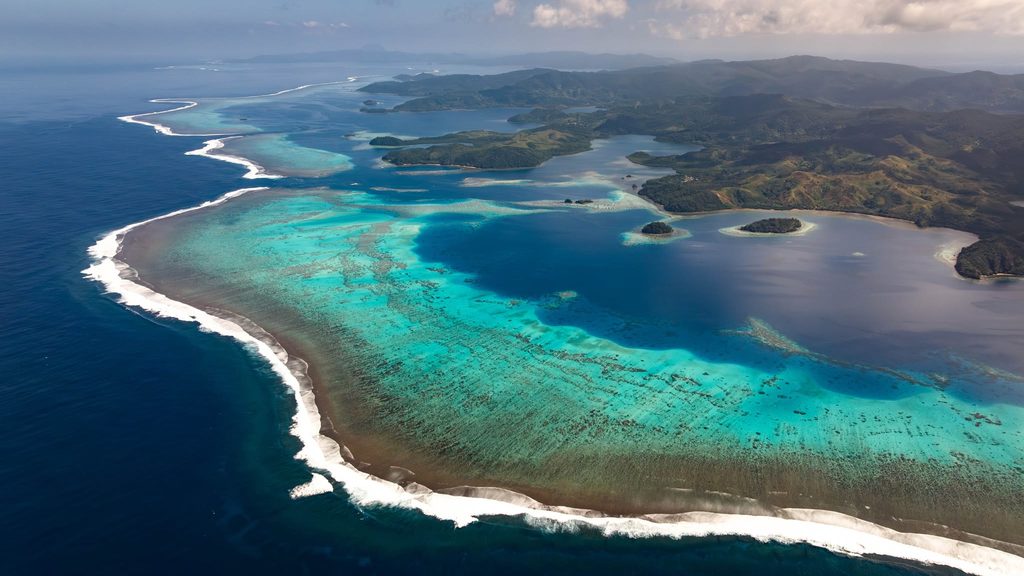
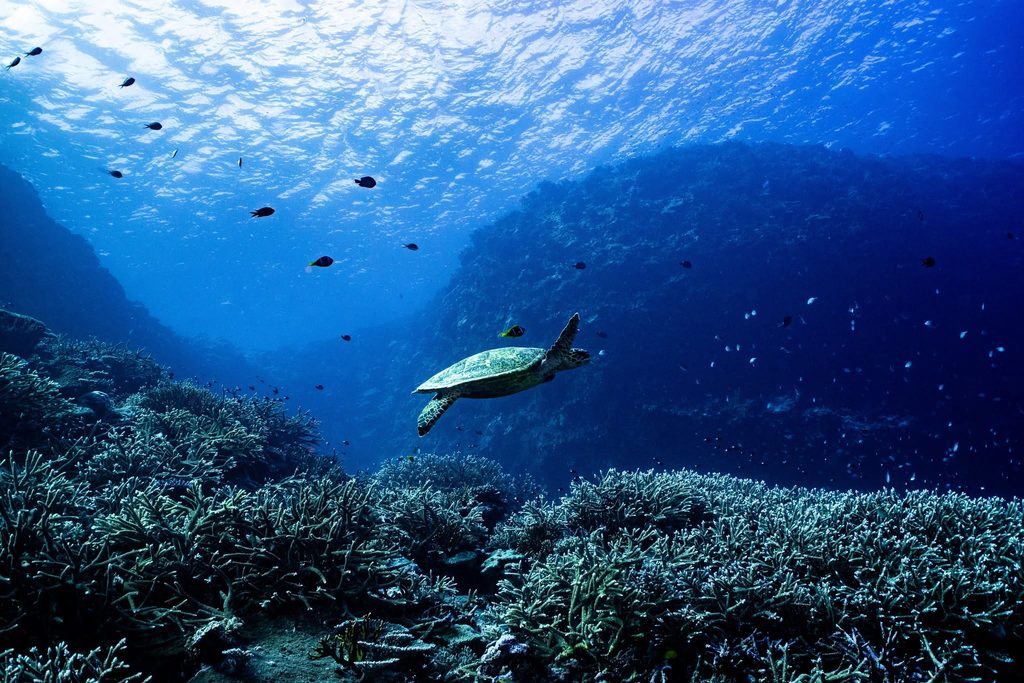
Aerial view of the Astrolabe Reef facing southwest. Picture: NAT GEO PRISTINE SEAS
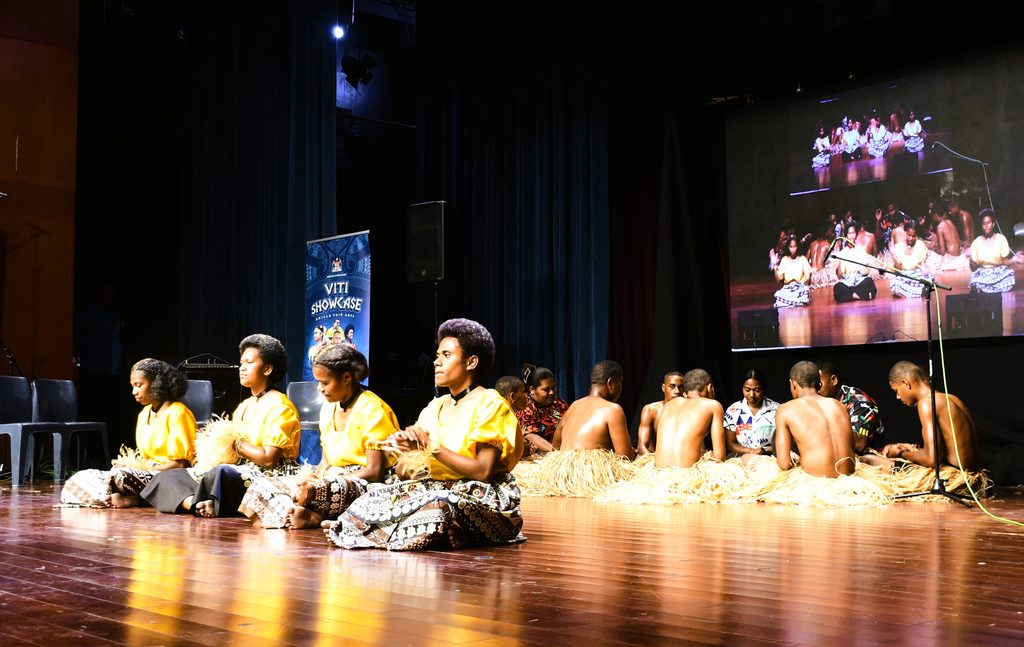
Students and teachers of Vunisea Secondary School in Kadavu performed the “meke ni kaci vonu” in Suva. Picture: ALIFERETI SAKIASI
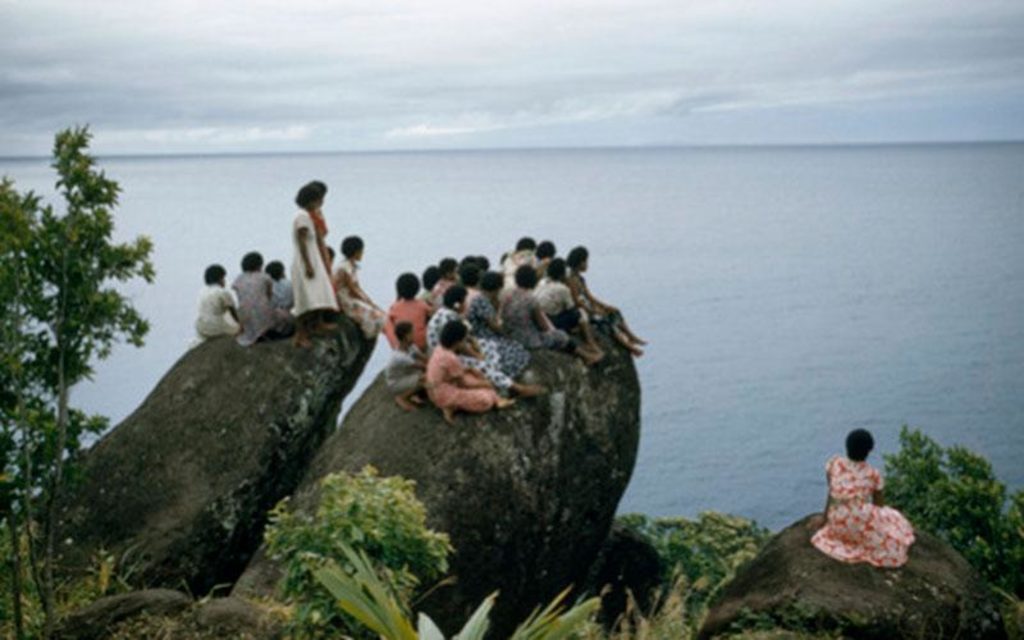
Women of Namuana atop the site where the turtle calling takes place.
Picture: PACFICI TRAVEL HOUSE
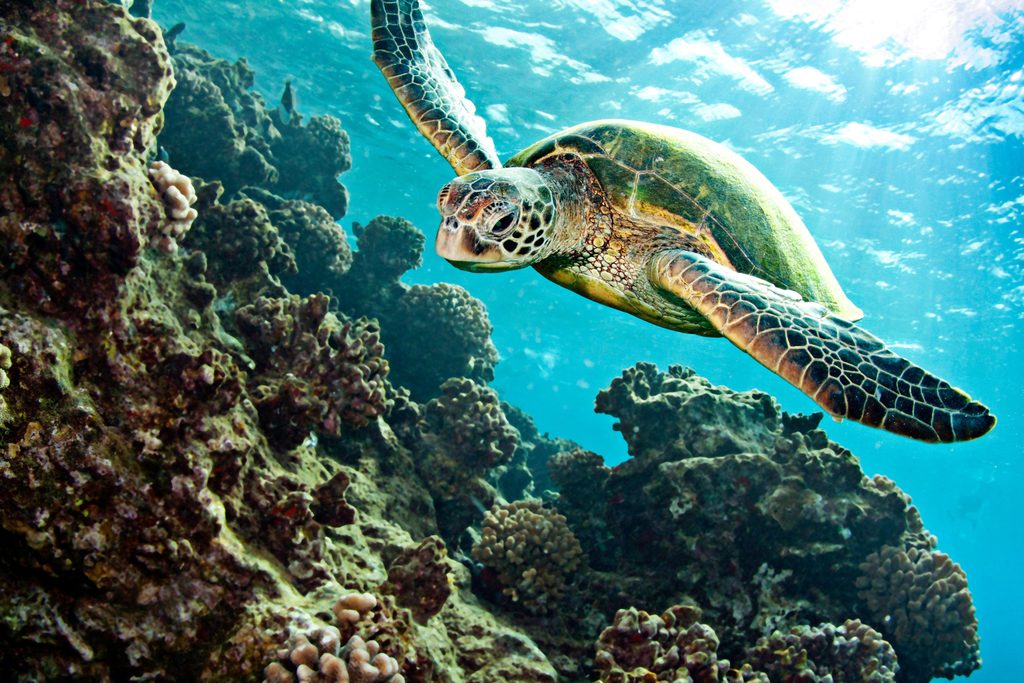
The stories of Tinaicaboga and Raudalice continue to shape the cultural identity of Namuana, reflecting the enduring relationship between the people and the ocean. Picture: WWF PACIFIC