
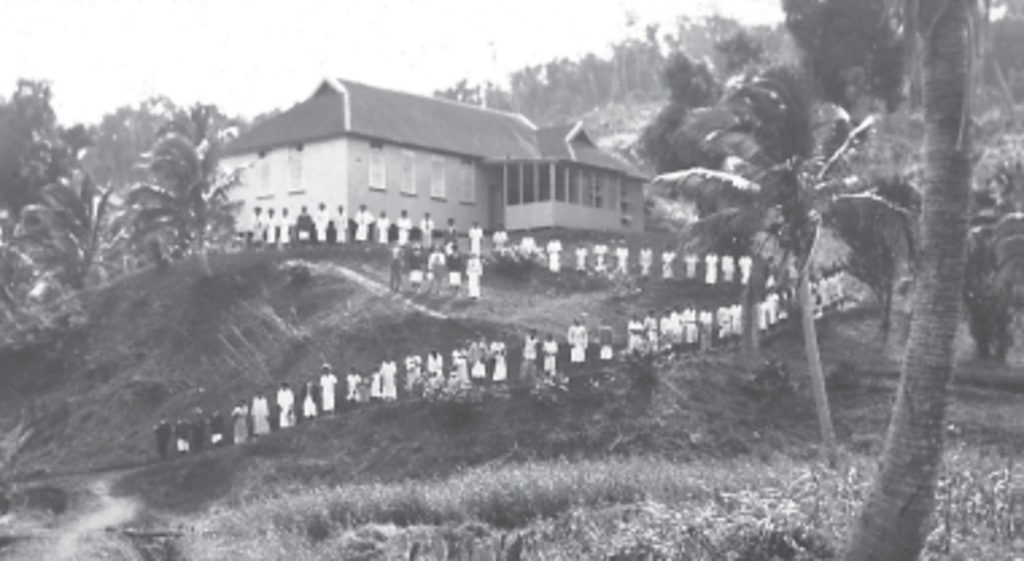
THE story of Fulton Adventist University did not begin with a classroom. It began with the sea.
On August 3, 1891, the ship Pitcairn arrived in Fiji on its maiden voyage across the Pacific. Among those aboard were John I. Tay and his wife, the first Seventh-day Adventists to set foot on Fijian soil.
They came at a time when the Pacific was still a vast chain of islands separated by thousands of miles of ocean, yet connected by a growing conviction that the Christian message should reach every shore.
Tay and his wife remained in Fiji after the Pitcairn continued its journey. But their story would take a sorrowful turn.
Six months later, Tay fell ill and died. He was buried in Suva, far from the places he had known and among people whose land, language and way of life were still vastly strange.
The mission did not end at his grave. By July 1895, the Adventist work in Fiji had begun again. John and Fanny Cole arrived from Norfolk Island, followed by John and Susie Fulton from New Zealand and, later, Calvin and Myrtle Parker.
The early missionaries faced the familiar realities of life in early Fiji – distance, unfamiliar languages and cultures, travel between islands and villages, and the enormous task of establishing a church in a place where people were mostly pagan.
But among them was a man who saw that the future could not depend forever on missionaries arriving from overseas.
Fulton the educator
He was John Fulton was an educator at heart.
He believed that teaching indigenous workers was an essential part of mission work and one of the greatest contributions expatriate missionaries could make to the Church. The message, he understood, would have its deepest roots when Fijians themselves were trained to teach, preach and lead.
That conviction would eventually change the course of Adventist education in Fiji.
At first, the plan was to send Fijian workers to Avondale College in Australia. It seemed a sensible solution. The Church already had an established institution where students could receive training.
But between Fiji and Australia lay the expansive Pacific Ocean.
For Fijian students, travelling overseas was not a simple matter. There were the difficulties of leaving home, the cost and logistics of travel, and the English-language competency required by Australian authorities for student visas.
At this point, the Church was faced with a practical question. If Fijian workers could not easily be sent across the sea for training, why not establish the training here?
The answer came in November 1903 when the first Fijian Church Council decided to develop the Fiji Training Institute, the foreunner of today’s Fulton Adventist University.
A bold decision
The Adventist Church in Fiji was still small—about 150 members in only four churches. Yet those few believers were looking beyond their own numbers. They were thinking about the generations who would follow them.
Fulton College would eventually trace its roots to that momentous decision.
The Fiji Training Institute was commissioned in 1903 under the leadership of John Fulton, superintendent of the Fiji Mission. It was the beginning of an educational journey that would take the institution through several names, several locations and many seasons of change.
But the purpose remained -train people for service.
The first task was to find a suitable home.
Suvavou, where the Adventist Church had first established itself, was considered unsuitable for a training institute. So the leaders began searching, praying and looking for a place where a school could grow.
Their search led them across the sea to Ovalau.
At Buresala they found 276 acres of land, a property blessed with rich soil, water and timber. It was about 11 miles overland, or 16 miles by water, from Levuka, then the capital of Fiji.
More than a piece of land
Buresala offered space for a school, a farm, a printing operation and a growing mission community. In the thinking of those early leaders, education and practical work belonged together. Students could learn with their hands as well as their minds, while the land could help sustain the institution.
The Church also planned to move its headquarters from Suvavou to Buresala.
In 1905, Fulton’s house at Suvavou was dismantled.
Piece by piece, it was taken apart and transported by sea to the new site. There, it was put together again and converted into a duplex. One side became the home of John Fulton, superintendent of the mission. The other was occupied by Carr, principal of the new Fiji Training Institute.
Around them stood eight native houses.
One was used for the printing press. Another was for supplies. Six were provided for students. It was not a grand campus by modern standards.
But for those who gathered there, it represented something much bigger.
Later in 1905, the Fiji Training Institute opened as an industrial school with ten students.
The education beginning
The following year, work began on a larger and more permanent school building. As the building rose at Buresala, so too did the vision behind it. The institution was slowly becoming more than a place where students were taught.
It was becoming a place where a young Church could prepare its own people for the work ahead.
Buresala would remain an important part of the story, but as the Church continued to grow, it incurred new needs.
When the Church reorganised and established the Central Polynesian Field, the school became the Central Polynesian Training Institute from 1918 to 1921.
Then came another challenge.
The Adventist work was spreading through the Wainibuka Valley. More families were joining the Church, and there were growing numbers of children and young people. Many were too young to make the journey to Buresala.
In 1922, a school was established at Navuso.
The teacher-training component was moved from Buresala to Navuso, and the institution at Buresala was renamed Buresala Training School. The name remained from 1922 until 1939.
The change reflected something important about the mission in Fiji.
The Church was no longer simply trying to establish itself.
The church grows
And growth meant teachers were needed. By 1928, the shortage of trained Adventist teachers had become a serious concern. At the Samabula Indian School, on the outskirts of Suva, George Masters began a class for teachers and another for Bible workers.
The work was spreading beyond Buresala.
Then, in 1939, another teacher-training programme began at Vatuvonu. Now it was Buresala. Navuso. Samabula. Vatuvonu.
Each place carried a part of the educational burden of the Church.
But maintaining several training institutions was not easy.
There was anothe2r change taking place in Fiji itself.
In 1937, the government began regulating education. Churches operating schools, including the Seventh-day Adventist Church, now had to meet government requirements and respond to rising academic standards.
The Church had reached another crossroads.
Membership was increasing, especially on Viti Levu. More trained teachers were needed. Facilities at the existing schools required upgrading. And maintaining several training centres meant spreading limited staff, money and resources across too many places.
The need for consolidation
Church leaders began planning for a new institution that would bring the training work together on a stronger foundation. The new site would be within thirty miles of Suva, the capital, placing the institution closer to the growing population and the centre of national life.
It was another turning point. The journey had begun nearly half a century earlier with a small vessel crossing the Pacific.
It had passed through Suva, where John Tay was laid to rest. It had moved to Buresala, where ten students gathered in 1905. It had continued through Navuso, Samabula and Vatuvonu as the Church searched for ways to train the people who would carry its work.
Through all those changes, one idea remained constant. The Church needed to prepare its own people. That was John Fulton’s conviction.
And perhaps that is the deeper story behind the institution that would eventually bear his name.
Fulton College was not built in a single moment. It was shaped slowly—by missionaries who crossed the Pacific, by Fijians who responded to the call to serve, by teachers who opened classrooms, by students who left their villages to learn, and by church leaders who continued to build even when resources were few.
Its history is therefore more than a list of dates and changing names.
The school grew in the same Pacific environment that shaped the mission itself—the sea that connected islands, the rivers and valleys that brought communities together, the fertile land that sustained families, and the villages where the work of the Church took root.
From the early days at Buresala to the later vision of a consolidated institution near Suva, education became one of the ways the Adventist Church sought to serve Fiji.
The Fiji Training Institute had started with ten students.
But those ten represented something far greater than a number.
The journey from that small beginning at Buresala was far from over. In fact, it was only beginning.
This story was written using information sourced from the website: encyclopedia.adventist.org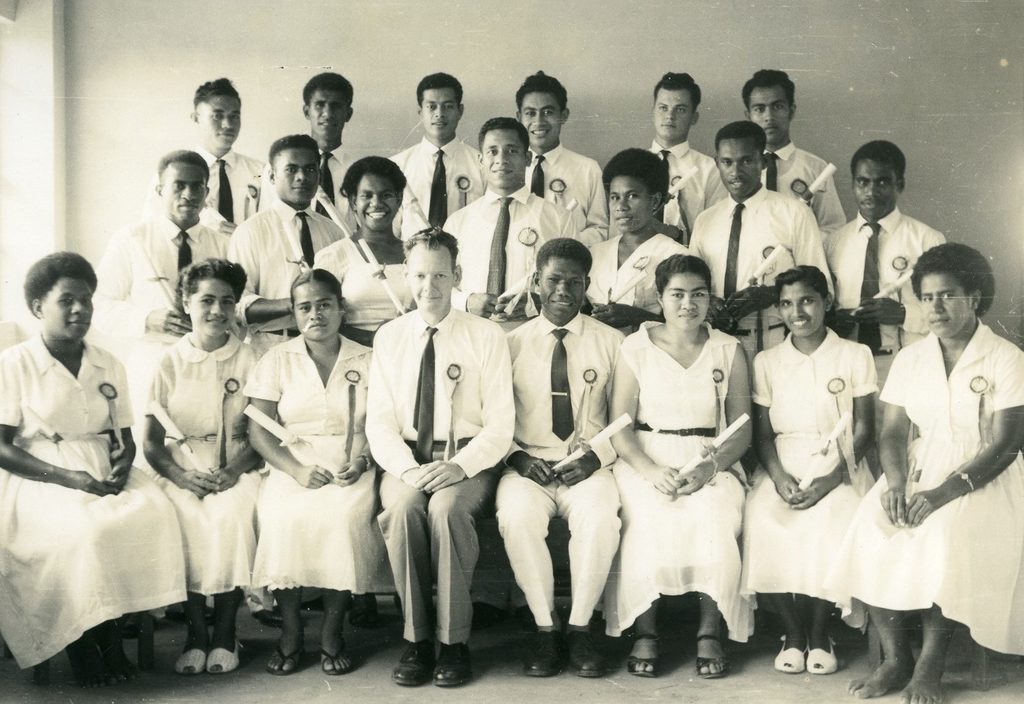
Fulton College graduation class, 1960. Faculty advisor, Noel Mills, seated in the front row. PIcture:encyclopedia.adventist.org/ Courtesy of Adventist Heritage Centre, Australia.
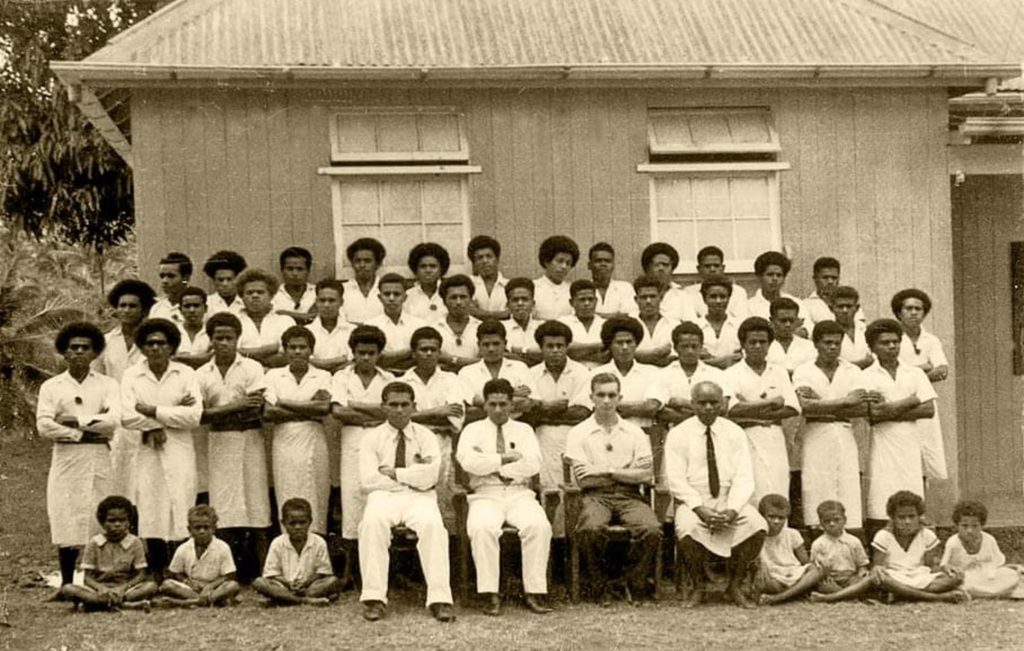
Young men at Buresala Training School, c. 1939.
Picture: encyclopedia.adventist.org/Courtesy of Ray Boehm
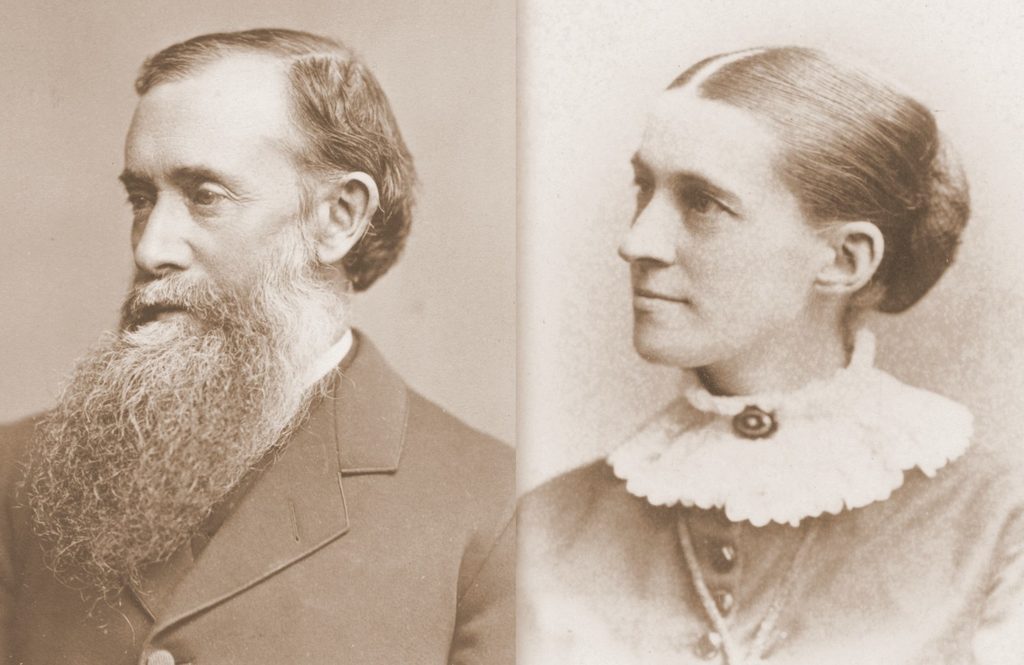
John I. Tay and Hannah Tay. Picture: encyclopedia.adventist.org/Courtesy of the General Conference of Seventh-day Adventists Archives.
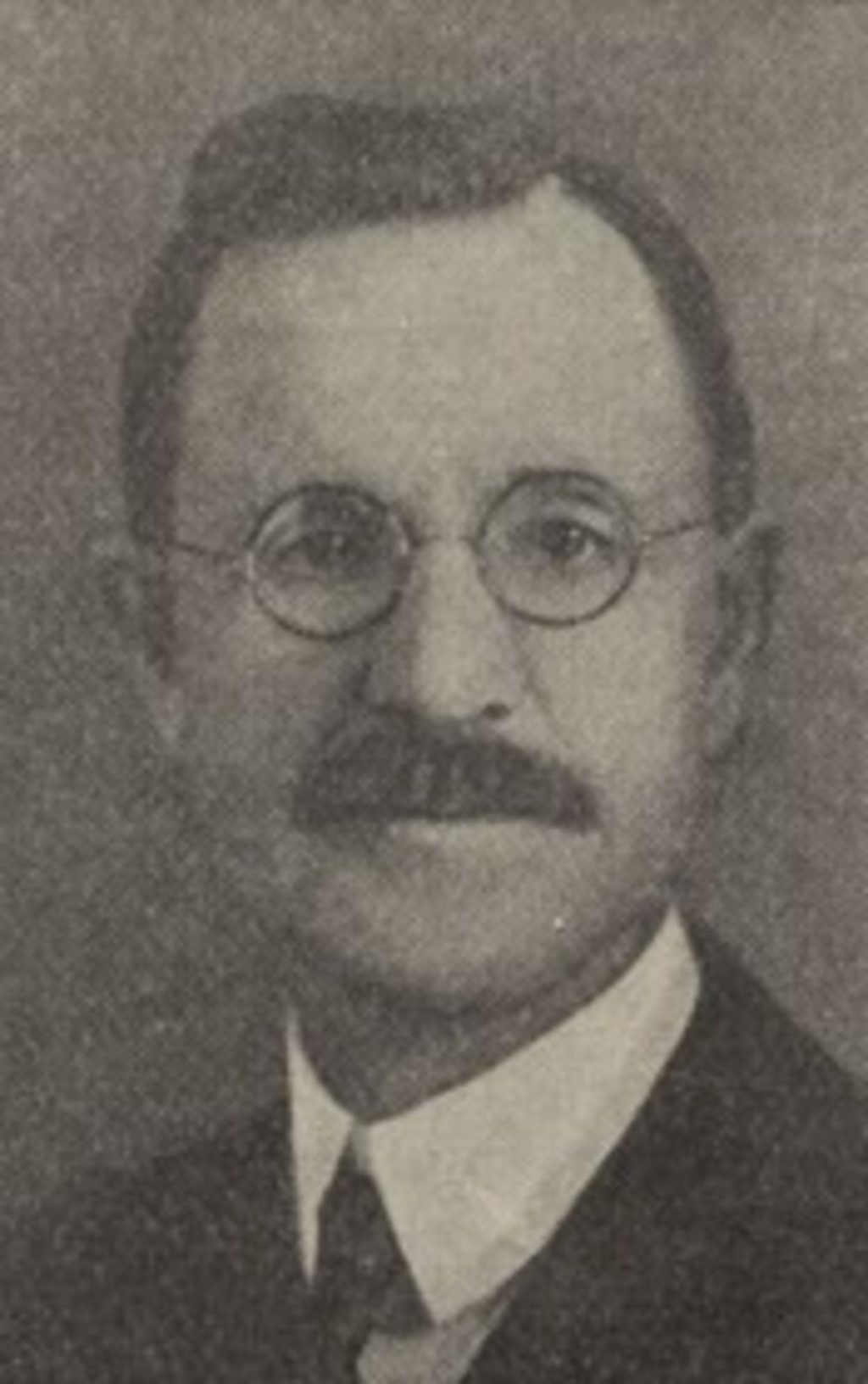
J. E. Fulton. Picture: Courtesy of the General Conference of Seventh-day Adventists Archives.
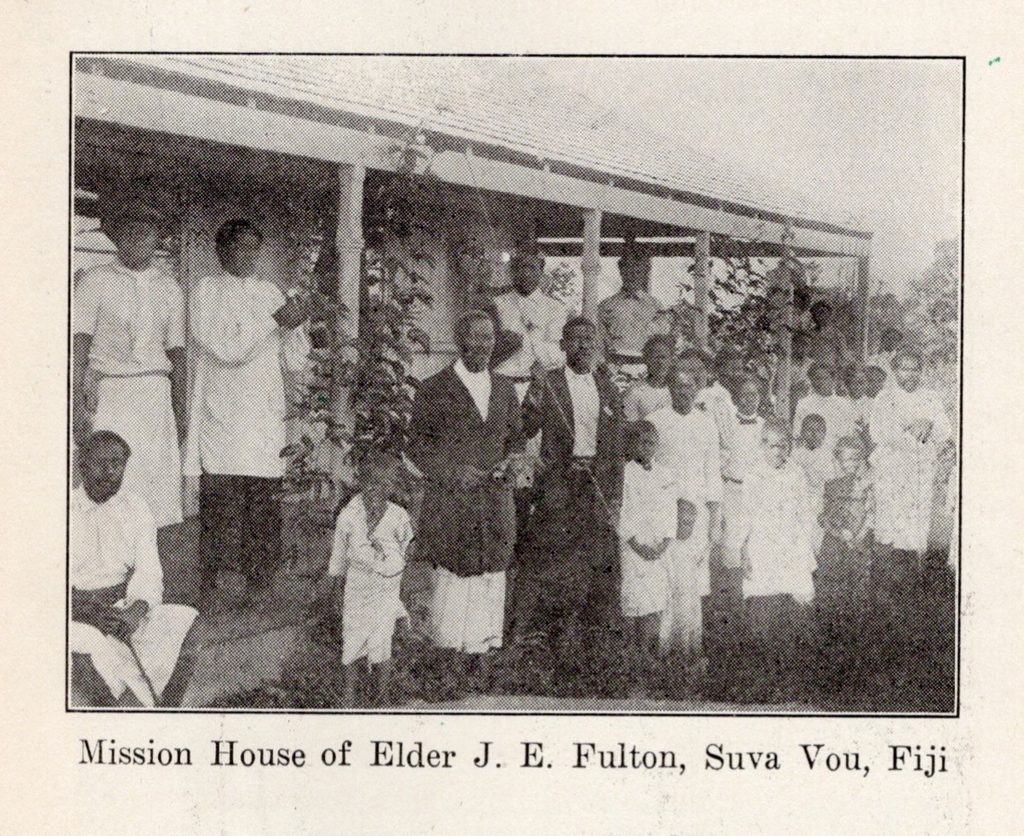
John Fulton’s home in Suvavou.
Picture: encyclopedia.adventist.org/From E. H. Gates, In Coral Isles, p. 161. Shared by Michael W. Campbell.
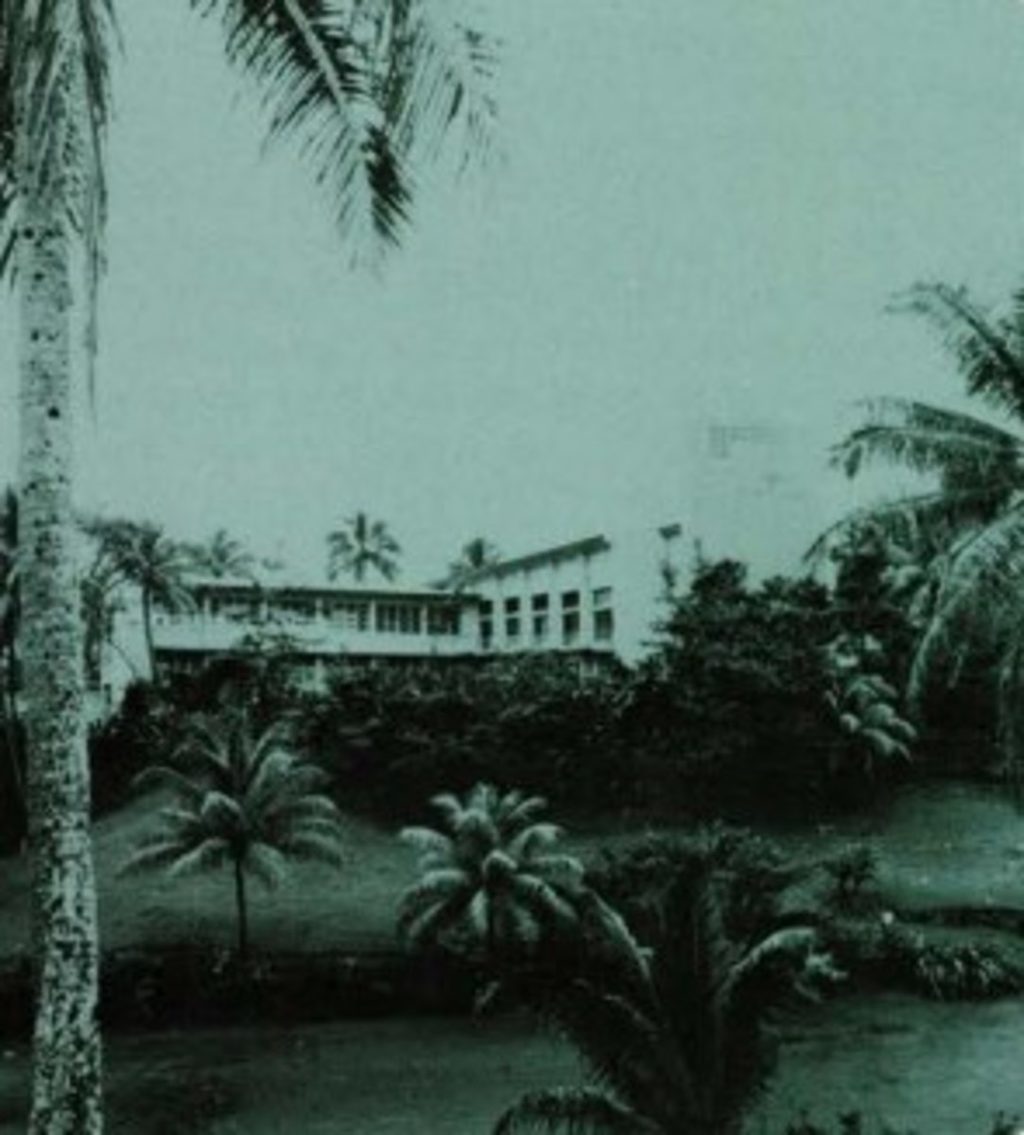
Fulton College, Tailevu, Fiji. Picture: encyclopedia.adventist.org/From Adventist Heritage, Vol. 10, No. 2, Fall 1985, page 52.
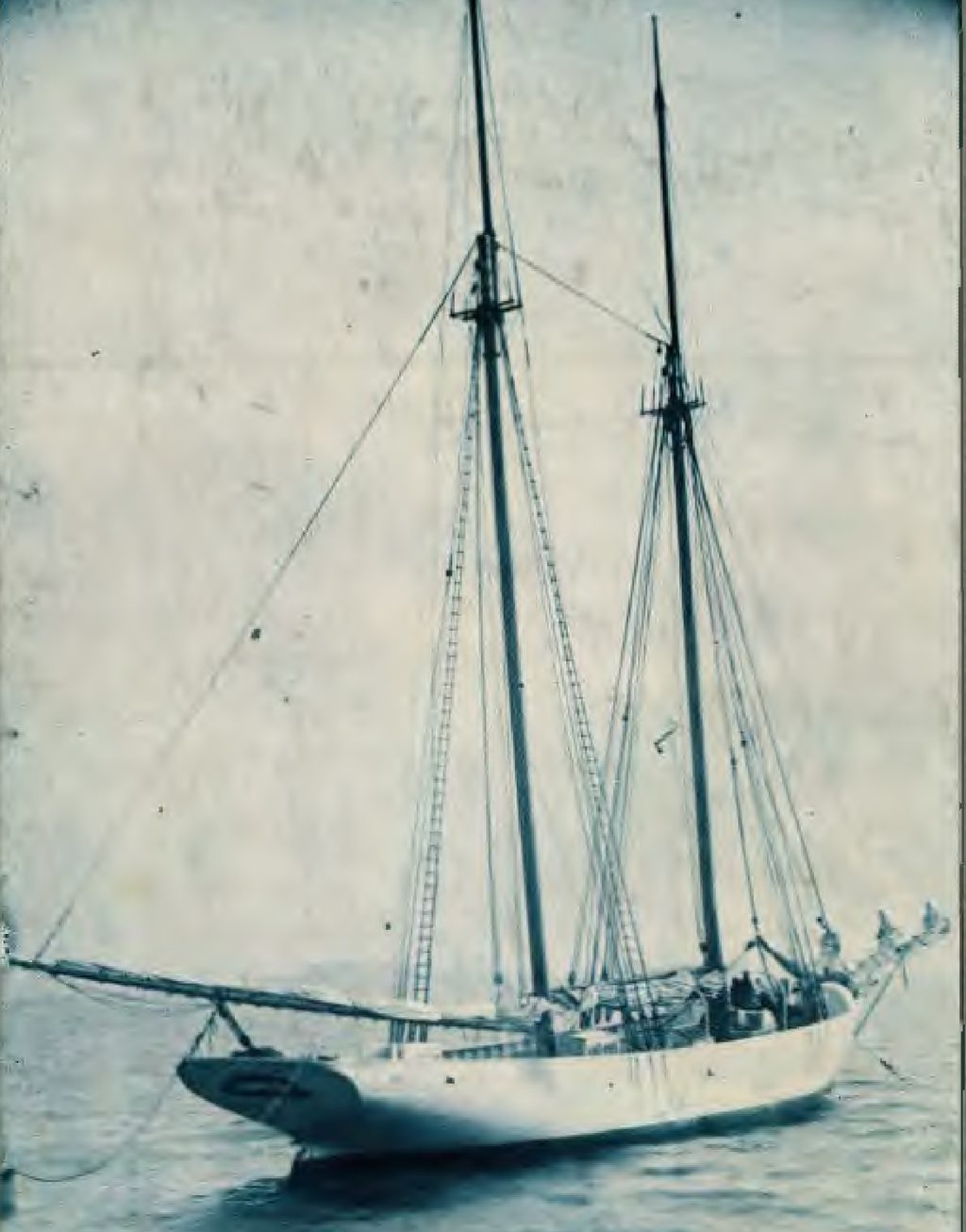
The Adventist missionary schooner Pitcairn (circa 1890) which brought John I. Tay to Fiji.
Picture: stampaday.wordpress.com

