
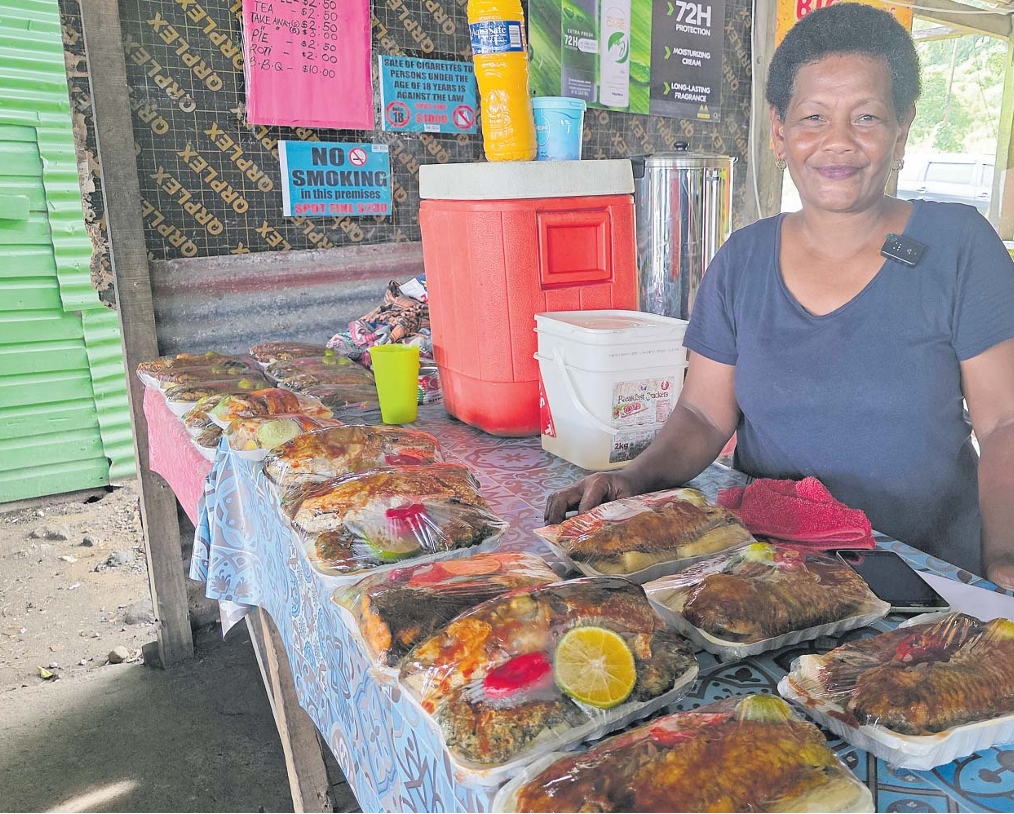
THE WAITING area at Natovi Jetty in Tailevu is more than just a transit point for travellers as it is now an economic empowerment spot led by women.
Collectively built and operated by members of the Muaniwavu Women’s Club, the group, make up of women from several villages across Tailevu, who came together to construct a kiosk beside the jetty.
Maria Marama Tawake describes it as creating a shared space where they sell food for breakfast, lunch and dinner while earning a steady income to support their families.
She is a longtime food seller who has been operating at the jetty for more than 12 years.
It may not be a flashy or posh eatery but it is a point that provides food parcels for those travelling to or from Vanua Levu.
Originally from Naveiteitei in Bureta, Ovalau, she now lives in Waivola Settlement with her husband.
Her two daughters are married and have families of their own, leaving Maria to continue working hard to sustain her household.
Every day, Maria begins her routine mid-morning, usually between 10am and 11am, bringing with her at least 10 food parcels along with freshly prepared fruit juice. Her menu features a variety of delicious homemade hot food, including fish with cassava, roti parcels, and other affordable meals to cater for hungry travellers passing through the jetty.
“It helps me look after my family and this is my main source of income, and I’ve been doing it for many years now,” she said.
Her workday continues until all her food is sold.
On days when a few parcels remain by nightfall, she simply takes them back home to share with her family, ensuring that nothing goes to waste.
She says business at the jetty largely depends on ferry schedules, especially vessels travelling to and from Vanua Levu.
During arrival and departure times, the area becomes lively, filled with passengers eager to buy fresh quick, convenient and affordable meals.
“Most of my customers come when the boat arrives or just before it leaves.
“That’s when everything gets busy, and we all try to serve as many people as we can.”
Despite the supportive environment among the women vendors, competition remains a daily reality.
Many of the sellers rely solely on their earnings from the jetty, making it a vital and competitive space.
She also says they have many customers when either Queen Victoria School or Ratu Kadavulevu School have events like visiting Sundays, rugby competitions, prize giving or prefect inductions.
Like many businesses, Maria also has her share of challenges. One of the biggest is sourcing fresh fish to cook for her patrons.
Unlike other vendors, she does not have direct access to fresh catch through family connections.
“Some women have husbands who are fishermen, so they get fish easily, whereas others like myself, have to buy it, and sometimes it’s expensive or not available.”
She says this added cost affects her overall profit, forcing her to carefully manage her expenses while still maintaining affordable prices for her customers.
When fish supply is low, Maria said she adapts by buying from supermarkets to ensure her business continues operating.
“Even if there’s not enough fish from suppliers, I still try my best and go to the supermarket, because I don’t want to stop the business.”
She said it was through determination that she has built a loyal customer base.
Regular travelers have come to recognise her stall, often returning for her meals and friendly service.
Maria said the success of the Natovi Jetty vendors highlights the importance of collective effort and community-driven initiatives by the women of Tailevu.
She said the kiosk itself is an example of what can be achieved when women come together with a shared vision.
Through the Muaniwavu Women’s Club, these vendors have not only created economic opportunities for themselves but have also strengthened social ties within their communities.
“This place was built by us, for us, and we support each other, even though we are also competing.”
The jetty’s transformation into a vibrant marketplace underscores the role of informal sectors in sustaining rural livelihoods.
For many families in Tailevu, the income generated here is essential for meeting daily needs, paying for education, and maintaining household stability.
For Maria, the journey has been marked by long hours, rising costs, and constant challenges, but her commitment remains firm. “As long as I can, I will continue,” she said. This work is important for me and my family.”
Her story, along with those of the other women at Natovi Jetty, serves as a powerful reminder that small-scale ventures can have a significant impact within the community.
Through perseverance, cooperation, and hard work, these women have turned a simple waiting area into a thriving centre of opportunity providing fresh meals for daily commuters between Viti Levu and Vanua Levu.

