
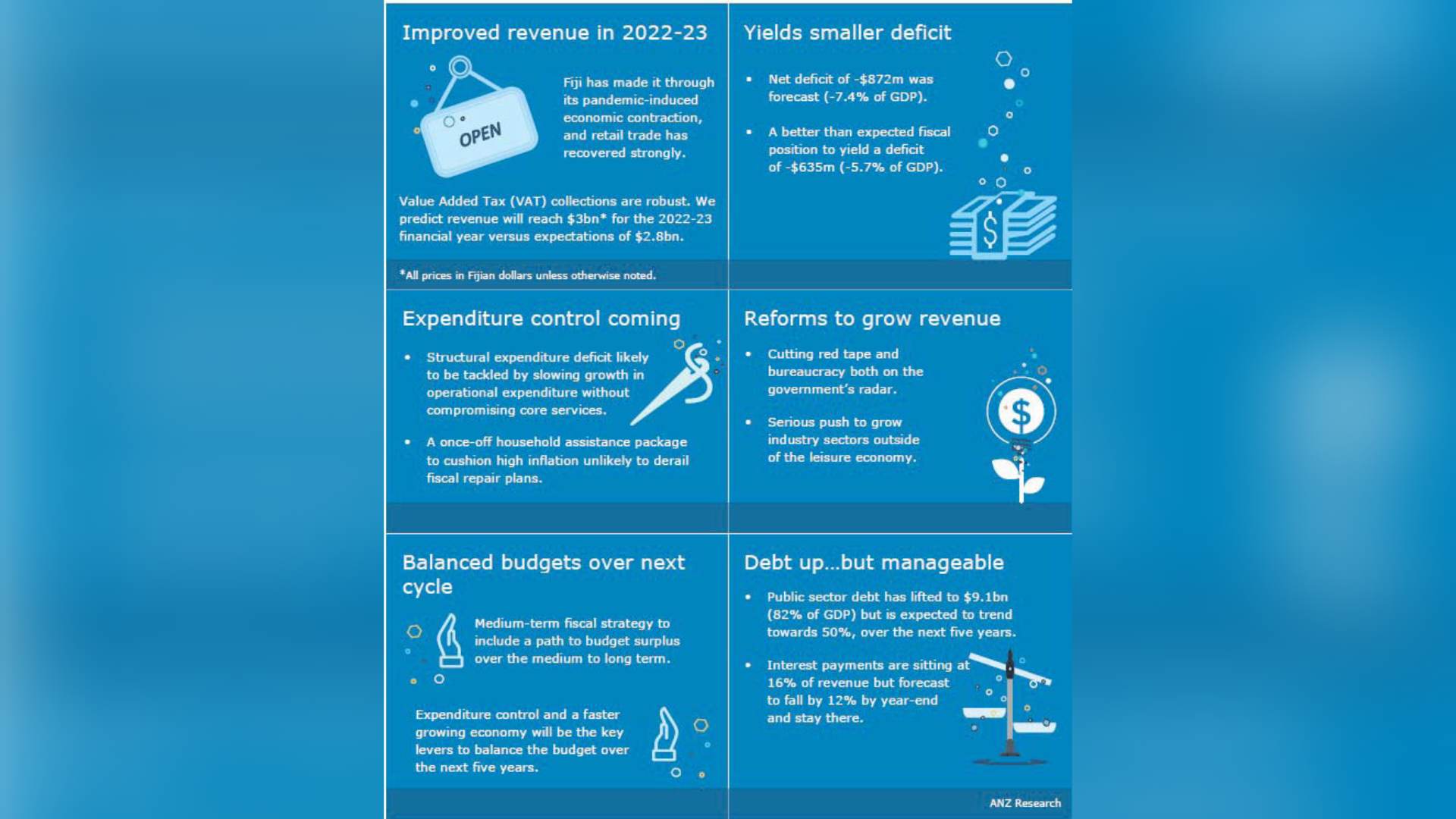
A New research report says while belt tightening may be necessary by the Coalition government, a once-off package to cushion the impact of elevated consumer prices on households may still be required.
The ANZ Research titled “Fiji Budget Repair”, says since coming into office the Rabuka-led coalition government’s mantra has been to “live within our means”.
Authored by ANZ economists Dr Kishti Sen and Tom Kenny, the report anticipates that the budget will look at savings that can put it on a path towards surplus over the medium to long term, after the pandemic’s back-to-back stimulus budgets.
It also expects new sources of revenue to be explored. The report authors explained that government spending helped prevent a severe economic downturn during the pandemic and had underpinned the post-COVID recovery.
“With the economy now powering ahead, the new coalition government has indicated it is time to return government finances to a stronger position.
“With expenditure restraint and growing revenue, we anticipate the government will deliver a deficit of around -5.7 per cent of GDP from an expected -7.4 per cent in 2022-23.”
According to the report reducing the deficit will be a challenge with limited resources and a narrow economy dependent on international visitors.
The report expects the government to strike a balance between election promises, competing priorities, expectations of enhanced delivery of core-services and some relief of cost-ofliving pressures to commence budget repair and reduce debtrelativeto-GDP over time.
With recent deficits being structural as payments have increased much faster than revenue, the report states that reducing the deficit will require controlling operating expenditure, especially transfer payments to non-core government statutory bodies, and reining in the growth of the Tertiary Scholarships and Loans Scheme (TSLS), which has increased capital grants in recent years.
In terms of tax collections the report notes that despite the last decade’s changes to personal and corporate tax rates and thresholds, government revenue has generally maintained its share of GDP at 25 per cent.
As governments make more money from growth, it was mentioned that the government may be banking on its reforms to accelerate growth and employment. According to the report as retail turnover gathers steam and the investment pipeline picks up pace, VAT revenue will increase with growing revenue easing away some of the pressure to raise other taxes.
“All in all, smaller deficits are expected over the forward estimates, putting government finances on a firmer footing. Yes, deficit budgets mean debt will push higher, but public sector debt is serviceable, as interest payments as a percentage of revenue is falling and is expected to reach its historical average of about 12 per cent by the end of this year and stay there. This is despite a lift in debt levels stemming from pandemic stimulus.”

