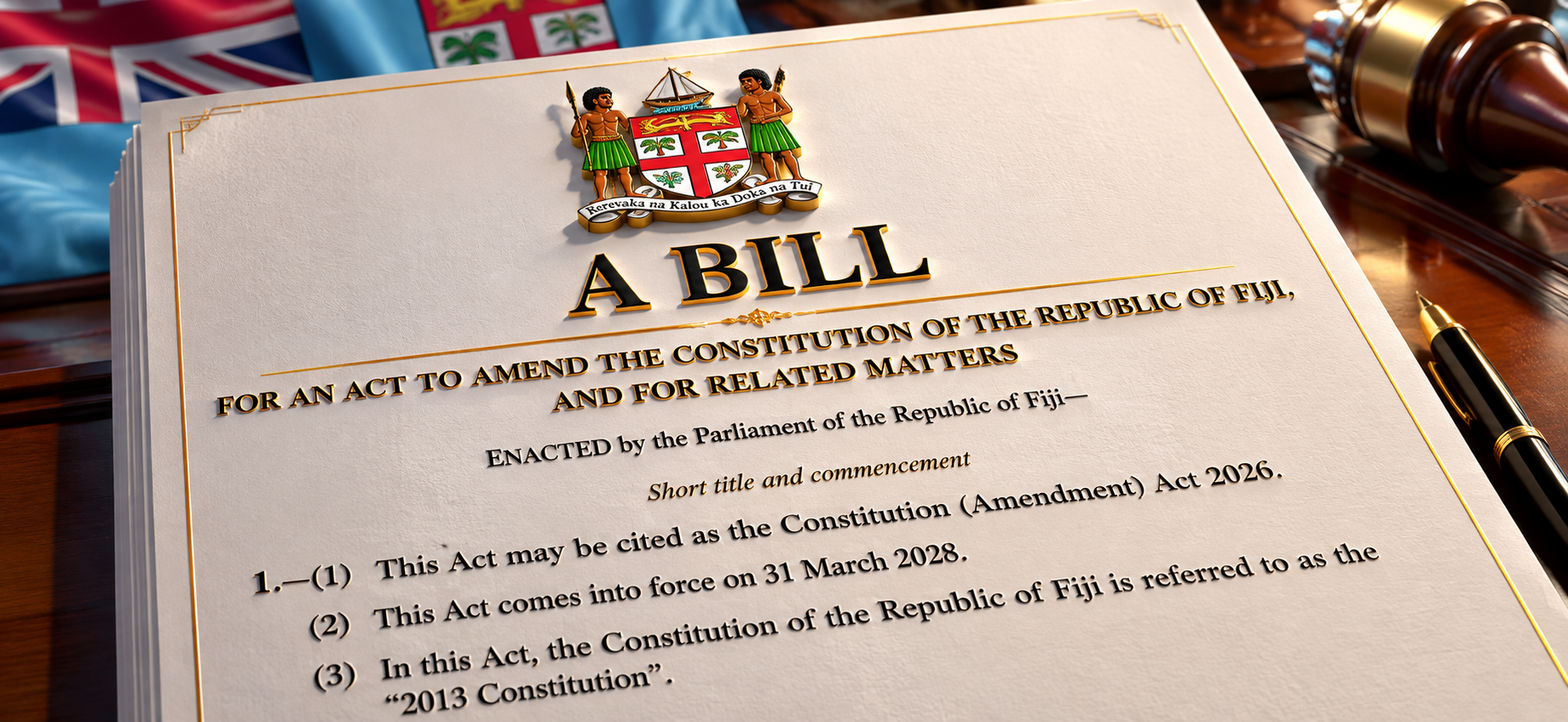
Landowners and communities would gain constitutionally entrenched consent rights over certain major development and resource extraction projects under the Constitution (Amendment) Bill 2026 tabled in Parliament this afternoon.
The proposed provision would require the State and project developers to obtain the “free, prior and informed consent” of landowners or communities before undertaking certain large projects that could adversely affect their rights or interests.
The requirement appears under Chapter 3 of the proposed Constitution, dealing with land, the environment and group rights.
Before licensing, permitting or undertaking an affected project, the State and developer would have to provide communities with enough information to assess its possible impacts and engage in constructive discussions over their concerns.
They would also be required to seek consensus, including by making “reasonable and necessary modifications” to protect affected rights and interests.
The consent requirement, however, would not automatically apply to every development.
The Bill states it would apply only to large proposed projects prescribed by written law, taking into account whether a project is likely to significantly and permanently alter the landscape or shoreline, significantly interfere with community livelihoods or amenities, or affect food security.
The constitutional definition of natural resources includes minerals, oil and gas, forests, marine resources and genetic resources, including resources extracted from or beneath the seabed.
The Bill also proposes that land and natural resources be protected and managed for the benefit of present and future generations, with an emphasis on conservation, biodiversity and ecologically sensitive areas.
If enacted in its current form, the consultation and consent obligations would sit within the Constitution itself, while Parliament would be able to prescribe the processes for fulfilling those duties through written law.