
Plastics have long been considered one of the cheapest and versatile products used by consumers almost daily.
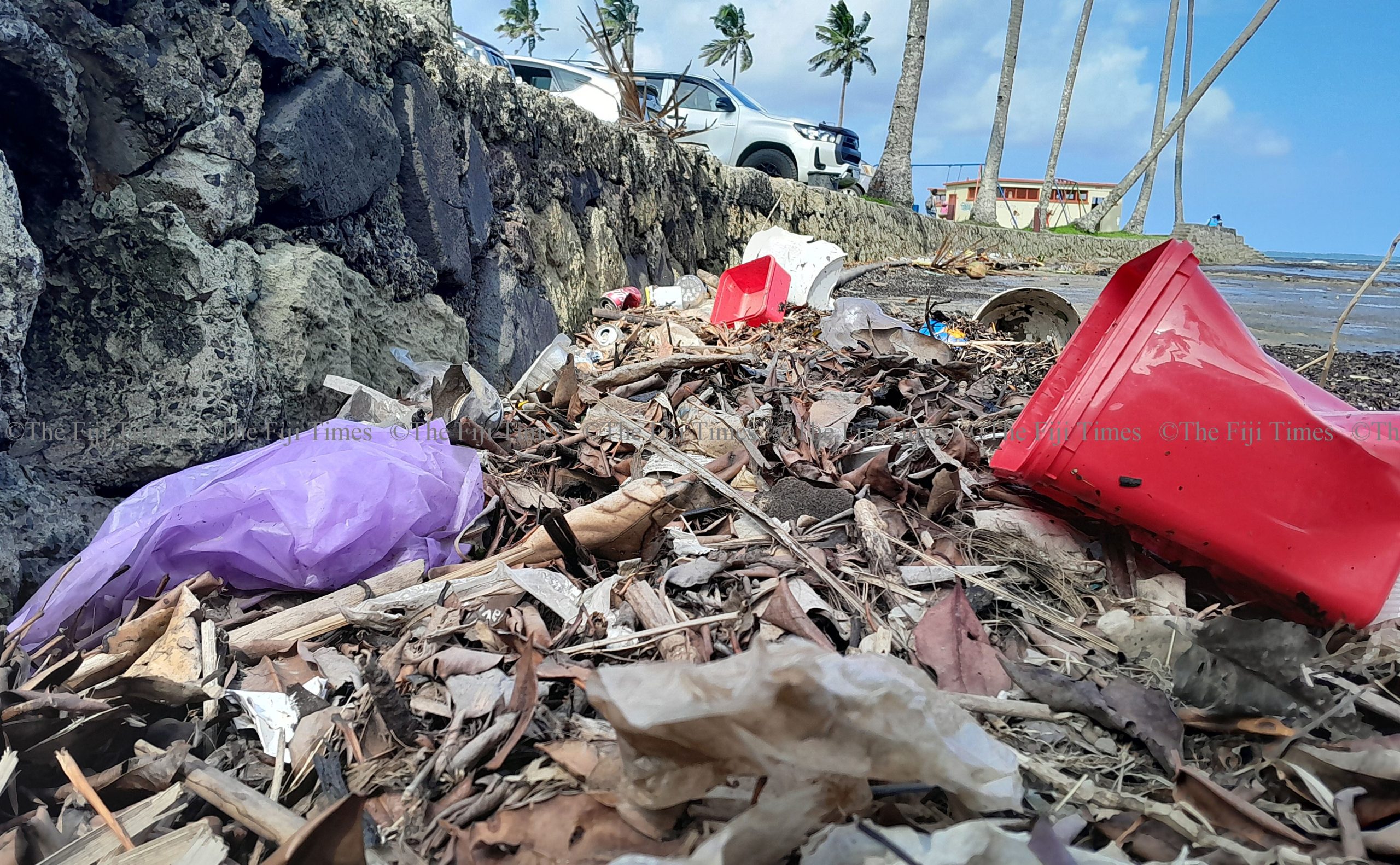
Now, it is one of the main pollutants that inundate our streets, waterways and ocean.
The United Nations Environment Program (UNEP) estimates that since the 1950s, global plastic production has increased exponentially, projected to reach 1.1 billion tonnes in 2050.
And NGO The Ocean Cleanup says an estimated 1.15 to 2.41 million tonnes of plastic entre the ocean each year from rivers. This poses a stark health risk to major consumers of seafood – Fiji included.
The NGO also states that once plastic enters the marine food web, there is a possibility that it will contaminate the human food chain as well.
Considering the environmental and human impacts of plastic pollution globally, the UNEP has convened the Intergovernmental Negotiating Committee (INC) on Plastic Pollution, for which five sessions have been organised so far, after an ad hoc expert group first met in Dakar, Senegal, in 2022.
Here, the resolution entitled “End plastic pollution: Towards an international legally binding instrument” was adopted by the parties.
Fiji is also part of the INC and attended the fifth session in Busan, South Korea, from November 25 November to December 1.
Ministry of Climate Change and Environment permanent secretary Dr Sivendra Michael said Fiji had championed this process in 2018.
“We were the first to call out in the ad hoc expert group that we need to do something about the marine litter issue,” he said.
“That was our call mostly around the marine litter because of the Great Pacific Garbage Patch, so we were saying there is transboundary movement of waste into our community.”
Not the producers
In Fiji, Dr Michael said most of the plastics found on shores and such were not produced in Fiji.
He said these were plastics that had floated into Fiji’s territory.
“It can be also the off spills from boats and vessels, or whatever it is, but the issue that we had in INC was the same as COP, is this low ambition countries that continuously pushed against them,” he said.
“And so, my take on that was, I think whether I felt satisfied or not with the process, I think I was really disappointed in the fact that a small group of countries, similar to that in COP, were able to take the process hostage by what I would call the “dark arts of multilateral negotiations”.
“Once again, we witnessed so many large contingents of fossil fuel and petrochemical lobbyists, which outnumbered the delegates of SIDS (Small Island Developing States).”
Dr Michael said SIDS members had collectively come together to push back on “these obstructionists” and fought to ensure that the treaty had the most effective measure to end plastic pollution.
The full life cycle
Dr Michael said almost 3200 chemicals were used to make plastic, most of which were hazardous in nature.
Thus, it was crucial to look at the life cycle of plastic from extraction, production and consumption.
“What does the plastic treaty do? It looks at the full life cycle. Looks from extraction, production to consumption. So, we call that upstream and downstream. Because, how do you keep mopping the floor, but the tap is on?
“You can keep doing all these things domestically, but we are not there to ask for waste management treaty.
“What we are asking them is, how do we actually ensure that the text has or mandates parties to have time bound targets on production reduction.
“The text should ensure that the target is legally binding upon all states, and it should also ensure that the targets can be ratcheted up over the time, meaning, like you can ramp up these targets.
“This also ties to the necessity provisions of chemicals of concern.
“About 3200 chemicals are used in plastic production. What we heard in the room was “chemicals of concern should not be in this treaty. Production should not be in treaty”.
“So, it’s everything on downstream, which means everything (falls) on us, users, consumers.”
Dr Michael said for a lot of parties who had to renegotiate deals around the phasing out on fossil fuel would eventually rely on plastic to generate revenue.
“Where will the next target be? On plastic, so they will ramp up their production on plastic so that they can make up for the lost revenue on this side.”
Initiatives at home
Despite the challenges in these international spaces, Dr Michael said the ministry was committed to green initiatives from their end. He shared plans about increased education and awareness among government staff, how much waste was produced by ministry staff themselves, what proportion was going to the landfill and how they could improve on that.
“We are upgrading the landfill in Naboro with methane capture technology,” he said.
“We are also looking at in the construction of a new cell. The new cell will have methane capture already. We are also looking at the Western landfill, and the landfill has to have a shift in the attitude, so maybe people not seeing it as a waste dumping area.
“There is a three-phase support. Phase one is that the landfill that’s going to be in the West will have sorting, recycling, green waste reduction and e-waste reduction.
“Whatever comes to the landfill is only waste that needs to go to the landfill. Whatever can be recycled goes to the recycling. E-waste goes to the e-waste.”
He also said while this was being done, they would also have to rehabilitate existing dumping sites in Vunato and Sigatoka among others.
Dr Michael said they had begun talks with the town councils and Ministry of Local Government to see what their needs were and how these ministries could work together.
“We are creating some awareness products from the waste pollution control team. And we are reviewing all the acts and the regulations.”
In addition, the ministry has also signed a memorandum of understanding (MOU) Nasinu Town Council for a trash boom initiative to clean river streams.
“We are sampling those river streams that have most pollution like Nabukalou Creek and so on to try and bring forth this initiative.”

