
THE rapid growth of Fiji’s creative industry has brought with it a new generation of photographers, filmmakers, graphic designers and digital storytellers eager to make their mark.
Social media has lowered barriers to entry, affordable technology has placed professional-grade equipment within reach, and artificial intelligence has begun reshaping the way creative work is produced.
Yet beneath this expanding landscape lies an industry still searching for structure.
According to Ben Seniroqa, founder of Only Idea Studios, Fiji’s creative sector is rich with talent but held back by gaps in business knowledge, limited investment and an education system that has yet to fully embrace creative careers.
Nonetheless, he believes the prospects are promising for visual and creative arts space.
“I think the industry is in a good place,” he said.
“There are many talented young content creators producing excellent work.”
Having spent years working behind the scenes for production companies before taking Only Idea Studios directly to clients, Ben has watched Fiji’s creative economy evolve from an emerging niche into an increasingly competitive marketplace.
But competition alone is not enough.
Building a sustainable industry
One of his biggest concerns is the absence of common business standards, particularly around pricing.
In today’s market, he said, two creatives can quote vastly different prices for work of a similar nature.
While experienced professionals price projects based on years of knowledge, equipment costs and production requirements, newcomers often undercharge as they build portfolios.
The result is an uneven market where clients struggle to understand the true value of creative work.
“You might have one videographer charging $3000 for a project while another charges only $200 for something very similar,” he said.
Without greater understanding of how projects are costed, he believes unrealistic expectations become embedded across the industry.
Rather than calling for regulation, Ben believes mentorship and greater openness among experienced practitioners would help emerging creatives understand not only their craft but also how to operate sustainable businesses.
The challenge, however, extends beyond pricing.
Running a creative business requires far more than artistic ability.
It involves managing clients, complying with tax obligations, paying staff, investing in equipment and maintaining professional standards.
These are lessons Ben largely learned through experience.
“My generation learned largely through trial and error,” he said.
“We had to teach ourselves, make mistakes and gradually build experience.”
Education and investment
That experience has shaped another conviction—that Fiji’s education system needs to evolve alongside changing industries.
While schools have traditionally focused on academic subjects and sports, Ben believes creative disciplines such as photography, videography, animation and digital design deserve far greater recognition.
Today’s students are growing up immersed in technology, he said, yet many leave school with little exposure to careers that increasingly contribute to Fiji’s economy.
He sees creative industries as more than artistic pursuits.
Journalists, musicians, filmmakers, designers and content creators all generate employment, support tourism and help shape Fiji’s cultural identity.
Preparing young people for these careers should begin in the classroom rather than after they enter the workforce.
Investment also remains a major issue.
Although home studios have enabled many creatives to produce quality work, Ben believes Fiji lacks dedicated production facilities where professionals can collaborate using industry-standard equipment.
Such infrastructure would strengthen local capacity and reduce reliance on overseas resources.
When discussing government support, however, Ben highlighted that funding alone is not the centre of the conversation.
Money itself cannot transform an industry.
“You can invest millions of dollars into the creative industry, but if the systems aren’t right, you’ll still end up with the same challenges,” he said.
Instead, he is calling for stronger education pathways, transparent support systems and long-term industry development which would produce more lasting results than isolated funding programmes.
AI and the human touch
The emergence of artificial intelligence presents another challenge.
Ben has already seen its impact firsthand.
Earlier this year, many businesses embraced AI-generated graphics and marketing material, resulting in fewer commissions for creative agencies.
However, he believes the initial excitement has begun to fade as audiences increasingly recognise the limitations of computer-generated content.
“I see it more as a partner than a threat,” he said.
Technology should enhance and spur creativity rather than replace it.
While AI can speed up production and improve efficiency, storytelling, emotion and authenticity remain fundamentally human qualities.
Creativity with purpose
His own work on Mareva and the Sea illustrates that balance.
Originally written and illustrated by Carlo Iacovino for the Secretariat of the Pacific Regional Environment Programme (SPREP), the 40-page educational comic was produced under the Pacific BioScapes Programme, an initiative managed by SPREP and funded by the European Union.
The story follows a young girl named Mareva and her island community after a ship runs aground and damages their reef, using the narrative to introduce concepts of marine spatial planning, coral reef protection and community stewardship of the ocean.
When SPREP sought to broaden the comic’s reach through animation, Only Idea Studios was commissioned to bring the story to life.
Ben shared that AI assisted with parts of the production process, but the project itself remained rooted in human collaboration, with family members, friends and fellow creatives contributing voices, animation and production expertise.
Prospects
It is that collaborative spirit which represents the future of Fiji’s creative industry.
The country already possesses the talent, but what it now requires is an ecosystem that equips creatives not only to produce exceptional work but also to build sustainable careers.
While Fiji braces itself now for the expansion of the digital economy, the success of our vibrant creative industry depends less on physical technology itself, but rather on how well equipped our people are to use it.
These subheadings preserve your wording while breaking the feature into logical sections, making it easier to read in a newspaper layout.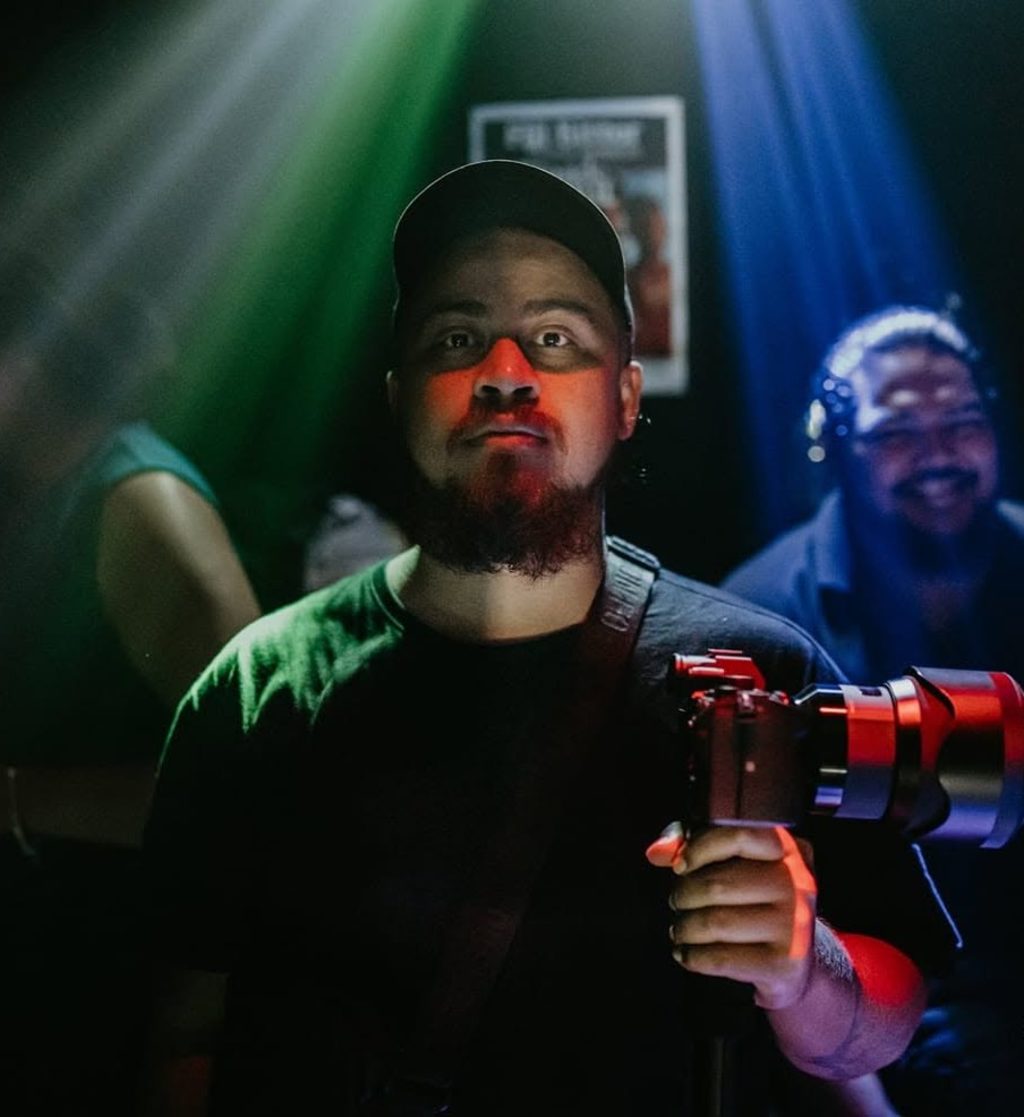
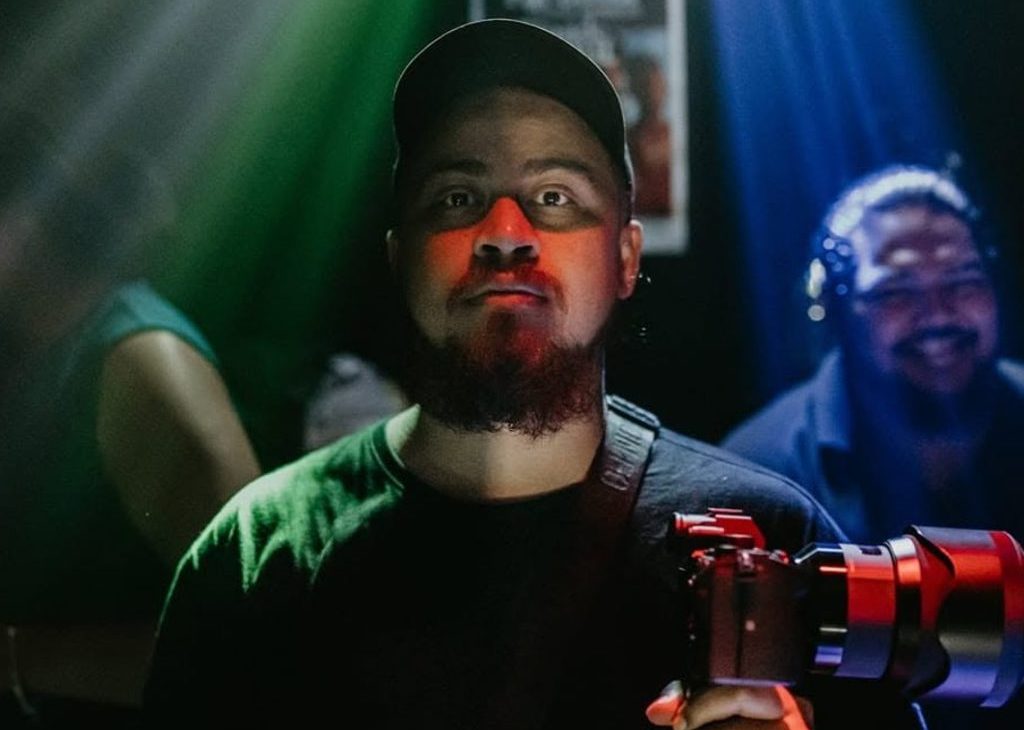
Ben Seniroqa on assignment with his camera. The founder of Only Idea Studios says Fiji’s creative sector has the talent to thrive but needs stronger investment, education and industry support to realise its full potential. Picture: SUPPLIED
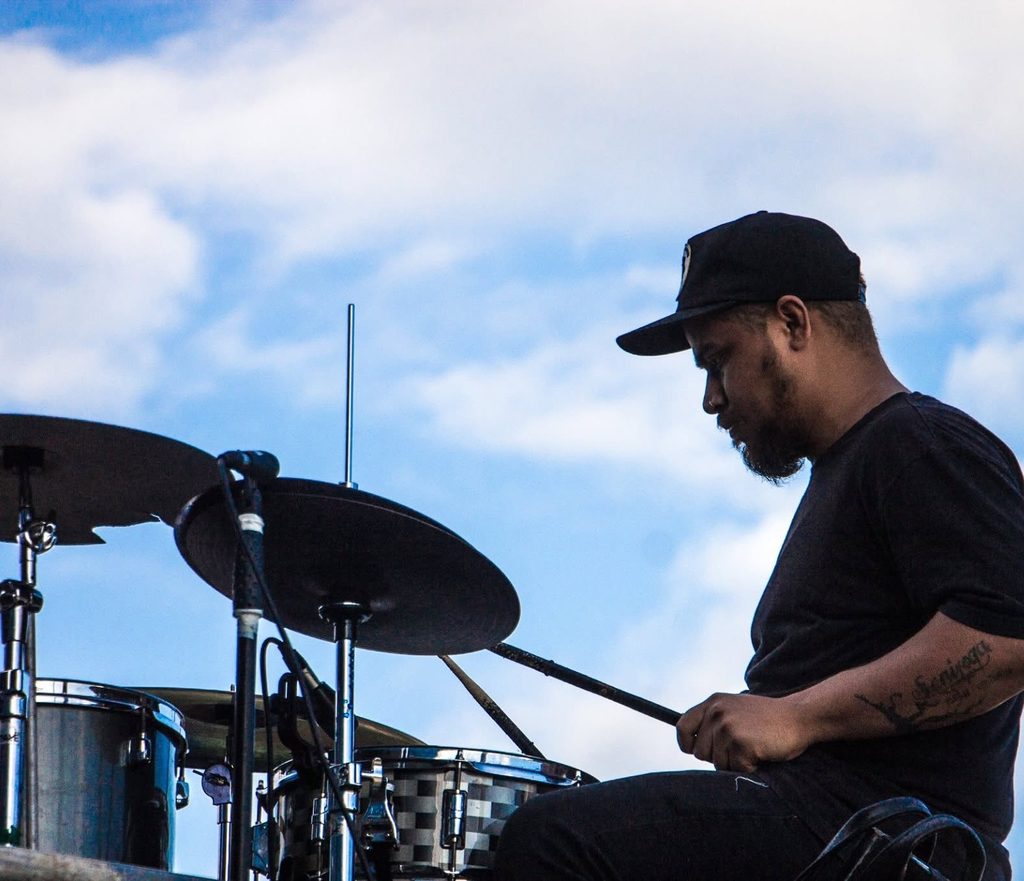
Ben performs on the drums, a passion he has pursued since the age of seven and one that laid the foundation for his journey into Fiji’s creative industry. Picture: SUPPLIED

