
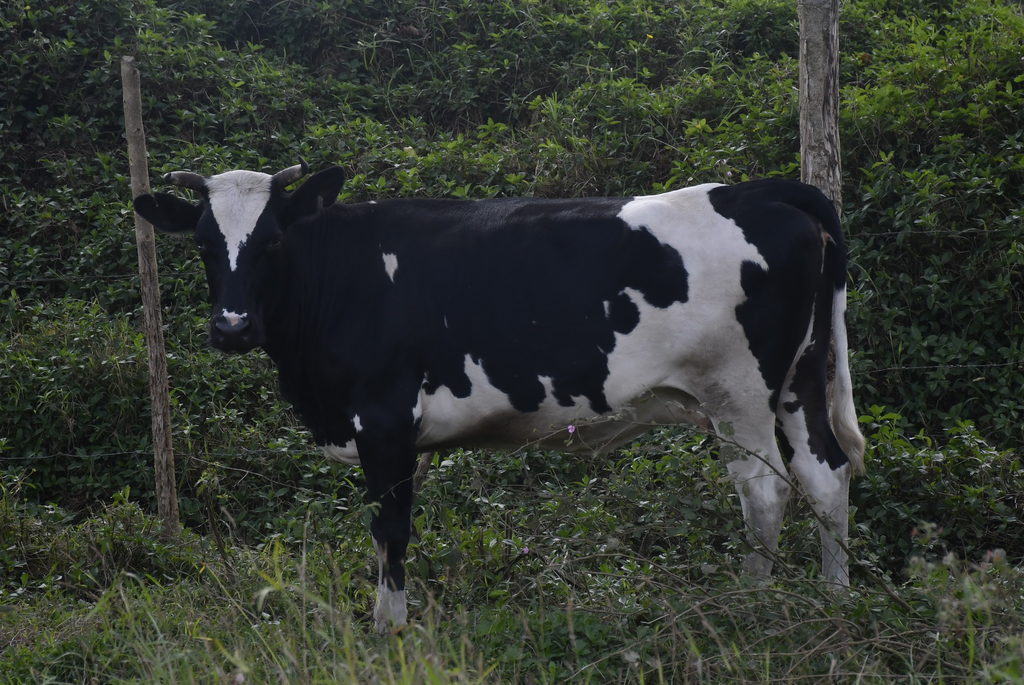
A 500-GRAM block of Rewa Butter now costs close to $16. A Fijian on the national minimum wage of $5 an hour must work three hours to buy it — before tax, before bus fare, before anything else on the table.
The brand is a century old and unmistakably Fijian. What sits behind it is not. For a hundred years the story told about Rewa was simple: Fijian cows, Fijian hands, Fijian families.
The real story is slower and darker — an industry that has been milking its own farmers for decades, first through mismanagement, then by decree, and now through a market structure that keeps them supplying the milk while a private conglomerate keeps the money.A cooperative born in 1924
After the First World War, returned servicemen were settled on land donated by Fijian chiefs under the Tailevu Dairy Scheme.
In 1924 they built Fiji’s first butter factory at Korovou, still called the industry’s birthplace. It grew into the Rewa Co-operative Dairy Company, farmer-owned in name, supplied at its 1991 peak by 2041 registered farms. For most of the century, Rewa Butter really was churned from Fijian milk. That era did not fade through market forces.
It was ended, deliberately, through internal failure so severe that by 2012, the government dismantled the structure that had carried the Rewa name for eighty-eight years.
Decades of mismanagement
In 2003, board members raised allegations serious enough that Rewa Dairy commissioned PricewaterhouseCoopers to audit its own accounts. The 2004 report found escalating “loans” to directors, farmers and shareholders — $624,189 in 2006, rising to $868,957 by 2009 — including a $5700 Omega watch billed to the company address.
The findings went to the Director of Public Prosecutions. Nothing happened for eight years. “Rewa Dairy has been riddled with mismanagement for decades,” Attorney-General Aiyaz Sayed-Khaiyum told the nation in 2012.
“When the accounts were audited, there was a $5 million hole that nobody could explain.” Even the rescue could not agree on its own numbers: Southern Cross Foods’ debt take-on has been cited at both $7 million and $17 million in separate Parliamentary accounts.
Sole processor, locked out
The 2012 decree split the company in two. Fiji Dairy Limited became “the sole processor of milk in Fiji.”
The Fiji Cooperative Dairy Company, owned by farmer-stakeholders, kept the cows and the collecting — nothing else.
It has no processing capacity of its own, then or now; every litre is sold upward to a factory farmers do not control.
Southern Cross Foods, a CJ Patel subsidiary, took 80 percent of Fiji Dairy Limited; farmers held the rest. Today Fiji Dairy draws from more than 350 farmers to run one Nabua factory employing roughly 200 people — the growing side of the industry outnumbers the earning side and owns none of it.
Profitable by design
None of this is accidental. In Parliament in 2017, then-Opposition MP Biman Prasad noted Fiji Dairy Ltd “continues to be a healthy and profitable entity” while competing milk importers pay a 32 percent duty (15 percent on ghee) — a rate Fiji Dairy alone was exempted from for ten years under the original 2012 deal.
One commercial business database estimates Fiji Dairy’s 2026 annual revenue at around $5 million.
Set against that: the entire farmer-shareholder base has never collectively received more than $1.2 million in dividends in any year on record — and in some years, nothing at all.
CJ Patel Group, Southern Cross Foods’ parent, controls more than twenty companies, its distribution arm carrying Nivea, Colgate-Palmolive, Kimberly-Clark, GSK’s Panadol and Nestlé’s Fiji range into the same supermarkets where Rewa Butter sits. No regulator has ever examined the whole picture at once.
“Product of New Zealand”
Here is what the wrapper does not say. Rewa-branded milk powder sold today is labelled “Product of New Zealand. Packed in Fiji-by-Fiji Dairy Pte Ltd.”
Fiji tried to manufacture its own powder once. In 1999, Rewa Dairy spent over a million dollars on evaporator equipment with no feasibility study, then discovered it needed roughly a hundred litres of raw milk, and enough burnt energy to cost $25, to produce one kilogram of powder. They sold the heater for $130,000.
“The evaporator is still sitting at Fiji Dairy,” Sayed-Khaiyum told Parliament in 2012 — a monument to the moment Fiji quietly gave up manufacturing for good.
Even before 2012, under farmer ownership, Rewa Dairy’s own profits came mainly from imported powder, butter and cheese, not from the milk its members produced.
The price rollercoaster
Rewa Butter’s 500-gram pack moves like the commodity it is. It sat at $10.60 in early 2024, rose to $12.73 by June, $13.94 by July, and $15.93 by mid-2025 — called a “luxury item” in Parliament.
A global butter glut briefly cut it to $14.28 in December 2025, before landing costs pushed it back toward $16 this year.
Every movement traces to the cost of imported bulk butter, set in Auckland and Melbourne, not Nausori. The commission does not negotiate that price down; it approves the mark-up once the paperwork proves it real.
Squeezed at the farm gate
While the shelf price climbs, the farm gate tells the opposite story and has for over a decade. FCDCL’s own chief executive told Parliament the price of raw milk fell from $1 a litre in 2012, the year of the restructuring, to 80 cents by 2017.
In the chaotic months right after privatisation, it swung as low as 52 cents some weeks. It has since recovered to today’s $1.07 to $1.12 — still barely above where it started fourteen years ago. Ravindra Prasad of Nandan’s Dairy Farm in Viria, Naitasiri, now produces 150 to 160 litres a day, down from 200; his weekly feed bill has doubled to $300.
Harvindar Singh of J Singh Dairy Farm in Waimaro has watched daily output fall from 1600 to 1300 litres, while a bag of copra feed once costing $8 is now nearly $30, and his monthly fuel bill has doubled to $10,000. Both are asking for $1.50 to $1.80 — an ask that would barely restore, in real terms, what they were promised the day the industry was sold.
FCDCL has now confirmed that farm-gate pricing will be set independently by the FCCC, taking the one lever farmers still touched out of their hands.
50 years without a target
None of this is new. Fiji’s agriculture policy has chased “food self-sufficiency” since the 1970s and, by government’s own admission, never reached it. In the narrow fresh-milk market, local supply covers roughly half to two-thirds of demand. Once butter, powder and cheese — almost entirely imported — are counted into the whole dairy diet, local farmers supply barely a quarter.
Production concentrates overwhelmingly in the Central Division; the Western Division supplies most of the rest, while the Northern and Eastern Divisions barely register.
A 2009 tuberculosis outbreak crashed output from 10 million litres to three million; further outbreaks in 2015–16 and 2019 kept it from ever recovering past six million since.
Serfdom with better vets
So, was Fiji better off under this arrangement? For consumers, no — they pay import-linked prices for a product marketed as homegrown. For farmers, sharper still: the farmer-controlled industry did not decline, it was formally ended, by decree, in 2012. Close to two thousand farms supplied Rewa Dairy in 1991; a few hundred remain today, ageing and still falling.
What’s left is not an industry in any national sense — it is a shrinking herd of ageing suppliers, feeding a processor they do not control, at a price that fell for years before it recovered, inside a market otherwise imported and repackaged under a hundred-year-old name.
Fiji did not drift into import dependence; it arrived there years ago. The farmers were milked long before the cows were. The industry was not allowed to fail them. It was built to succeed without them.
Dr Sushil K Sharma BA MA MEng (RMIT) PhD (Melbourne) — World Meteorological Organisation (WMO) Accredited Class 1 Professional Meteorologist. Former British Aerospace, The Royal Saudi Air Force and Bahrain Air Navigation Directorate Aviation Meteorologist. Former Associate Professor of Meteorology, Fiji National University, and Operational Meteorologist and Manager, Climate Research and Services Division, Fiji Meteorological Services. The views expressed are his and not necessarily shared by this newspaper.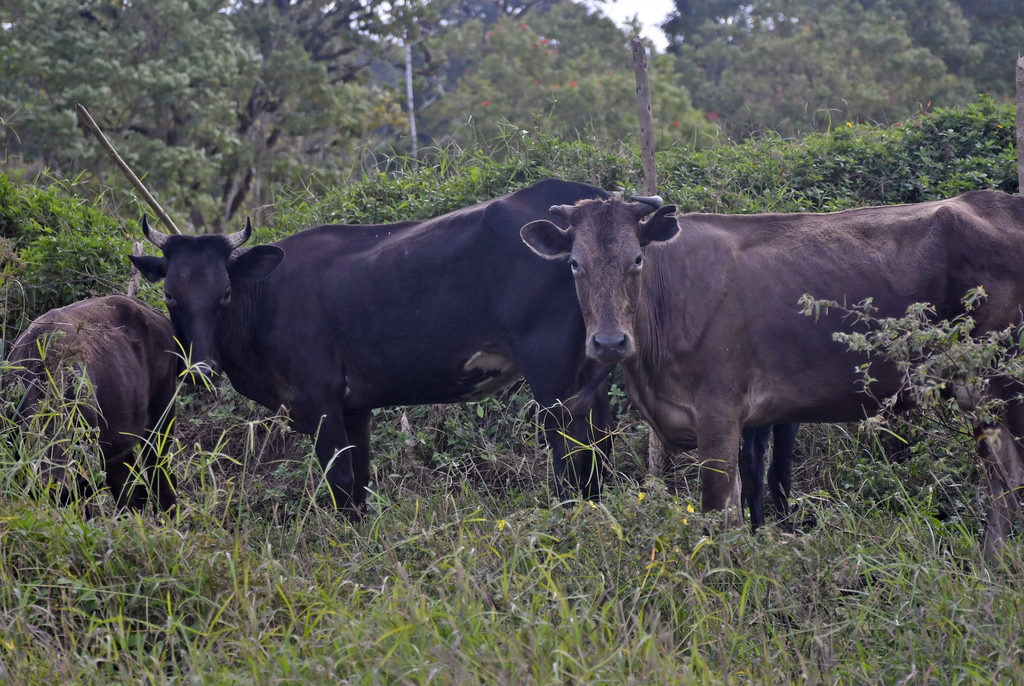
Dairy farming…a sunset industry? The author explores its grim reality.. Picture: JONACANI LALAKOBAU
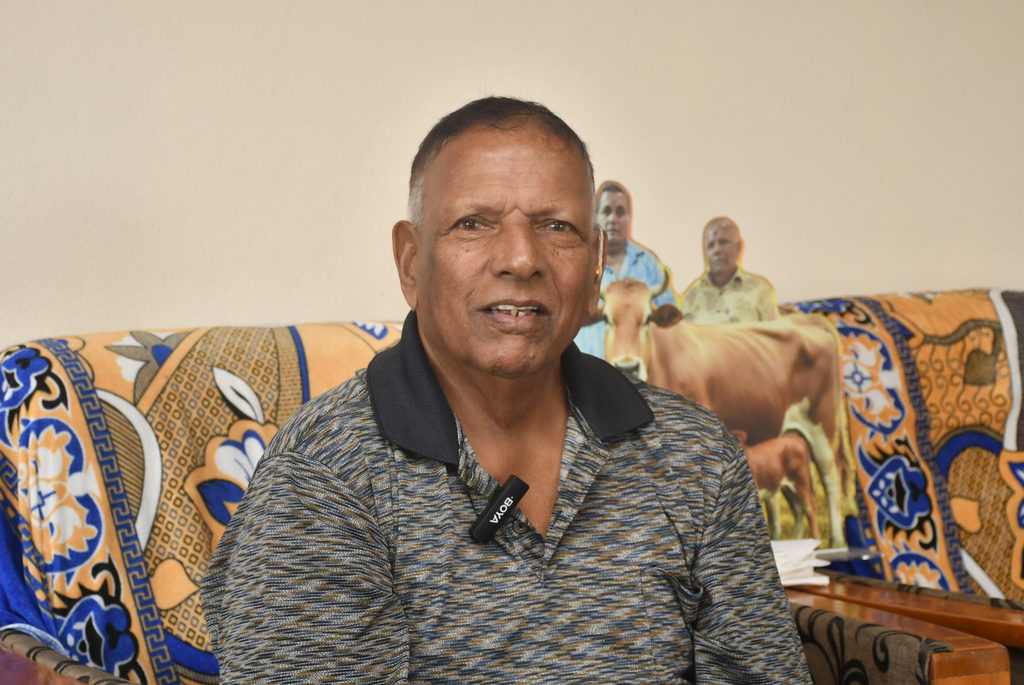
Viria cattle farmer Ravindra Prasad during an interview at his home at Viria Village Rd in Naitasiri on Thursday, July 16, 2026. Picture: JONACANI LALAKOBAU

