
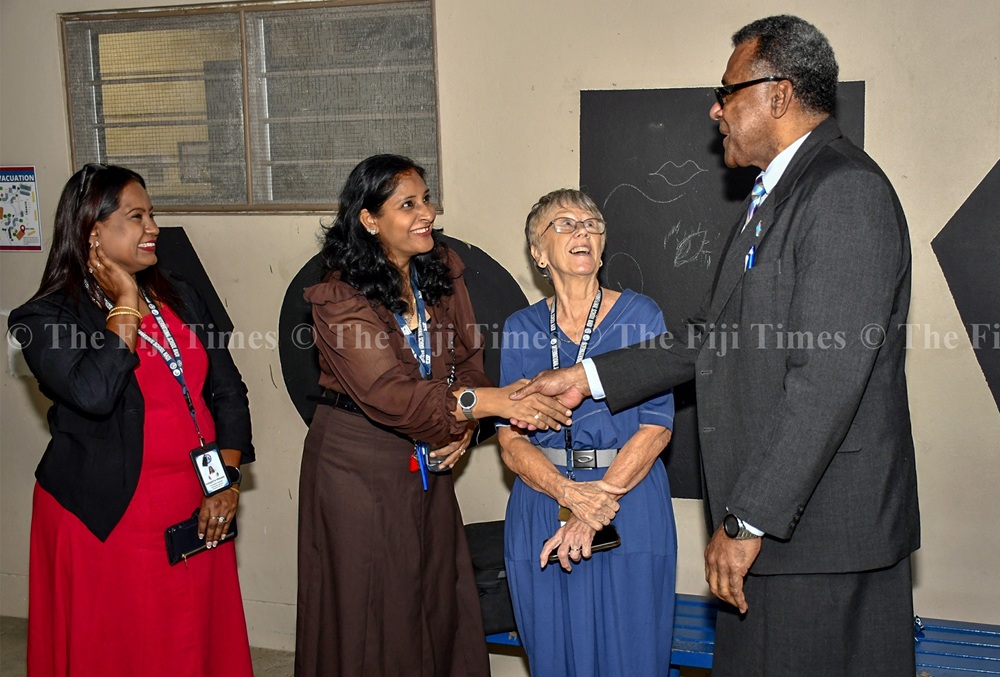
Building stronger communities — not just tougher laws — is the key to tackling Fiji’s growing drug problem among young people, according to Saint Mina’s Children’s Home manager Dr Lydia Moussa.
Addressing students at the opening of the International School Nadi Model United Nations (ISN-MUN) Conference 2026 yesterday, Dr Moussa said while stronger law enforcement remained important, the country must also address the social conditions that leave young people vulnerable to drugs.
Rather than focusing solely on arrests, harsher penalties and tighter border security, she urged future leaders to examine the root causes of drug use.
“Why are more young people becoming vulnerable to drugs in the first place?” she asked.
“When we look at the whole system, we see that prevention is about much more than policing. It is about creating communities where young people have hope, purpose and positive alternatives.”
Dr Moussa said meaningful prevention required investment in youth programs, sport, the arts, mentoring, employment opportunities, mental health services and safe recreational spaces alongside effective policing.
Instead of asking how do we stop drugs she said leaders should ask: “How do we build communities where fewer young people feel the need to turn to drugs in the first place?”
She encouraged students to adopt what she described as “systems thinking” — looking beyond immediate problems to understand the broader social, economic and community factors driving them.
“Leadership is not simply about solving today’s problems – it is about asking the right questions to understand the systems that shape tomorrow.”
Dr Moussa challenged delegates to become leaders who choose curiosity over assumption, collaboration over division, wisdom over quick answers and service over self-interest.
“In a world that often encourages people to think in sides, you have the opportunity to think in systems.
“Our futures are deeply connected, and the challenges facing one nation ultimately affect us all.”
She reminded students that the decisions they make in the future would carry real consequences.
“One day, the decisions before you will no longer be hypothetical. They will shape communities, influence nations and impact lives.”
“The future will not be shaped by those who have the most power. It will be shaped by those who understand the responsibility that comes with it.”
The ISN-MUN Conference, organised by the United Nations Association of Fiji, brings together secondary school students from across the country to develop leadership, diplomacy and public speaking skills through simulated United Nations debates.

