
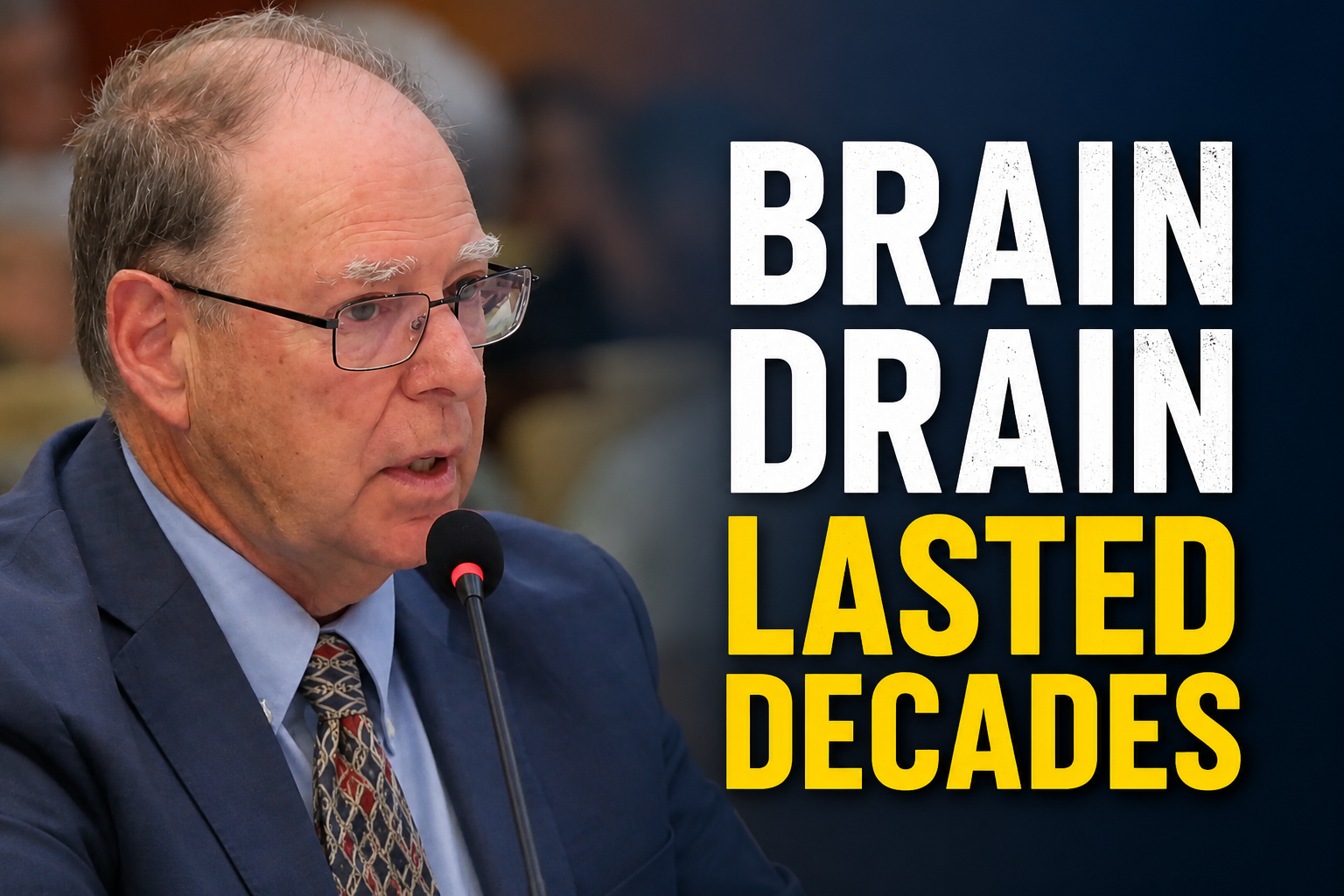
The long-term impact of Fiji’s coups extended far beyond the departure of Indo-Fijians, with the country suffering a devastating loss of skilled professionals across all ethnic groups, the Fiji Truth and Reconciliation Commission heard yesterday.
Academic Professor Graham Hassall said fear and uncertainty created a moral dilemma for public servants, many of whom felt compelled to remain silent or comply with unlawful directives simply to protect their families.
“When it rains, you have to put up your umbrella. That was taken by me to mean, ‘I have to feed my family. If I don’t obey that illegal ruling order, I’ll lose my position.’ That was the moral dilemma that every public servant faced.”
Professor Hassall cautioned against assuming that civil servants who remained in government after the coups were unsympathetic to the concerns of Indo-Fijians.
“You cannot presume that, for example, a Fijian who stayed in the public service was against Indo-Fijian concerns. There was a suppression of expressions of solidarity across race for this reason, and everybody just kept quiet.”
He said the resulting brain drain affected the entire country, not just one community.
“The impact of brain drain wasn’t just Indo-Fijians leaving; it was a brain drain on Fijians as well. It was a brain drain that affected the country. It’s not just an exodus of people leaving through the airport.”
Professor Hassall said the scale of the loss became clear when he examined Government Gazettes recording resignations from the public service.
“When I looked at the Government Gazettes, particularly for the years 1987, 1988 and 1989, and saw the number of teachers and medical staff resigning from the service, it really brings home to you the numbers that were involved.”
He said the consequences of the exodus were reflected in international assessments of Fiji’s development.
“The public sector came to be seen as a training ground for the private sector and for migration. Once a graduate gained three to five years’ experience in the Ministry of Finance or Public Works, they migrated to Australia and New Zealand.”
Professor Hassall said international agencies, including the World Bank, found that some infrastructure projects failed not because of a lack of funding, but because Fiji lacked the skilled workforce needed to deliver them.
“The World Bank reported that infrastructure projects failed not because of lack of funds, but because of what they called absorptive capacity. For example, how many engineers had left the Public Works Department.”
He said the loss of experienced professionals had lasting consequences for Fiji’s public service and national development.

