
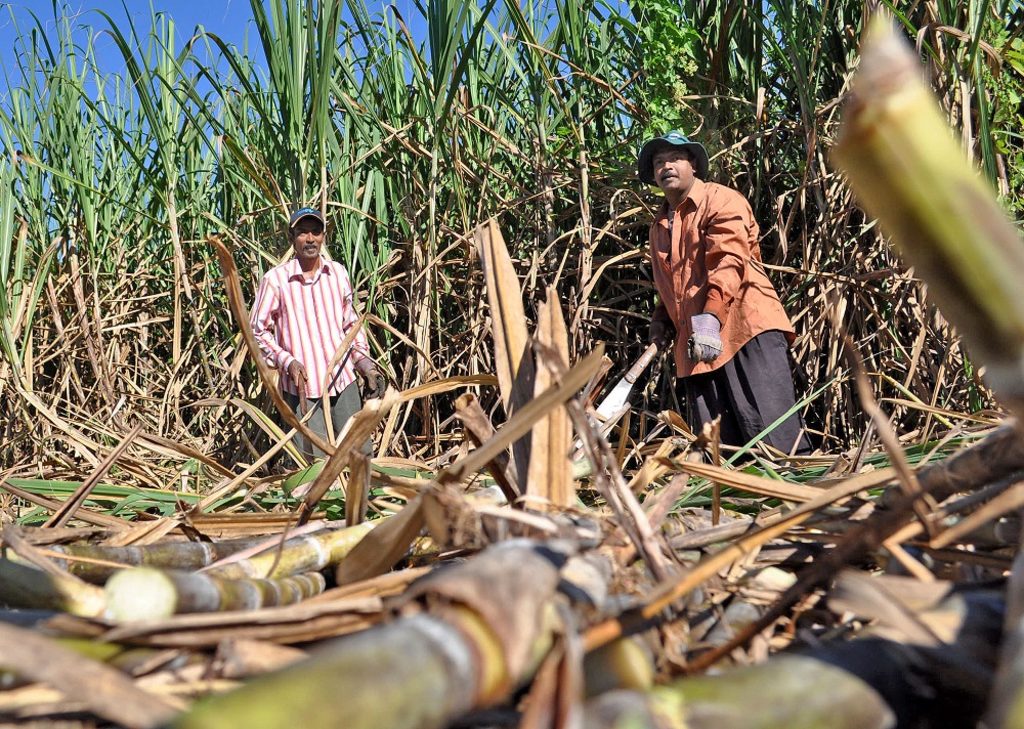
In 1889, my great grandparents arrived In Fiji with their 9 years old son as part of the indenture system.
After the immigration processing they found themselves in a place called Navua where they started their 5 years of indentured servitude planting sugar cane. The conditions, as we’ve all come to know, were more than challenging. They were harsh and unrelenting because in many ways they were starting from scratch.
It was a time when sugar was slowly starting to become the lifeblood of Fiji. The sweet smell of its potential and success were in the air.
The rhythmic sound of cane trains crossing the countryside, the sight of farmers tending their crops beneath the tropical sun and the towering chimneys of the mills were all symbols of an industry that helping to forge a new frontier and to build a small island nation.
For generations, sugar put food on family tables. It paid school fees, built homes, sustained rural communities, and contributed significantly to Fiji’s economy. For decades it was Fiji’s number one export earner.
Today, however, that giant appears to be struggling and teetering on the brink of collapse. Without government subsidies it would most certainly collapse.
Cane production has declined. Many farmers have left the industry. Labour shortages continue to grow. Young people are increasingly seeking opportunities elsewhere and aging infrastructure has made it difficult for the industry to compete in a rapidly changing world.
The questions many are asking is simple:
Can Fiji’s sugar industry giant be revived and survive?
Is it even sustainable?
Perhaps a better question would be:
Can Fiji’s sugar industry reset itself, even reinvent itself?
History teaches us that industries rarely survive by standing still. They survive by evolving and adapting.
The challenges facing Fiji may not be a lack of opportunity but a lack of vision and imagination.
For decades, we’ve viewed sugar cane primarily as a source of sugar. Yet around the world, sugar cane has evolved into something much bigger.
In countries like Brazil, sugar cane helps power vehicles through ethanol fuel. Elsewhere, it’s used to generate electricity, manufacture industrial products, produce bio-plastics, create animal feed and support entire renewable energy sectors.
What if Fiji stopped seeing sugar cane simply as sugar?
What if we began viewing it as a renewable resource capable of generating multiple streams of income?
Imagine mills producing not only sugar but electricity. Imagine ethanol plants reducing dependence on imported fuel. Imagine waste products becoming valuable commodities rather than discarded by-products.
Suddenly, the conversation changes.
The future of sugar may not lie in sugar alone.
Of course, diversification by itself will not solve every problem.
The industry also faces another challenge that’s becoming increasingly apparent: its aging farming workforce.
Many of Fiji’s cane farmers have spent a lifetime on the land. Generations to be exact. Their knowledge and experience are invaluable. Yet younger generations are often reluctant to follow in their footsteps.
Who can blame them?
My paternal grandparents were the last in a line of indentured labourers in our family. They sent their children to study abroad. Their children became some of Fiji’s first professionals – a doctor, lawyer, two school teachers and a Methodist Minister.
Few young people are attracted to an industry that appears uncertain and offers limited financial rewards.
If Fiji wants young people to embrace agriculture, farming must become profitable, modern and technologically advanced.
Young minds are naturally drawn to opportunity. They’re innovators, problem-solvers and entrepreneurs. Give them an industry with a future and many will eagerly help shape it.
Mechanisation, improved training, access to finance and modern farming techniques could all play a role in making agriculture attractive once again.
Perhaps there’s another lesson hidden within the sugar industry’s struggles.
For years, discussions have focused on saving what once was a giant.
But the future rarely belongs to those who cling to yesterday.
It belongs to those willing to build tomorrow.
The sugar industry of the future may look very different from the one our great grandparents and grandparents knew. It may produce energy as well as food. It may rely on technology as much as tradition. It may employ scientists, engineers, entrepreneurs and innovators alongside farmers.
And that may not be a sign of decline.
It may be a sign of evolution and reset.
The truth is that Fiji still possesses many of the ingredients necessary for success: fertile land, favourable growing conditions, generations of agricultural knowledge and resilient people who’ve overcome adversity time and time again.
The foundations remain.
What’s needed now is vision. And articulating that vision into bold initiatives could be the key.
The greatest danger facing the sugar industry may not be declining production or global competition.
It may be the belief that decline is inevitable.
Because when people stop believing in possibilities, they stop creating them.
Perhaps Fiji’s sugar industry isn’t approaching the end of its story.
Perhaps it’s simply waiting for new innovators to begin writing a new chapter. Maybe even a new “playbook”.
The question is whether we have the courage, imagination and leadership to begin writing it.
COLIN DEOKI lives in Melbourne, Australia and is a regular contributor to this newspaper. The views expressed in this article are his and not necessarily of this newspaper.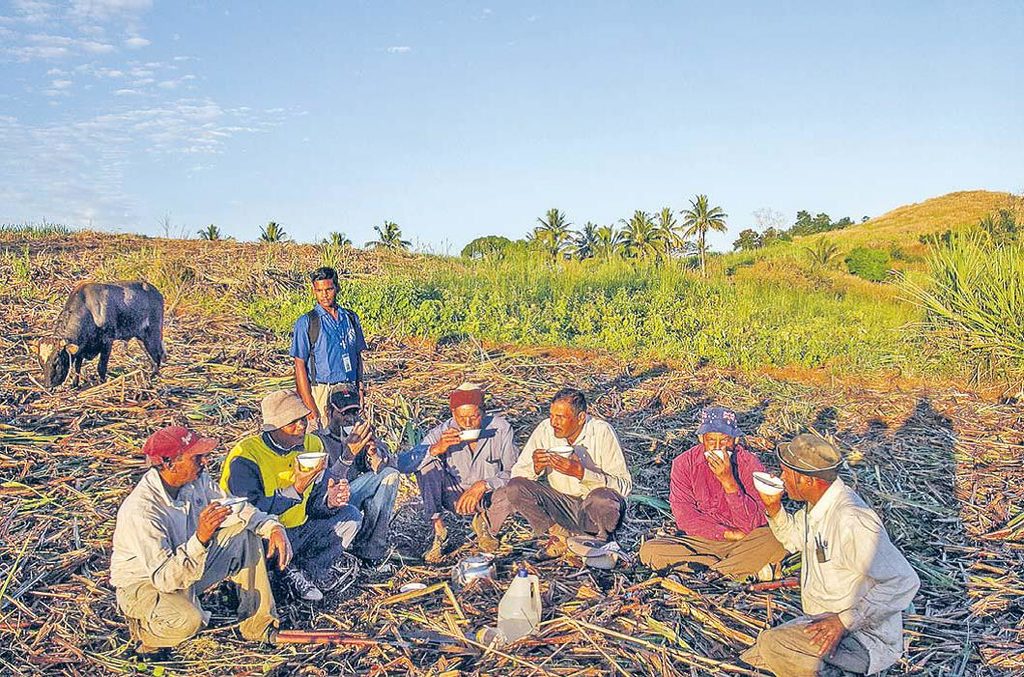
Sugarcane farmers from Kawakawa near Labasa during their cane harvesting tea break. Picture: FILE

