IN a democracy, the primary role of the national legislature is to make laws that will govern its people.
In Fiji, most of our Bills are usually introduced by Cabinet ministers, although any member of Parliament can table a Bill for consideration.
According to Parliament of the Republic of Fiji literature, when a Bill is brought forward, it is formally introduced by name and read out for the first time.
This is referred to as “first reading”. Parliament then sets a date for the Bill to be further deliberated on, known as the “second reading”.
During the second reading stage, MPs debate and then vote based on the principles and merits of the proposed law.
When Parliament formally agrees to the Bill by adopting a motion that the Bill be read a third time, this is known as the “third reading”.
Between the “second reading” and “third reading”, a Bill can be referred to one of Parliament’s standing committees for further consideration.
At this stage it may invite the public to provide feedback.
The committee is normally required to make a report on its consideration of the Bill to Parliament within 30 days. So the passage of a Bill can take up a considerable amount of time.
It has to, so that draft laws are exposed to the necessary systems of legislative checks and balances and democratic oversight before they become law.
A number of times we’ve heard and seen exchanges in our Parliament over the use of Standing Order 51, which is one of the rules of procedure for our Parliament and its committees.
Basically, this provision allows for the fast tracking of Bills through Parliament.
This is not something sinister. Bills can be considered “without delay” when the Government believes there is a need.
However, some may argue that when fast tracking becomes too frequent, or when it is used to deliberately “shut out voices”, then questions need to be asked.
We have the right to demand that our voices be heard directly or indirectly through our MPs because we elected them to the legislature and we have the right to remind them of their duty and how they must act.
Misuse of the parliamentary procedure may upset the legislature’s normal deliberative processes which require thorough and careful discussion.
In other words, fast tracking a Bill’s passage can make parliamentary law-making processes look “less participatory” because constituents through their representatives are not able to effectively debate in the way they would like to, that is, within the normal time frame allowed.
When this happens “too often too easily” laws, in principle, may fail to be truly representative and legitimate in nature.
When experts and political scientists were reforming modern democracies they realised that people needed governments to rule them and governments needed the people.
They also realised that for government to work effectively those in leadership needed power and this had to come from the people. That is why we cast our votes during elections.
They also realised that, without restraint, this power could be dangerous and abused.
Hence, today the type of democracy we’ve inherited emphasises human rights which means that the rights of citizens are paramount.
This includes our political representatives’ right to comprehensively debate the provisions of any Bill and that oversight be present during this debate.
Democracy also stresses the importance of separation of powers, the rule of law, representation, legitimacy, transparency and accountability.
That is why a democracy underlines the importance of parliaments and at the same time provides ways to limit the power of those in leadership and hold them accountable to the people.
So when voters and their representatives in Parliament, including supporters of losing parties, are not given ample time to scrutinise laws, this may deprive the legislature, as an arm of the State, of its legislative oversight abilities and its power to keep a check on those who govern.
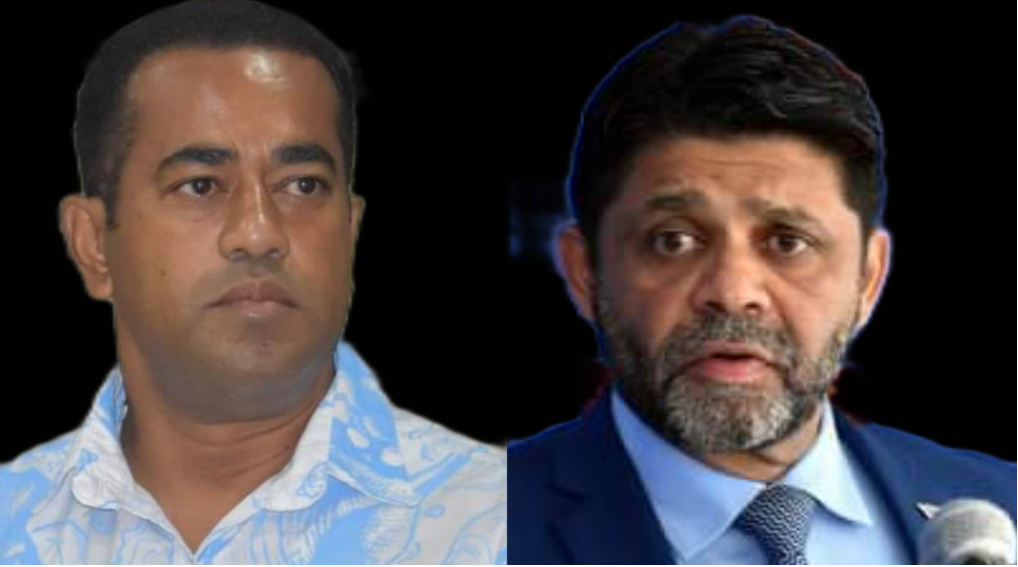
The Attorney-General, Aiyaz Sayed-Khaiyum, in The Fiji Times of February 13, 2021 noted that Standing Order 51 was to quicken the passing of legislation. Fair enough!
He made the comment while responding to questions in Parliament by National Federation Party parliamentarian Pio Tikoduadua who had asked the A-G for an update on the Accountability and Transparency Commission given there were budget provisions for its establishment every year.
The Code of Conduct Bill has not been approved by Parliament.
Mr Tikoduadua quizzed the A-G on why it was taking long for the committee to deliberate on the Report of the Justice and Human Rights Committee.
“This is why we get things done under Order 51, it is to get things elevated under the order list,” Mr Sayed-Khaiyum replied.
Opposition parliamentarian Niko Nawaikula had raised concerns in the past too in regards to the use of Standing Order 51.
On October 13 last year former Parliament secretary-general Mary Chapman said she was concerned with “the frequent abuse of the use of Standing Order 51” in the House.
Speaking at the NGO Coalition on Human Rights State of Democracy panel discussion in Suva, she said parliamentarians were not being given enough time to scrutinise Bills.
There are a number of reasons why Parliament will want to vote to bypass the usual stages of considering a Bill (draft law) and instead to vote on it “without delay”.
Reasons can vary from ensuring that legislation is in force in time for an event to ensuring that government responds to a public concern.
There are other reasons.
There is nothing new and wrong with providing reasons as long as the expedited decision is genuine and not merely to refuse politicians the opportunity to meticulously scrutinise laws.
Like many democratic ideals, there is a fine line between acting in their interest and going against them.
So while rushing a piece of legislation may seem to be within the confines of parliamentary procedure, it could also work to the detriment of democratic ideals and may ultimately rob citizens of their right to effectively and actively participate in decision making.
Ample time must be given to politicians to properly scrutinise Bills.
Opportunity must be there for opposition members to introduce a Bill.
This is vital for improving policies, laws and public service delivery for the benefit of citizens and to ensure that they enjoy the rights that they deserve and with dignity.
The bottom line is, proper scrutiny means that any change in law is truly substantiated, relevant and responsive to people’s needs and duly justified.
It means that citizens have access to quality information to make right and uplifting choices that can improve their lives.
Also, it allows politicians from both sides of the House to interact meaningfully and engage with civility before reaching a compromise that serves to benefit the common good.
Therefore no law must be made with unnecessary haste or for superficial reasons.
But then again, like most times, the ball rests in government’s court.
The way in which it engages the people in decision-making and how it ensures that elected politicians are truly accountable and transparent will reflect its own political calibre and maturity.
At the end of the day, it is not the number of Bills passed or how fast they are passed that determines whether leaders espouse and practise democratic leadership.
Rather, it is how the views, the interests and aspirations of the people who voted them in are reflected in the Bills they pass in Parliament.
Until we meet on this same page same time next week, stay blessed, stay healthy and stay safe.