IN Fiji’s highlands, geography can mean more than distance — it can shape how young people access health information, education, employment and other opportunities.
United Nations Population Fund (UNFPA) technical specialist for Adolescents and Youth, Dr Tej Ram Jat, said where a young person lives should never become a barrier to the information and services, they need to live healthy, empowered and dignified lives.
Speaking at the youth festival in Navosa last week, Dr Jat said holding the festival in Navosa demonstrated a commitment to reaching young people wherever they live.
“It represents our shared commitment for ensuring that young people, youth development, their health, their empowerment, reach every young person in Fiji, no matter where they live, whether they live in Suva, in Lautoka, Ba or in the highlands of Navosa,” he said.
Dr Jat extended the United Nations’ congratulations to the Ministry of Youth and Sports for hosting the event, saying the gathering reflected the aspirations young people share despite living in different circumstances.
The message reflected this year’s International Youth Day theme, “Different Contexts, Common Aspirations.”
Different realities, shared hopes
Navosa gave the theme particular meaning, Dr Jat said, as young people from different communities and backgrounds, including agricultural communities, gathered for the festival.
Their geographic circumstances may affect access to health services, education and employment opportunities, but those differences do not change their hopes for the future.
“They all share common aspirations,” he said.
Those aspirations include living healthy and dignified lives, making informed choices about their bodies, health and wellbeing, and accessing quality information and services.
Dr Jat said young people’s ambitions also extend beyond their individual lives.
He pointed to the Pacific youth-led global campaign on climate change, which resulted in an International Court of Justice advisory, as an example of young people taking action on issues affecting their communities, countries and the wider world.
He said the achievement demonstrated the strength and initiative of young people in Fiji and across the Pacific.
“It shows how young people from the Pacific, from Fiji and other Pacific nations, are vibrant, how they are strong, how they are proactive, how they make informed decisions about their lives,” he said.
Fiji’s demographic opportunity
Almost 44 per cent of Fiji’s population is below the age of 25.
These young people live in urban areas, rural communities and the highlands, but wherever they live, they are the backbone of a sustainable and resilient future for Fiji.
“So this demographic profile offers Fiji a wonderful opportunity to realise the benefits of demographic dividend.
“And the demographic dividend is a situation where we have young people in the workforce who are skilled, who are educated, who are healthy, and who make very significant contribution in sustainable socioeconomic development of the country.”
But that opportunity depends on investment.
“We will be able to achieve only if we are investing appropriately in health, education, skills development and wellbeing of these young people, which they deserve,” he said.
As young people move from adolescence into adulthood, they need services and support that help them build strong foundations and become contributing citizens.
Working together for young people
Dr Jat said addressing the challenges facing young people requires government ministries and partners to work together.
He congratulated the Government of Fiji and different line ministries for their efforts to comprehensively empower young people.
The Ministry of Health and Medical Services is working to strengthen youth-friendly health services, train healthcare providers and provide services to young people.
UNFPA is also working with the Ministry of Education to provide family life education to students in schools.
For young people who are out of school, similar information is provided through work with the Ministry of Youth and Sports.
The programs reach young people at youth training centres and in villages through youth clubs.
Trained health facilitators from the Ministry of Youth and Sports provide information on reproductive health, decision-making and healthy choices.
Dr Jat also highlighted collaboration with the Ministry of Labour on employment opportunities, as well as work with the Ministry of Women, Children and Social Protection and the Ministry of Justice on human rights and the prevention and response to gender-based violence.
Closing the information gap
For young people living in geographically isolated communities, accessing information can be a challenge.
Dr Jat said geographical isolation must never become an information vacuum.
“Sometimes they are not able to go to health facilities or the health centres or other places where they can get this information,” he said.
To help address the challenge, UNFPA and the Ministry of Youth and Sports, under the leadership of Minister Jese Saukuru, developed the YES mobile application.
The application allows young people to access information wherever they are through their phones. It also provides telephone numbers for helplines and services covering health and other areas where young people may need support.
Dr Jat encouraged young people to download the application and use it to access the information they needed.
Investing in Fiji’s future
For Dr Jat, supporting young people is not simply about addressing their needs today. It is about strengthening the future of Fiji.
He called on government partners, donors and civil society colleagues to maintain and expand targeted investments in adolescents and young people.
“They are today’s leaders, they are tomorrow’s leaders, they are the future of this country,” he said.
Providing young people with comprehensive health and education, skills development, decent employment and genuine roles in decision-making, he said, is an investment in a stronger and more resilient Fiji.
The youth festival in Navosa provided a setting for that message, bringing together young people from different villages and communities while highlighting what they share.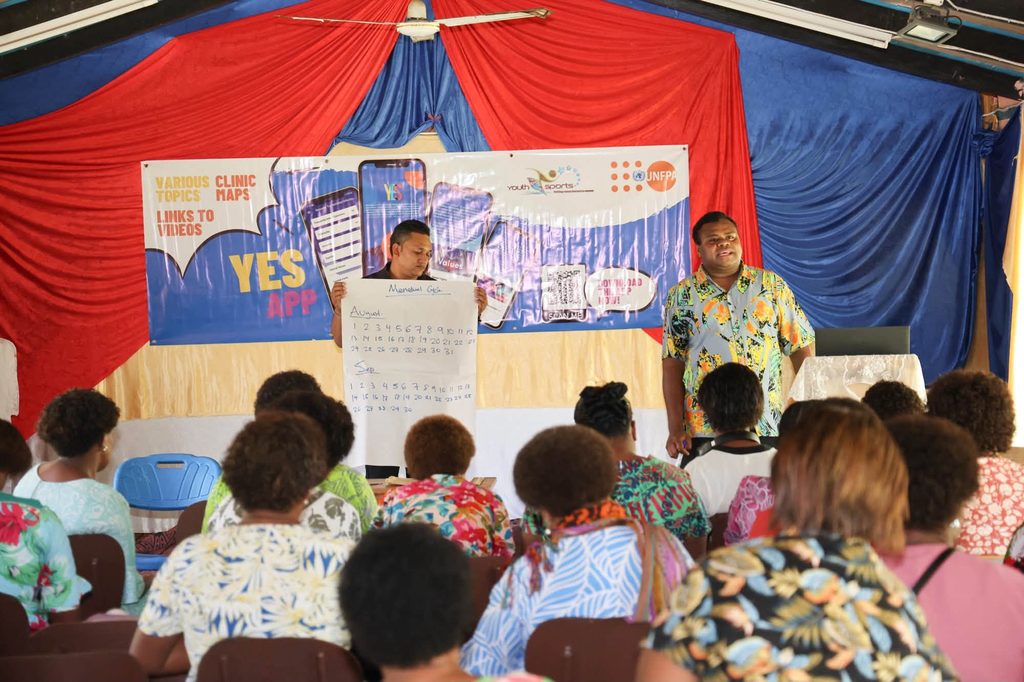
Youth of Navosa were part of a Sexual and Reproductive Health and Rights (SRHR) awareness session at the Nasau Youth Training Centre before the youth festival. Picture: MINISTRY OF YOUTH AND SPORTS
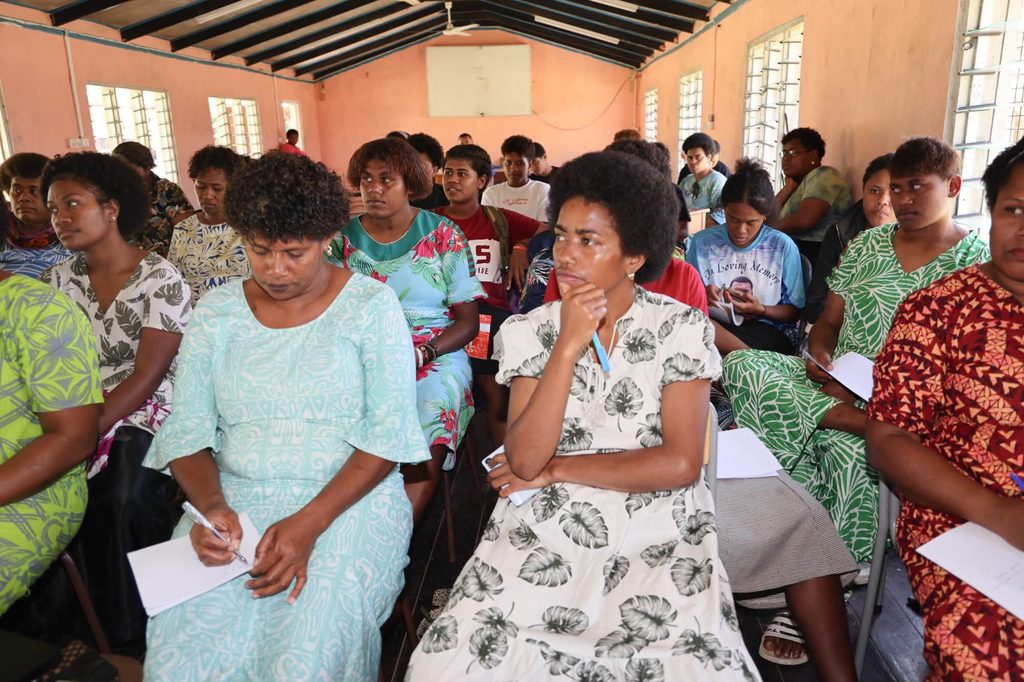
Youth of Navosa were introduced to and downloaded the YES App, which is designed to educate and inform young people about values, gender equality, sexuality, relationships, and referral services for sexual and reproductive health. Picture: MINISTRY OF YOUTH AND SPORTS