Deep in the cane fields of Davota, Tavua, a then 24-year-old Raghwa Nand would hum religious bhajan songs to himself while the scorching sun rays hit his back.
The Darbar Arts Culture and Heritage Trust defines bhajan performances as Hindu devotional songs which can either be performed as a recitation or chant.
Mr Nand said it was in 1986 at the age of 24 that his father nudged him to turn his hobby into a passion.
However, he would finally move to Rarawai, Ba in 2010 with his small family.
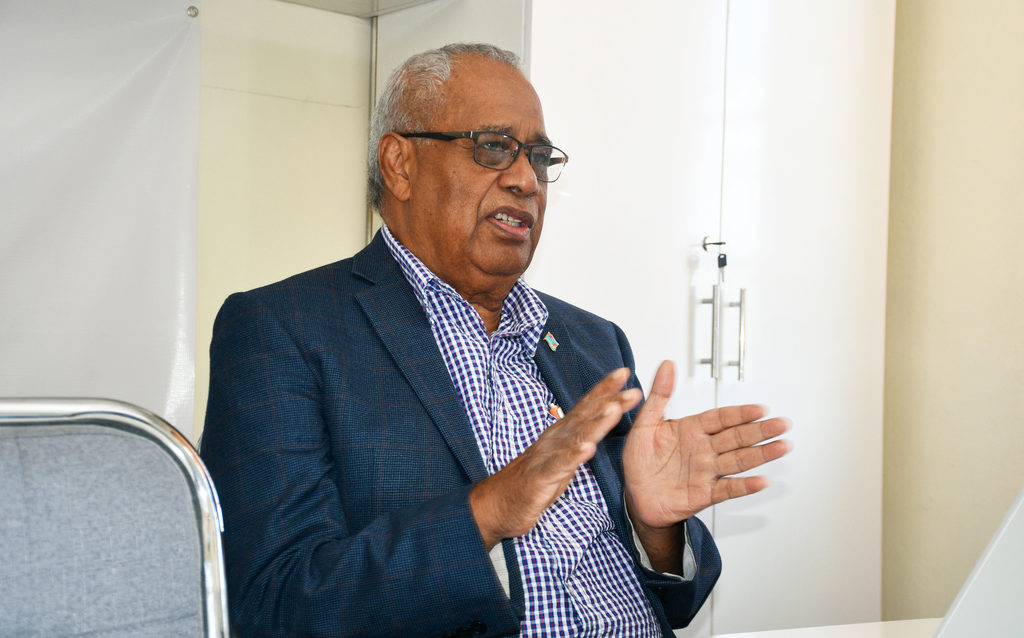
The Fiji Times team briefly sat down with Mr Nand for a chat regarding the inception of his five-member group he proudly named the Raghwa Nand Bhajan Group.
“This is my hobby, I Iove it but it was mostly my father who wanted me to sing, and, in those days, people loved to hear me sing, that’s why my father insisted that I sing the bhajan,” he said.
In the 1980s Mr Nand said Ba-based bhana players Patrick Prasad, Manshil Prasad and Junior Sagar were popular names in almost every Hindu household.
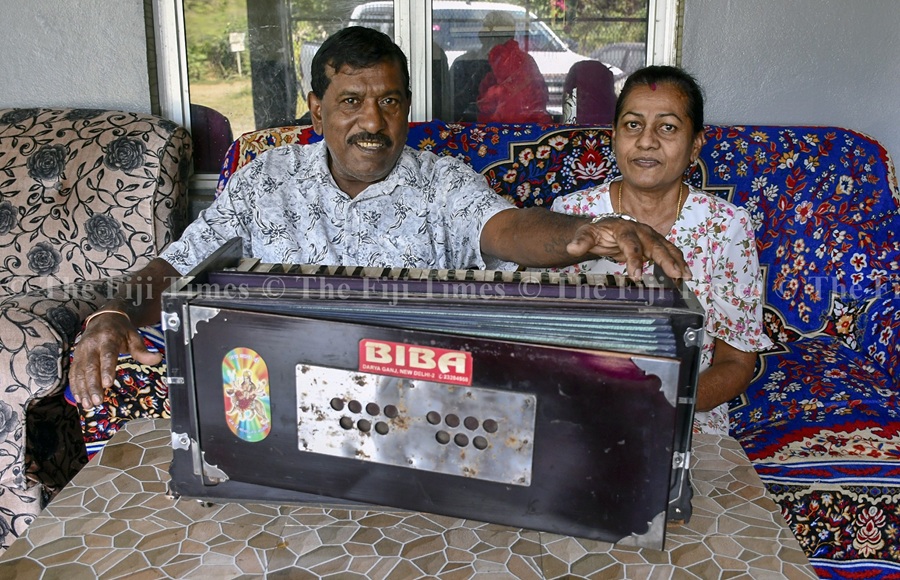
Now 68 years old, Mr Nand’s fingers traced the keys of his aged accordion which he often used for performances in Rakiraki,Tavua and all-around Fiji.
“I started playing bhajan in 1986, I was 24 years old and I was part of the mandali in Tavua playing the harmonium and other instruments while also reading the holy book,” he said.
“I also had my guru who taught me how to play the bhajan, then I started my own group, and the guru taught me what I needed to know.”
Mr Nand has won 32 trophies and two medals from bhajan competitions.
“I mostly sing religious bhajan for weddings and funerals and even nine days, 12 days or six months pooja there.
“I get the songs from the bhajan book and that’s how I learnt but the lyrics are already there, it is us who must come up with the tune.”
Now retired, Mr Nand dedicates his time to honing his craft at home.
“When I’m free, I’ve got the instrument here so that’s when I play the harmonium, my son also plays the dholak.
“I have two granddaughters and two grandsons; they also play the harmonium and dholak on Friday and Saturdays.”
Reflecting on the general atmosphere during bhajan performances in the 1980s and now, Mr Nand said the dedication to the craft in terms of learning the lyrics and the fluidity of performances was gradually disappearing.
“Before it was good but now the new comers do not know how to sing the bhajan.
“Singing bhajan is our identity, I would like to encourage the youths to sing and remember your identity, if anyone needs my assistance, I am always available to teach.”
Mr Nand said it was extremely important to prepare well before every performance to set the tone for the specific function the group is performing at.
For the Nand family, weekends are not for resting; they are for preserving a sacred calling.
While Mr Nand laments the modern shift toward computerised beats and rushed performances, he refuses to let the authentic art form die.
Mr Nand believes the soul of a true bhajan is the emotional and spiritual devotion behind its delivery.
In the 1980s, singers spent months researching scriptural texts to ensure their melodies matched the weight of the lyrics.
Today, he notices that the newer generation often prioritises fast-paced rhythms over deep cultural understanding.
To bridge this generational gap, Mr Nand has turned his home into a makeshift academy. Every Friday and Saturday he spends time with his grandsons, nine-year-old Yohaan Reddy who has mastered playing the dholak and three-year-old Avyaan Reddy who plays the harmonium.
He teaches them how to breathe life into the static text of old bhajan books, guiding them to find a unique tune, his melodious voice carrying each note while he patiently navigates them on the proper use of the musical instruments, be it a light thump of the dholak or the slow push of the harmonium, his grandsons instantly falling into perfect rhythm beside him.
Mr Nand remains deeply hopeful that the vibrant chords of the harmonium will echo through Fiji’s valleys for decades to come, anchoring the youth to their roots.