
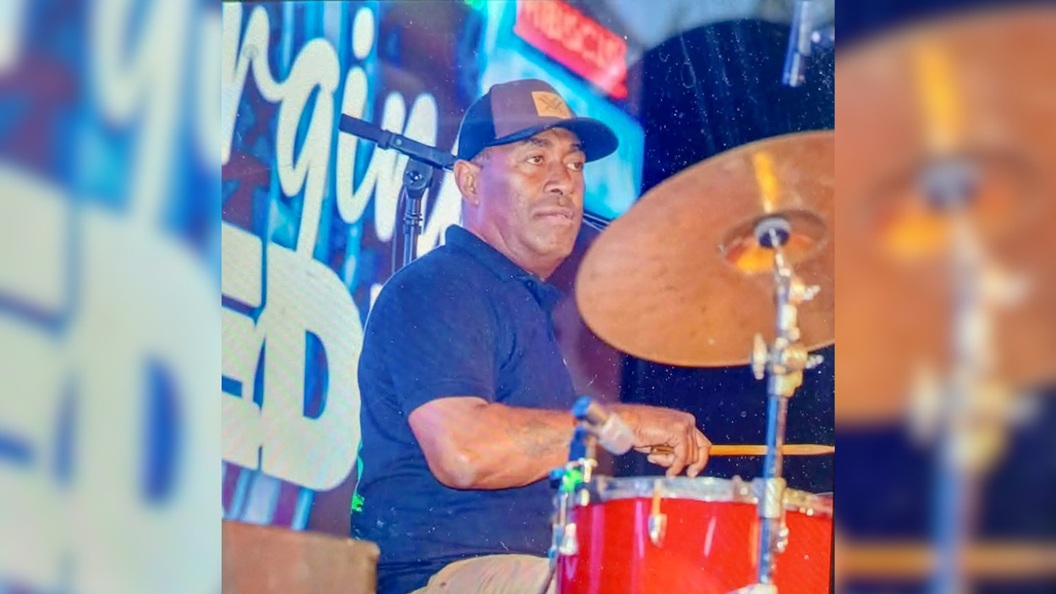
For Ilaisa Abariga, life has always moved to the sound of a drumbeat.
Long before people across Fiji knew him as “Pajo”, before the nightclub crowds, concert stages and years of entertaining thousands, he was simply a young boy in Wailoku, Suva, watching his older brother play drums and dreaming of one day to do the same.
Today, at 50 years old, Abariga is regarded by many in the local entertainment scene as one of the Pacific’s finest drummers, a musician whose career has stretched across generations of bands, artists and performances.
But behind the fast hands, spinning drumsticks and energetic performances is a story built on humility, discipline and years of sacrifice.
Originally from the Solomon Islands community that settled in Wailoku, Tamavua, Abariga has maternal links to Udu Point in Vanua Levu.
Music ran naturally through his family.
His sister, Di Tui, now living in the Western Division, is a well-known singer, while his elder brothers were responsible for introducing him to the drums. That introduction came at a very young age.
“I used to sit on my brother’s lap while he played,” Abariga said.
“I would watch his hands and listen carefully to the rhythm. That’s how I started learning.”
“They are the reason I’m here today.”
While many children his age were still learning nursery rhymes, young Ilaisa was already learning timing, beats and stage rhythm.
His first band was Gypsies, a small group made up of people from around his community. He was only in Class One at the time.
Looking back now, he laughs at the memories of being the youngest member in almost every band he joined.
“Back then if you got the beat wrong, you’d get a dong on the head.”
“I was always the youngest one, so I got plenty of those.”
But he said those moments shaped him into the musician he became.
“In those days the older musicians wanted you to learn properly.”
“They corrected you immediately. At that time, it felt hard, but now I appreciate it.”
As his confidence grew, so did his opportunities.
Abariga slowly made a name for himself in Suva’s nightlife entertainment scene during what many still consider the golden era of live music in Fiji.
He performed at the Kings Hotel in Nabua before later moving to the former Bali Hi nightclub and eventually Checkers, places once filled every weekend with live bands, dancing crowds and loud island music.
Those years, he says, taught him an important lesson of understanding people.
“I know the atmosphere and I know what people like.”
“That’s what I play to.”
Whether it was island reggae, slow classics, jazz-inspired music or upbeat dance numbers, Abariga became known for his ability to connect with audiences through rhythm.
His musical growth continued after learning from respected drummer Paul Stevens before later joining the Freelancers band, where he developed a deeper understanding of jazz and tone control.
“It taught me to become more flexible as a drummer.”
But while music brought excitement and recognition, it also demanded sacrifice.
Unlike many Fijians, he didn’t celebrate a traditional birthday at the age of 21.
Instead, much like his younger years, his 21st was spent focused on performing, rehearsing and surviving through music.
Still, he carries no regret.
“Everything I learned from childhood until now stays with me today.”
“I’m grateful to all the older people I met along the journey because they taught me things I still use in life.”
Over the decades, his reputation allowed him to perform alongside some of Fiji’s most recognised entertainers.
He spent time performing with Vude King Seru Serevi and remains in contact with him today.
He also credits artists such as Laisa Vulakoro, Lia Osborne and Georgina Ledua as important influences throughout his musical journey.
One of the proudest moments of his career came in 2017 during the Fiji performance of The Millenniums, the touring band associated with the late international Fijian music icon, George “Fiji” Veikoso.
For Abariga, performing alongside musicians connected to a man many Pacific Islanders considered a legend was something special.
George Veikoso, whose music carried the sounds of the Pacific across the world, was admired by many local musicians for the way he blended island reggae, soul and Fijian identity into timeless songs.
He said preparing for the concert was intense because the local backing band had only a short time to learn the material.
“We only had a short time to learn the songs.”
“But by the time we finished rehearsing, we had figured out the whole album.”
Despite the pressure, the concert became one of the highlights of his musical life.
It was also during that experience that the late Veikoso gave him the nickname “Pajo”, a name that has followed him ever since.
“To be given that name by Mr Fiji himself was something special for me.”
Known not only for his drumming skills but also his showmanship, Abariga developed a reputation for entertaining crowds in unique ways.
“I can play standing up.”
“I can even play while spinning.”
But perhaps the most meaningful chapter of his life today is the one happening away from the nightclub lights.
Abariga is now part of the Fiji Corrections Service where he works as a driver while continuing to perform with the organisation’s band.
For him, music has now become less about fame and more about purpose.
He says one of the greatest joys at this stage in his life is mentoring younger musicians and inmates through music.
“Sharing my talent with them makes me feel like I’m doing something good for the community.”
“To teach these boys may not always be easy, but I hope they take something positive from it and use it to do better things in life.”
Now considered one of the senior musicians in many local circles, Abariga enjoys seeing younger performers grow around him.
“It’s nice being the older one now because I remember when I was that young boy trying to learn from everyone else.”
Even at 50 years old, he has no plan of slowing down despite many people his age stepping away from demanding performances.
“I still enjoy doing what I love.”
He said younger members of the Fiji Corrections Service band often urge him to continue performing and carrying the legacy forward.
While retirement is not on his mind yet, Abariga admits he has started thinking about eventually passing on everything he has learned through decades behind the drum set.
“Maybe by the age of 60 I’ll pass the legacy on to somebody else.”
“But before that, I still have a lot to teach.”
And after a lifetime spent keeping crowds dancing, mentoring young musicians and carrying Fiji’s rhythms across generations, his advice remains simple.
“Don’t sleep on your talent.”
“You don’t need qualifications to become a good musician. If you have talent, showcase it because talent can take you places.”

