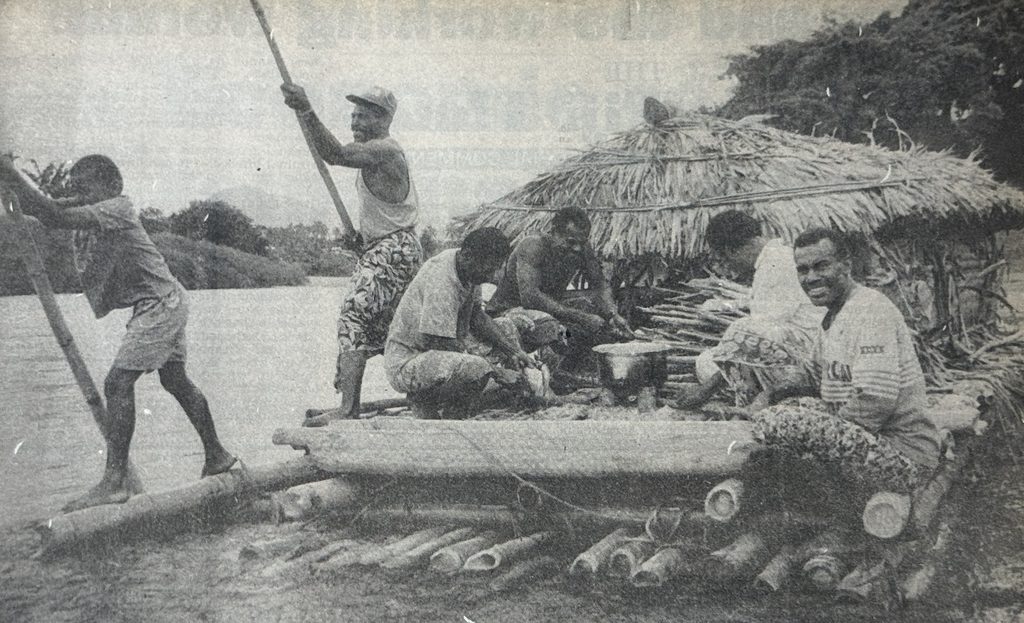
In 1992, Information Minister Ilai Kuli said people trained in the era of bilibili (bamboo rafts) had developed a level of patience and resilience that enabled them to withstand any challenge.
According to an article published in The Fiji Times on December 2 that year, Mr Kuli made the remarks while observing the arrival of the first group of bilibili rafts at lower villages along the Wainimala River during the Naitasiri provincial bilibili-a-thon.
“This is the way Asesela and I were brought up,” he said, referring to the late Professor Asesela Ravuvu.
The bilibili-a-thon began in 1990, when a secondary school undertook a river journey from upper Wainimala to Nausori — covering about 100 miles in under a week. By 1992, participation had expanded significantly.
“Last year, four secondary schools took part. This year, all 16 tikina in the province are participating.
“You have your walk-a-thon and others have spell-a-thons — for us, it’s the bilibili-a-thon.”
Recalling his own upbringing, Mr Kuli described a 1947 journey with his parents to Sawani, during which they transported a tonne of dalo to Nausori and earned about $20 — enough to fund a year of his education.
He said the initiative was conceived by a group of educated individuals from the province, including Prof Ravuvu, with the aim of reviving traditional skills and cultural knowledge that were gradually being lost.
“The educational value is that young people will be able to see and experience the lives their parents and grandparents lived.”
As part of the project, each village was tasked with crafting a traditional lali (wooden drum) for sale in Nausori, helping to revive the role of mataisau (traditional artisans) whose skills had become less commonly used.
Villages along the Wainimala River line welcomed the flotilla in traditional fashion. At Vatulili Village in the Tikina Navuakece, about 50 villagers gathered on the riverbank to greet participants and assist them on the journey.
Each bilibili was constructed using traditional materials — bamboo bound with jungle vine (walai) and roofed with duruka leaves — with no imported binding or modern construction materials used.
A team form this newspaper that accompanied the first group witnessed customary exchanges between related voyagers, reflecting longstanding cultural practices.
The flotilla was expected to arrive in Nausori for the opening of the Bilibili Festival, with proceeds directed towards the Naitasiri provincial education scholarship fund.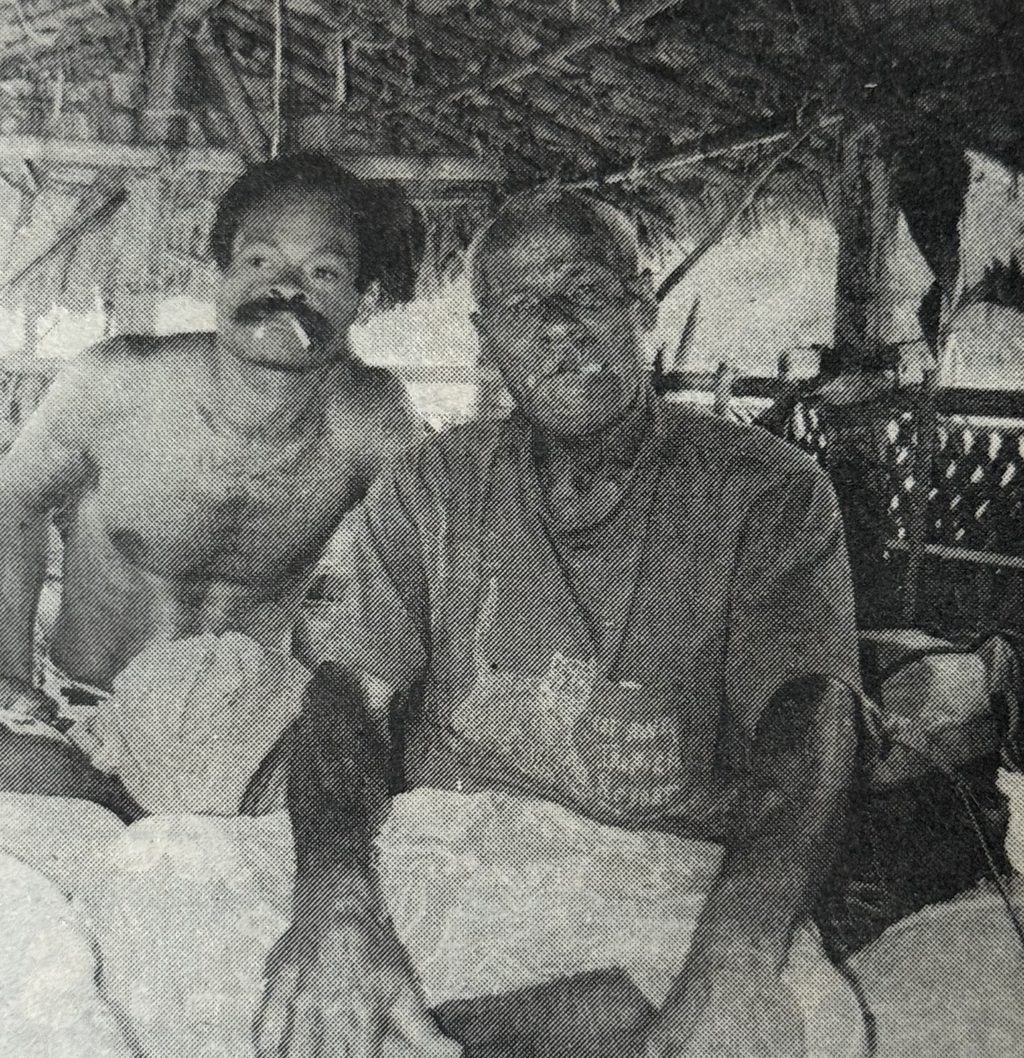
Viliame Waqalevu (left) and Suliano Kacikinakoro of Nasirotu Village in the upper Wainimala take a deserved cigarette break at Vatulili Village.