
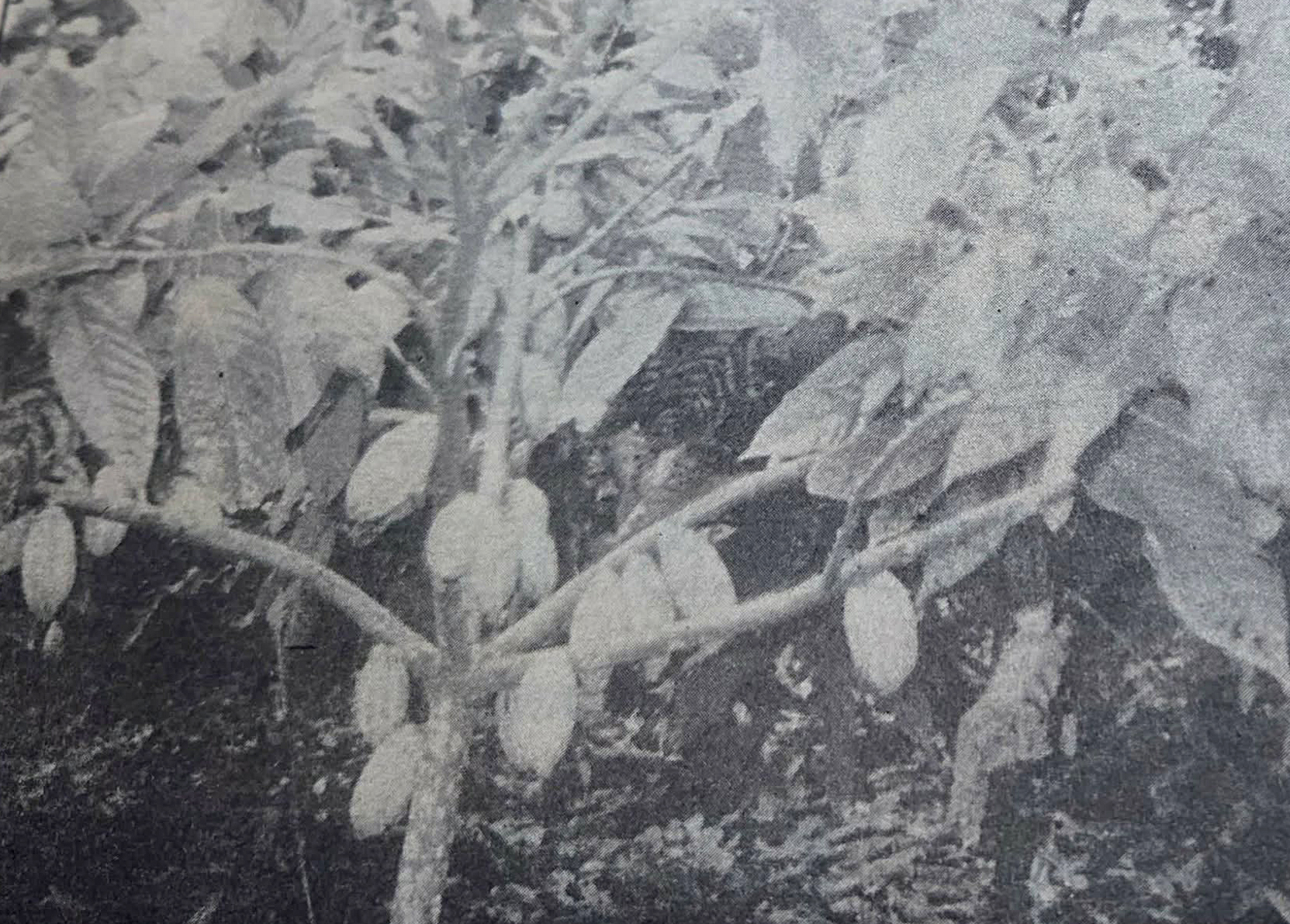
Fiji’s cocoa industry, though never a major export sector, was once widely believed to have the potential to help diversify the country’s export industry.
A feature published in The Fiji Times on May 9, 1986, titled “Cocoa Industry Thriving,” highlighted the potential of cocoa farming and the efforts being made to establish it as an important industry and promote it as an export diversification crop. At the time, more than 3500 hectares of cocoa were under cultivation, with 245 tonnes of dry cocoa exported, generating about half a million dollars in revenue.
Cocoa was introduced to Fiji in the early 1880s when clones were brought from Trinidad and Sri Lanka. During that period, cocoa was viewed as more than just another agricultural product. It was seen as a way to diversify Fiji’s economy, reduce dependence on major exports such as sugar, and create new income opportunities for rural communities.
The Matasawalevu project in Dreketi was promoted after World War II in an effort to revive the cocoa industry. However, development remained slow because stem canker and black pod diseases affected plantations, while Fiji’s humid and wet climate was considered unsuitable for the Trinitario variety of cocoa.
During the late 1970s and into the 1980s, agricultural experts and government agencies once again encouraged farmers to consider cocoa as a valuable commercial crop. With the introduction of the Amelonado variety and the implementation of Plan Seven, sustainable planting began to expand. The 1978 Agricultural Census recorded 1229 hectares of cocoa under cultivation.
Today, small-scale cocoa farmers continue to produce beans for speciality markets through companies such as Cacao Fiji and Vanua Chocolate, demonstrating that the aspirations of the 1980s were not misplaced. The 1986 newspaper feature captured more than the success of a single plantation; it documented a time when Fiji looked beyond its traditional industries of sugar and copra and explored new opportunities for rural development and greater resilience in the agricultural sector. It remains a valuable record of an important chapter in the history of Fiji’s farming industry.

