
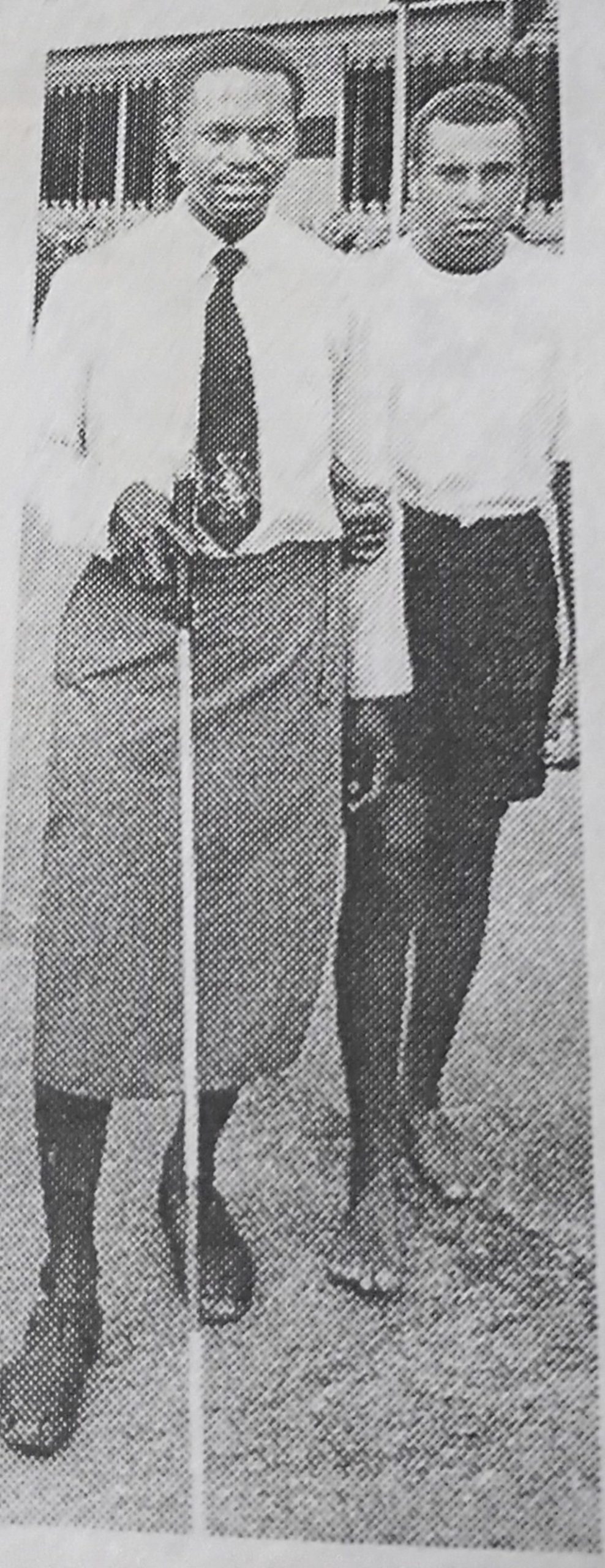
There was a time when blind people were rarely seen on the streets, in offices, or even operating machinery in factories.
According to a story published in The Fiji Times on October 16, 1999, all that had changed. when blind people were no longer made to feel disabled or inadequate.
They had become part of the working society and were out there like anyone else, earning a living.
They had long been ignored and excluded from daily activities. While many may not have realised it, such treatment had made them feel rejected and useless.
The article said the United Blind Persons of Fiji was out to change that. They wanted their members to be treated like any other members of society.
And the way they were doing it was by observing what they called White Cane Safety Week, which was being marked at the time.
The purpose of the campaign was to make people fully aware of the meaning of the white cane and the need to exercise special care for blind people who carry it.
Its theme, “White Cane, Our Sight and Our Guide Towards the New Millennium and Beyond,” spoke about the importance of the white cane.
White cane. What was it?
It had been a faithful guardian and companion to the blind.
With its unique design tailored to specific users, a white cane, commonly known as a walking stick, served an important purpose.
The white cane in society had become one of the symbols of a blind person’s ability to travel from place to place.
UBPF’s fundraising officer, Sainimili Tawake, said there were people who still did not respect the white cane.
“The white was very important to us because it takes us from point A to point B,” Mrs Tawake said.
Mrs Tawake said that in the past, they bought new white canes from overseas because some able people would ignore them and break them.
The use of white canes had promoted courtesy and special consideration for the blind on the streets and highways.
Mrs Tawake added that blind people wanted society to acknowledge them as fellow human beings and recognise their hidden potential.
In many cases, disabled people thought they were not worthy of being part of society.
But a confident and strong Mrs Tawake said such thoughts only killed a person’s ego.
Mrs Tawake, who was also partially blind, said family members should treat such people like any other member of the family.
“I was never treated like a princess,”
“My mum made me wash the dishes, collect firewood, wash the clothes, and do other activities my sisters used to do at home.”
She said that the treatment she received had given her a strong character.
“When people treat me in such a way, it tells us that we can do what others do. And we like that.”
“Don’t judge a book by its cover.”
Some people preferred to see blind people locked at home, where they were safe.
They believed it best suited the blind.
Mrs Tawake said this attitude needed to change.
“Society should one day see these people working in offices and doing other jobs that are done daily.”
Mrs Tawake said they were treated terribly, an experience that no one could describe.
“It’s hard and unbearable.”
“We are made fun of and treated like people from a different planet.”
She clearly remembered how many opportunities she had missed out on because of her disability.
“The opportunity was there, I had it right in front of me, but I was never given a chance to grab it.”
And in many cases, when opportunities were taken, success followed.
But not for Mrs Tawake — the success she had hoped for never came, even when she was part of a netball team.
Fear and worry developed in her about how she was treated by her teammates.
Her teammates feared she might not be able to catch the ball because of her sight.
“I don’t blame them.”
UBPF president Surendra Singh said that most people were uncertain and afraid of blind people.
“Conducting such an awareness campaign will benefit society as a whole because the sighted would know our basic needs.”
Mrs tawake said “all these people need today is a changed society where they belong.
“Don’t write a person off simply because of his /her disability.”

