
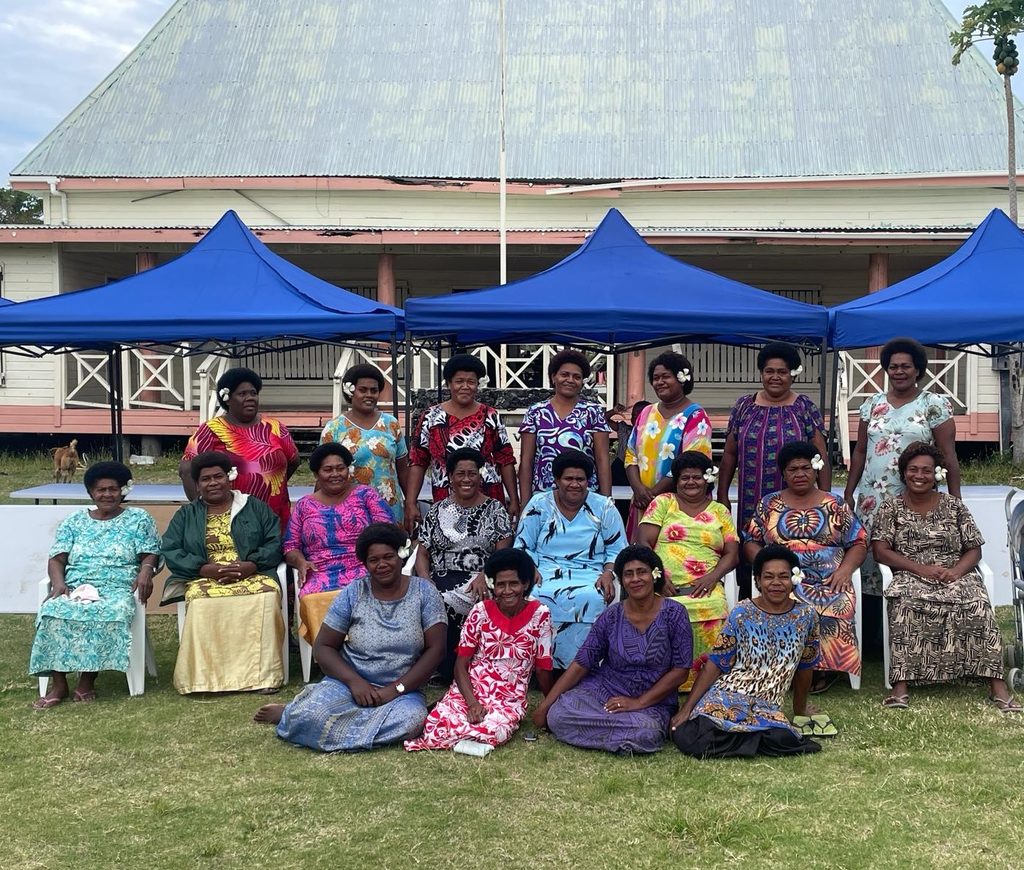
Travellers are increasingly seeking experiences grounded in respect for culture and protection of nature – a trend creating new opportunities for remote communities. For Yasawa-i-Rara, this journey began in 2018 when the Republic of Fiji Navy, Kenua Fiji and the Australian Government’s Market Development Facility (MDF) collaborated to update the hydrographic map for Yasawa-i-Rara, meeting international safety standards and paving the way for the return of cruise tourism after a 16-year hiatus.
To prepare, the community undertook two key trainings facilitated by the iTaukei Trust Fund Board (TTFB), supported by MDF, which works closely with yachting and cruise tourism stakeholders to expand sustainable tourism opportunities in remote islands. The first training was conducted ahead of the Seabourn Pursuit cruise ship’s arrival in April 2024 – focusing on customer service, food preparation and first aid – and the second at the end of the year was in fashion design and craft-making. These skills enabled households to deliver high quality, authentic experiences for guests and laid the foundation for new income streams.
Building on the progress of 2024, the community has continued to refine its tourism offer and broaden income opportunities. Yasawa-i-Rara’s tourism activities have matured significantly, with the community now hosting guests from nearby resorts on a weekly basis, while new enterprise initiatives are emerging. This has also created space for women to apply new skills, strengthen economic equality and contribute more visibly to household income and community decision making.
Community transformation
Sera Tagaia is a member of the Yasawa-i-rara women’s group involved in hosting cruise visitors. She has since developed a thriving food and beverage business called Nix and Sera’s Home Dining on the Island Experience.
“We are very grateful for the two trainings provided by TTFB and MDF in 2024. These have enabled us to put new skills into practice,” says Sera.
“The first training focused on customer service for tourists and food and beverage insights, especially portioning, which is very different from our everyday Fijian style. The second training introduced us to fashion and design as well as craftmaking skills.”
Traditionally, Sera’s family relied on her husband’s fishing for their main source of income while she helps support the family by selling traditional handicrafts.
In October 2024, six months after the return of cruise tourism to its remote shores, a couple moored their yacht in the bay and visited the village to conduct their isevusevu (traditional gift-giving ceremony presented to the chief by visitors when arriving in a village). The visitors expressed interest in trying a local homecooked meal and Sera’s family happily agreed to host them.
“After that first meal, they gave valuable feedback; what they ate was exactly what yachties look for – a traditional Fijian meal. We are thankful to this couple because they helped launch our business,” says Sera.
The couple also introduced Sera and her husband to the No Foreign Land app, which is used by yachties to navigate islands and communicate.
“The knowledge gained from the food and beverage training helped us prepare properly, and we ask questions beforehand to tailor the meal and experience to the guests’ preferences. Hosting yachties in our home was a new and exciting experience and we learned a lot along the way!”
Community unity and collaboration
Sera enlists the help of family members and other women from the village for larger events, sharing income so that more households benefit. This strengthens the women’s participation in the village economy and gives them the opportunity to coordinate events, manage household earnings and make shared household decisions with their family members.
According to the mother of four, community support is essential for success.
“Like solesolevaki (the spirit of unity to achieve a common goal) we must work together to help those starting a business,” explains Sera.
“For food supply, I rely on my husband, who is a skilled fisherman. I grade his catch and set aside lobsters, giant clams and land crabs for guests. I always make sure that guests are eating the ‘catch of the day’, which is fresh.
For large events, I work with village women for meal preparation and serving. They can also prepare crafts and other items for sale. Life on the island can be tough, so opportunities like this help families meet their obligations.”
Economic impact
Since launching in late 2024, Sera and her husband have hosted over 30 yachts, with a minimum of two guests per yacht, at FJD30 (AUD20) per person. The largest group her family has hosted to date is 26 people in one sitting, who dined on the beach under the trees at sunset — an experience the guests loved.
“This income has greatly helped our family. We can support our daughter’s education in Suva and set aside funds to grow the business and meet village and church obligations.
Accessibility and comfort are also prioritised, with Sera hiring tables from the women’s group.
“We are thankful for the women’s group’s assistance with plastic tables and chairs, which I hire for dinners. Guests are not used to sitting on the floor like us, so this makes them more comfortable.”
Sustainability and visitor experience
Using the island’s natural resources in a responsible manner is a way of life in the village and an important consideration in their family business; they only use what they need and never take more than necessary from the sea and land.
Dinner bookings are made at least 24 hours in advance, enabling Sera and others in the community to plan supplies and prepare crafts. Menus vary depending on available resources, ensuring each dinner remains unique. Guests often share photos on social media, giving Sera a marketing boost alongside her own efforts.
“We want to share this opportunity with others in the village, as it helps them provide for their families and gives us a break. We will ensure standards remain high because one bad experience can harm the business.
My advice is to be genuine, showcase our culture and greet guests with the Bula smile. Don’t be afraid to ask for advice or check what guests want to eat and experience. Asking helps us meet their expectations and minimises risks like dietary restrictions.”
Yasawa-i-Rara’s journey demonstrates how a community-driven vision, supported by meaningful partnerships, can foster sustainable and inclusive livelihoods. Australia is committed to such collaborations, which strengthen women’s economic participation, protect Fiji’s cultural and natural heritage, and ensure the benefits of growth are shared widely across households.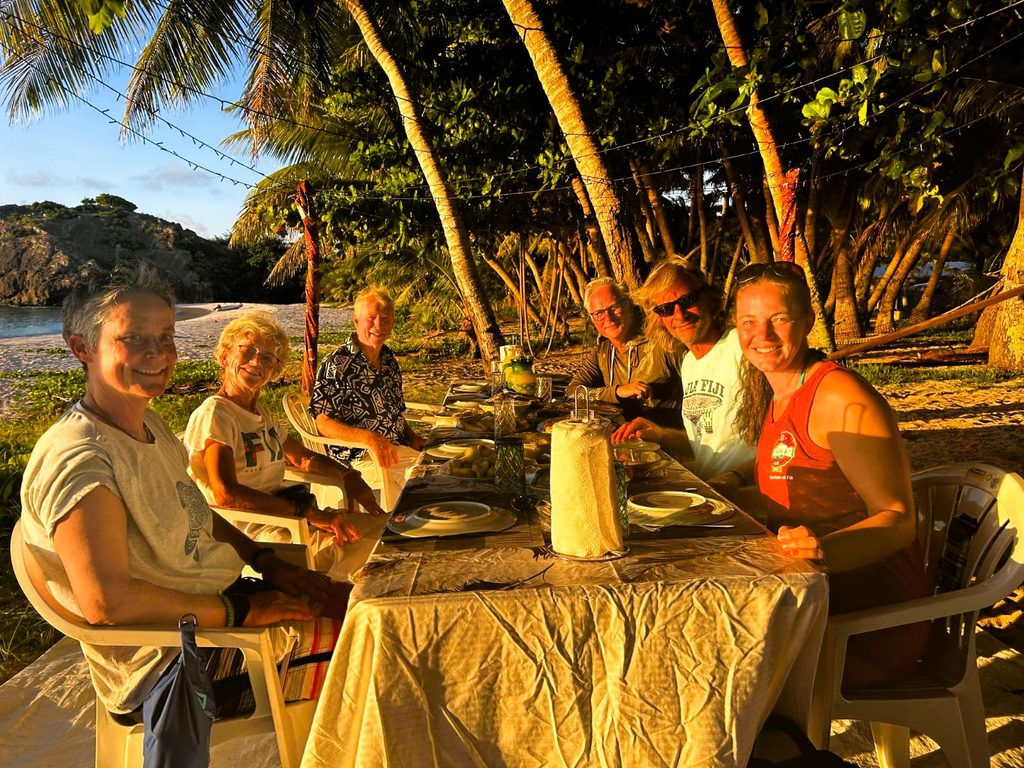
Right: Guests enjoying a locally prepared meal on the beach in Yasawa-i-Rara. Picture: SUPPLIED
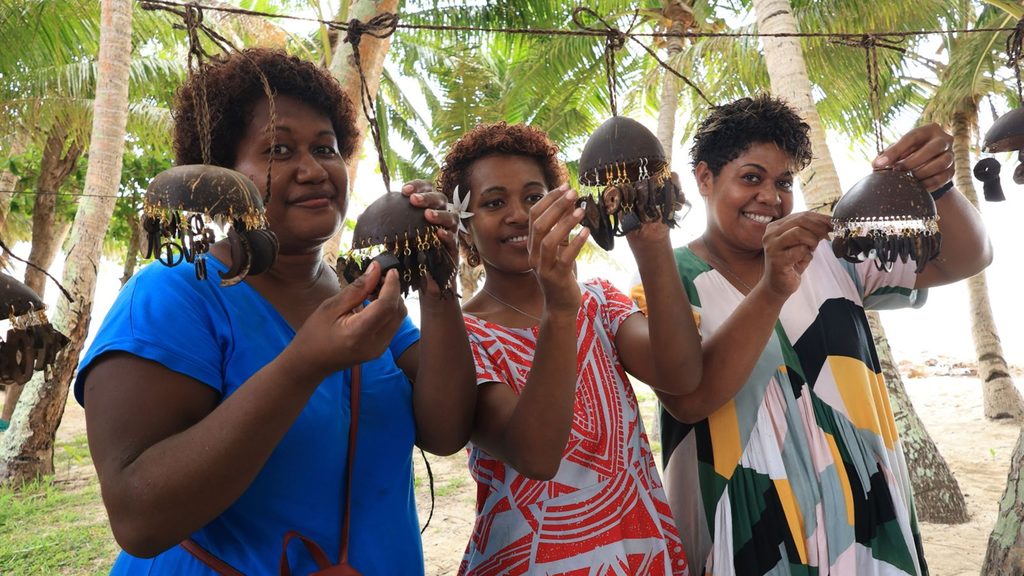
Women from Yasawa-i-Rara showcase handicrafts they can now sell when guests from nearby resorts or yachties visit the community.
Picture: SUPPLIED

