
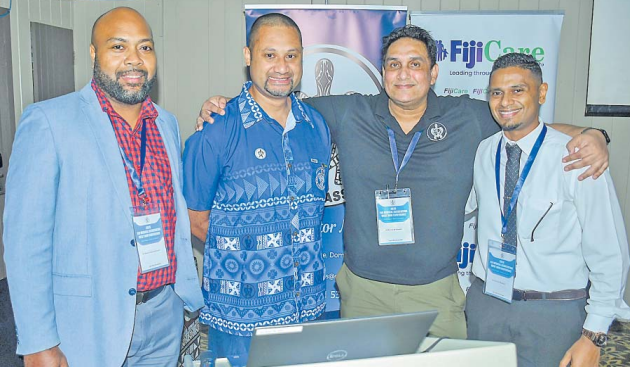
THE surgical landscape at the Lautoka Aspen Hospital is undergoing a significant shift as specialised interventions begin to bite into the country’s high amputation statistics.
Vascular consultant Dr Ronal Kumar revealed that intensified efforts in limb salvage have seen the frequency of procedures drop from a staggering two to three amputations per day to approximately two per week.
Speaking at the Fiji Medical Association mini-conference at the Novotel Hotel in Nadi on Saturday, Dr Kumar said the facility had managed to reduce the monthly toll from 20 or 30 cases to between six and ten.
Despite these gains, the consultant noted that as a tertiary care provider, the hospital remained at the receiving end of patients who already had advanced disease, making the battle for limb preservation a constant challenge.
The current strategy to save limbs involves improving blood supply, early intervention, and using innovations such as vacuum-assisted closure (VAC) dressings to debride and heal wounds.
Dr Kumar highlighted a critical gap in the workforce, noting that Fiji currently lacks specialised wound care nurses. He believes that once these positions are filled, surgeons can focus more intensely on limb salvage techniques and improving blood supply.
A major hurdle remains the timing of patient presentations. Dr Kumar estimated that between 75 to 80 per cent of patients arrived at the hospital in the late stages of disease.
“Not all of the latecomers is their own fault, a lot of it has to do with where they get captured, sort of a failure or delay in the primary health care.
“Secondly, is of course we are competing with herbal medications and the mindsets that people have.
“Third is of course isolation from health care itself.”
Dr Kumar said the perception of hospitals remained a barrier, with many still fearing that admission inevitably leads to a cut foot.
“What we’re trying to get out is that if you present early, then we are in a state to save the foot.”
For those who do undergo amputations, the road to mobility is often blocked by social and geographical factors. While prosthetic services are available for free in Suva, Dr Kumar, however, said that not everyone was a candidate.

