YOU may have driven across Seaqaqa and passed a stretch of sugarcane field known as Mata-i-Lakeba Farm.
If so, you might have wondered how this specific area got its Lauan name.
The connection traces back to a farm linked directly to the prominent Mara family.
For Mukesh Hussain, that land is not just something he passes by.
It is the place he has returned to every day for almost four decades, quietly working, maintaining, and caring for the same fields of cane through changing times in Fiji’s sugar industry.
“I have been looking after this farm for almost 35 to 40 years,” he said.
He speaks calmly, but behind those words is a long life shaped by early mornings in the fields, long harvest seasons, and the steady rhythm of cane farming that has defined rural life in Seaqaqa.
His journey began when the late Ratu Sir Kamisese Mara owned the farm in the Seaqaqa cane belt during the early development of the area as one of Fiji’s key sugar-growing regions.
“Since Ratu Sir Kamisese Mara’s time, I have been on this farm.”
At that time, Seaqaqa was expanding rapidly under the government-supported cane development program.
New settlers were moving into cane farming, land was being developed, and sugar production was growing to become the backbone of the Northern economy.
Mata-i-Lakeba Farm was part of that wider development.
From the beginning, Mr Hussain was given responsibility to manage the daily operations of the farm.
“From that time, I was looking after everything on the farm.”
That included planting cane, maintaining the fields, supervising farm work, and ensuring the crop was ready for harvest each season.
He said it required discipline and constant attention because cane farming was often a back-breaking venture.
“You have to be there all the time. The farm does not wait for anyone.”
Over time, what began as a responsibility became a lifelong commitment.
Even after Ratu Sir Kamisese Mara passed away, Mr Hussain said his role on the farm did not change.
“After his death, I remained on the farm and took care of it.”
The farm remained linked to the Mara family, even as members of the family moved into national leadership roles or lived away from Seaqaqa.
Despite the distance, he continued to stay on the ground and manage the daily work.
“The owner’s family has been away, but I remained on the farm taking care of it.”
Over the decades, he said his relationship with the Mara family grew stronger, built not on formal contracts alone but on trust, respect, and long service.
“We are just like a family.
“Our relationship was built on understanding and responsibility.
“There is a lot of trust between us.”
One of his most meaningful experiences was his long connection with the Mara family, and being invited to the installation of Tui Nayau Ratu Tevita Mara in 2025.
“I may have been the only Indian to be part of it.”
He described it as a rare honour that reflected years of trust and closeness with the chiefly household.
“That was something very special for me.”
He said it was not about status, but about being accepted after years of service and commitment.
“I just did my work honestly.”
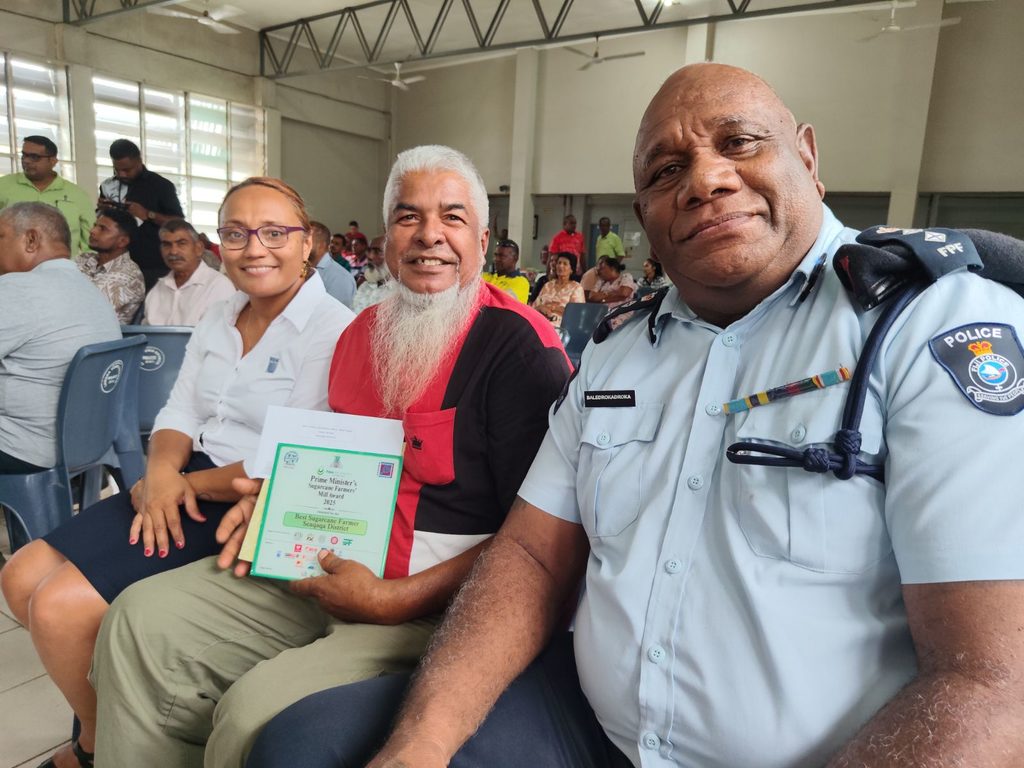
Adding to the significance of their bond, his contribution to the agricultural sector was recently recognised when he won the overall Best Farmer of the Year award.
Many attendees at the Labasa Civic Centre were surprised to see a tall, light-skinned man with a distinct white beard stand up to proudly accept the prestigious award on behalf of the Mara family.
“I am very proud of that.
“When Ratu Mara’s son’s name was called, everyone was surprised to see me stand up and receive the award.”
He said the reaction in the room showed that many people did not expect him to be the one receiving recognition on behalf of the farm.
He said receiving a growers’ award meant a lot to him because it reflected years of quiet work that often went unnoticed.
“It was a long journey before I received that award.”
He said this was not the first award he had received on behalf of the Mara family.
“I received a recognition award from the Fiji Development Bank in the 1990s. This is my second award. I also received one in the 1990s.’
He said recognition gave him motivation to continue working on the farm.
“It encouraged me to keep going.”
He said it reflected years of quiet service behind the scenes.
“It was not easy work, but I kept doing it,” he said.
For him, Mata-i-Lakeba Farm is not just land or a workplace.
It is a lifetime of responsibility, trust, and continuity that has connected him to one of Fiji’s most well-known families and to the wider history of the sugar industry.
As another harvest season approaches, he remains on the same land he has cared for most of his life, continuing a quiet but long-standing commitment that began in the time of Ratu Sir Kamisese Mara.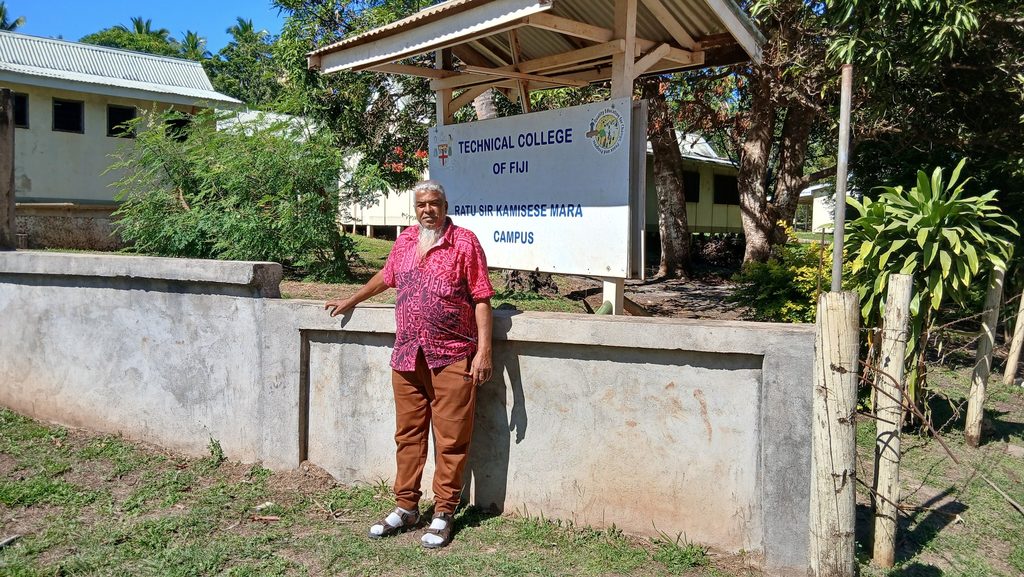
Mukesh Hussain poses in front of Ratu Mara Technical College billboard in Lakeba, Lau.
Picture: AKHTAR HUSSAIN FACEBOOK
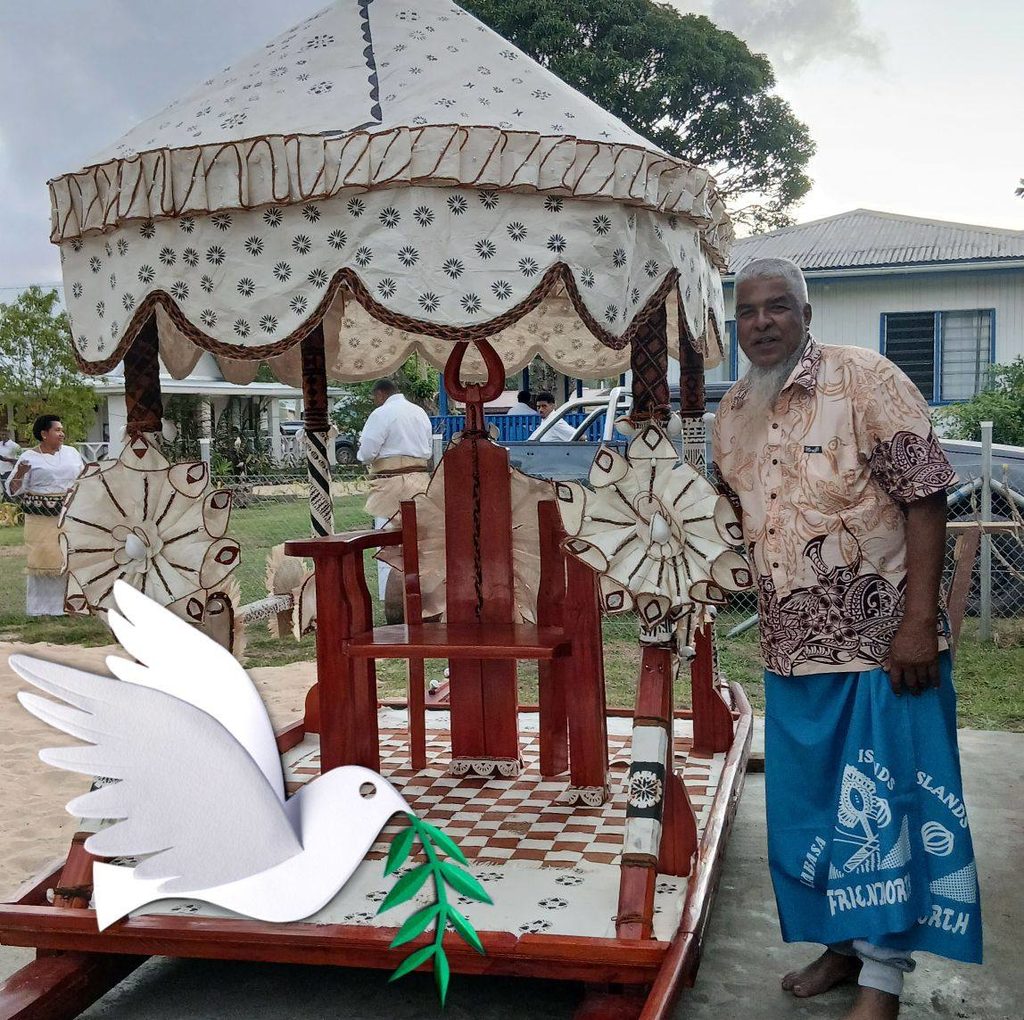
One of Mukesh Hussain best memories is reflecting on his long connection with the Mara family. He was invited to the installation of Tui Nayau Ratu Tevita Mara in Tubou, Lakeba in Lau last year. Picture: AKHTAR HUSSAIN FACEBOOK