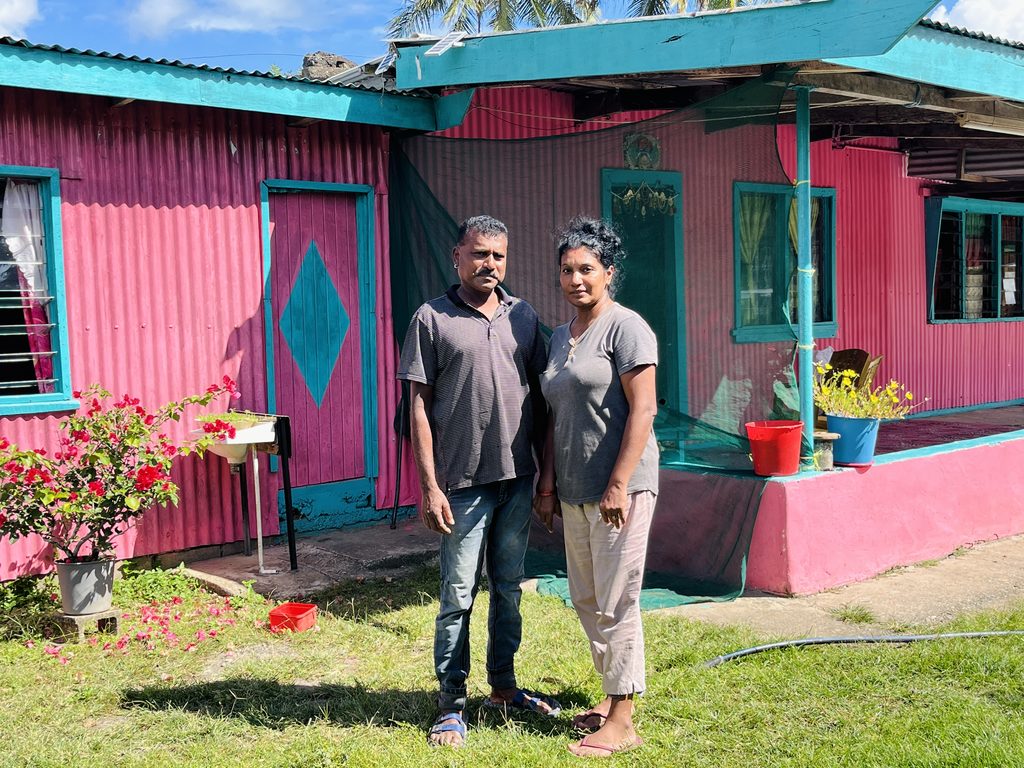
Bimal Prakash Chand continues to grow the same crops that once helped his family establish themselves and build a successful life in the Sigatoka Valley.
For the 53-year-old, farming is more than a livelihood, it is a legacy planted decades ago by his father in the fertile soils of Raunitogo.
As the rooster crows, Bimal, his brother and their family are already preparing for another day on the farm.
Rows of okra, cabbage and eggplant stretch across their land, the same crops that once carried his family through difficult years and helped them build a life in Sigatoka.
Although the Chand family originally came from Ba, where his father worked as a sugarcane farmer, they moved to Sigatoka in the 1950s in search of better opportunities.
Today, Bimal proudly calls Sigatoka home as he has lived there all his life.
“This is home for us now and I’m 63,” he said.
Lessons beyond the classroom
Bimal attended Raunitogo Primary School before moving on to Sigatoka Valley Junior School.
Even though he went to school, some of his most important lessons were learnt outside the classroom.
At the age of 10, he began following his father through the fields, learning how to weed, clear land and plough.
“When my father started farming here, he planted cabbages, eggplant and okra,” he said.
“We learnt from him little by little. Farming became part of our life.”
More than 30 years later, he remains committed to the same work that sustained generations before him.
Together with his brother, the family continues to cultivate vegetables that are always in demand at the market.
Among their most valuable crops is okra, which they harvest up to three times a week during peak production periods.
Farming as a family effort
His wife, Irene Sangeeta Chand, also helps him take care of the farm.
Much of their okra is supplied to Shalend Export in Bilalevu and is later exported to New Zealand.
“The price is good during the off-season,” she said.
“Sometimes it can sell for about $3 a kilogram, but during the season it usually drops to around $1.”
Other vegetables are sold through middlemen who regularly stop by the farm to purchase produce for local markets.
The family has built strong relationships with buyers over the years, with some customers coming directly to their home to buy vegetables.
Living with the floods
But farming near the river comes with constant uncertainty.
During heavy rain, the family closely monitors water levels, knowing floods can quickly damage crops and wipe out weeks of hard work.
“Rainy season is very hard for us because there are hardly any vegetables available except okra,” she said.
“Our farm gets affected by flooding because we live close to the river.”
Because of these challenges, the family carefully chooses what crops to plant, balancing market demand with the realities of farming in flood-prone conditions.
Rewards of hard work
Despite the hardships, the rewards of farming are visible throughout the Chand family’s journey.
The income earned from the farm has helped put their two children through school. Their eldest son is studying to become a teacher while their youngest child is still in high school.
“We have been able to support our children through farming,” she said.
Years of hard work have also allowed the family to buy vehicles and own a tractor — milestones the family do not take lightly.
Scattered around the property are reminders of earlier chapters in the family’s farming history.
One of them is an old, closed tobacco shed that still stands quietly near the farm.
“When my father-in-law was alive, they also did tobacco farming,” she said.
For Bimal and his wife, the structure is more than an abandoned building. It is a reminder of sacrifice, persistence and the generations who worked the land before them.
A strong sense of community
Beyond the crops and machinery, Irene said what makes Raunitogo special is the people.
“We love living here,” she said.
“Our neighbours are very supportive. There is a strong sense of community at Raunitogo.”
In the heart of Sigatoka Valley, where floods still threaten fields and market prices continue to rise and fall, Bimal Chand keeps returning to the soil each day, planting the same crops his father once planted and continuing a family story deeply rooted in the land.
Outside the farm, Bimal plays bhajans with his sons and relatives, often performing at family and community gatherings for extra income.