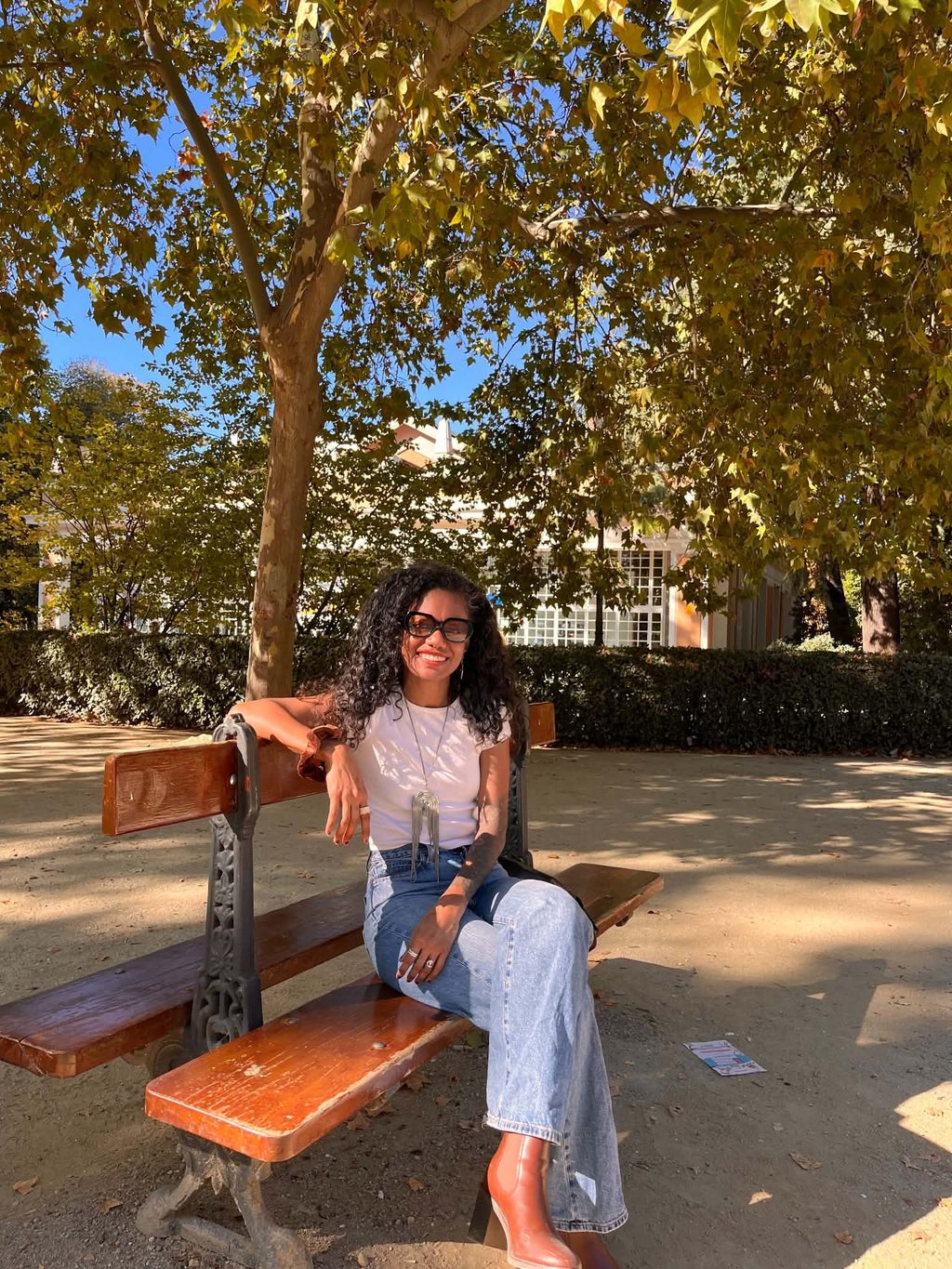
THOUSANDS of kilometres away from Fiji, in the heart of Madrid, Spain, Taina Talei Maitiro is finding a meaningful way to bring people closer to home.
Her classroom may be online, her students scattered across different parts of the world, but the language she teaches carries the stories, identity and heritage of a people whose roots stretch far beyond geographical borders.
For Taina, teaching the Fijian language is about much more than learning words, grammar and pronunciation. It is about ensuring that future generations of Fijians, wherever they may be born and raised, do not lose the language that connects them to their ancestors.
Taina traces her roots to Korotubu in Macuata, with her maternal links to Naselesele, Taveuni. She attended Gospel Primary School before moving on to Suva Grammar School. Today, she calls Madrid home, where she has turned a long-held concern about the declining use of Fijian among younger generations into a growing online teaching initiative.
Her journey has taken several unexpected turns, but each experience has helped shape the work she is now passionate about.
After completing high school, Taina enrolled at the University of the South Pacific on a government scholarship, initially intending to study law. However, circumstances changed when the Fijian Affairs Board placed a hold on first-year scholarship holders pursuing law that year.
Rather than allowing the setback to derail her ambitions, she took a different direction, graduating with a Bachelor of Arts degree, double majoring in Literature and Language, and Politics, with a minor in French. She later pursued postgraduate studies in Linguistics, focusing on Pacific languages.
It was during her university years that her appreciation for languages deepened, particularly through the influence of Dr Paul Geraghty, whose lectures and enthusiasm for Pacific languages left a lasting impression.
“Every conversation with him was an intellectually enriching experience, and his passion for language inspired me to explore my own linguistic and cultural heritage more deeply,” she recalled.
Her academic background eventually became the foundation for a decade-long teaching career across Fiji, New Caledonia and Spain. She worked in kindergartens, primary and secondary schools, as well as academies, teaching English to students from different backgrounds.
Her move to Spain came in December 2019, following two years working as a teaching assistant at a high school in Pouembout, New Caledonia. There, she came across an opportunity to take up a similar position in Spain. She decided to apply, took a chance and was accepted.
Home away from home
What she enjoys most about Spain is the people’s passion for life. She describes Spaniards as vibrant, expressive and passionate about enjoying the moment. Madrid, in particular, has given her access to a thriving arts and cultural scene, from contemporary art and photography exhibitions to theatre, opera and intimate concerts.
There is also something familiar about the Spanish way of life.
“There’s a parallel between our two nations that I find endearing, and that is the way football brings the entire country to a standstill in much the same way that rugby does in Fiji,” she said.
Although the Fijian community in Spain is relatively small compared with those in countries such as the United Kingdom and France, she maintains friendships with other Fijians living in different Spanish cities. Their reunions are often centred around rugby matches, particularly when teams from home are visiting.
But while she has built a life in Spain, Fiji remains firmly at the centre of her work.
The idea of teaching Fijian vernacular online first emerged about six years ago during a conversation with her boyfriend about Fijian emigration and the gradual loss of language among families living abroad.
“The issue was personal. I had witnessed the effects of language loss within my own family and felt compelled to do something about it,” she said.
However, being so far from Fiji, she initially struggled to see how she could make a meaningful contribution.
Then came an unexpected suggestion.
Her boyfriend told her about someone who taught Maltese online to members of the Maltese diaspora. It was an approach she had never considered, having spent most of her teaching career in traditional face-to-face classrooms.
That conversation planted the seed for what would eventually become her Fijian language teaching project.
Promoting her mother togue to the world
She began developing learning materials, preparing worksheets and presentation slides, gradually building the resources she would need. In May this year, she finally introduced the idea to her family, recruiting her nieces and nephews as her first students.
They became her first learners and, as she jokingly describes them, her “guinea pigs”.
Around the same time, she shared a promotional poster online. The response exceeded her expectations, with interest coming not only from Fijians living overseas but also from people in Fiji and foreigners keen to learn the language.
Today, Taina has fully embraced remote teaching, offering both English and Fijian vernacular lessons online.
Her classes are conducted through Google Meet, with lessons tailored to individual learning needs. Conversational classes are available for those wanting to improve their fluency and confidence, while teenage and adult beginners work on grammar and vocabulary through speaking, reading and writing exercises. Younger children learn through songs, games and other interactive activities.
The encouraging response has strengthened her belief that there is a real need for accessible iTaukei language education.
“I would say my greatest motivation is the vulnerability of Fijian as a language,” she explained.
She believes languages must be actively spoken, written and passed on if they are to survive. Drawing inspiration from language revitalisation efforts involving Hawaiian and Maori, she hopes her initiative can play a small but meaningful role in ensuring Vosa vakaviti remains part of everyday life for generations to come.
“The more I research and immerse myself in this project, the more I appreciate just how rich our language is. It has made me even more aware of the responsibility we have to preserve and promote it,” she said.
For Taina, the importance of language goes beyond communication. It shapes how people understand themselves, their communities and the world around them.
She believes children growing up overseas without exposure to iTaukei language may naturally develop a stronger connection to the culture of the country in which they were raised, leaving them with a weaker connection to their Fijian heritage.
Language, she argues, provides a bridge between generations. It carries stories, traditions, oral histories, cultural values and knowledge that cannot always be translated or fully understood through another language.
“When a language dies, much of this knowledge is lost along with it,” she said.
It is a responsibility she takes seriously, particularly in an increasingly interconnected world where dominant languages can easily overshadow smaller languages.
Treasure your heritage, identity
Her message to young Fijians is simple: do not become so absorbed in the wider world that you forget where you come from.
She encourages them to listen to Fijian music, support local artists, writers and creators, speak Fijian indigenous language whenever possible and take time to learn the legends, folklore and stories that shaped their people. Just as importantly, she urges young people to spend time with their elders and listen to their experiences, wisdom and memories.
“Being part of a global community does not mean leaving Fijian culture and language behind. In fact, the stronger our roots, the more confidently we can engage with the world,” she said.
She also has an encouraging message for those who may have grown up without learning their mother tongue.
“Go doe it!” she urged.
While English and other international languages may open doors to professional opportunities, she believes learning one’s native language offers something equally valuable: a lasting connection to heritage and identity.
Away from her online classroom, Taina enjoys making the most of Madrid’s cultural offerings. She spends her free time visiting exhibitions, attending theatre and opera performances, reading, browsing books at her neighbourhood library and enjoying long walks around the city. She also has a fondness for Spanish cuisine, particularly tortilla española, a traditional potato omelette, and pimientos de Padrón, fried green peppers from Galicia.
There is, however, one Fijian favourite she has yet to find a substitute for.
“Palusami is the Fijian dish I miss the most. Unlike kokoda, curry and chop suey, which can be recreated here, palusami is impossible to make because its main ingredient, rourou, is not available in Spain,” she said.
Despite the distance, her connection to Fiji remains strong, supported by family, memories and a deep appreciation for the culture that shaped her.
As she continues developing her online teaching project, Taina hopes to reach more learners and encourage families to make Fijian vernacular a living part of their children’s lives.
Her newly established Facebook page, Learn Fijian with Taina, is another step towards that goal, providing language tips and learning resources for those interested in reconnecting with the language or starting their learning journey.
And perhaps that is the greatest achievement of all: ensuring that no matter where the next generation of Fijians calls home, they will always have a language through which they can find their way back to their roots.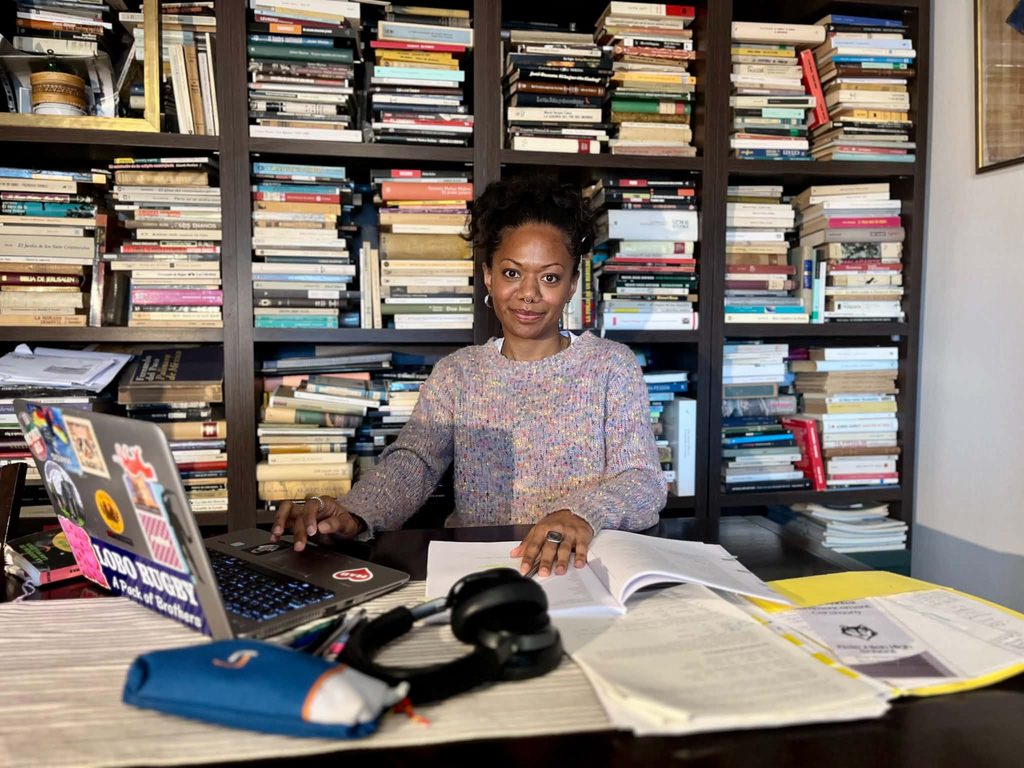
As Taina continues developing her online teaching project, she hopes to reach more learners and encourage families to make Fijian a living part of their children’s lives.
Picture: SUPPLIED