
For years, Silicon Valley’s stars have been able to drum up positive media headlines with their visions of a future tech utopia. In 2022, several of them ran into the hard wall of reality.
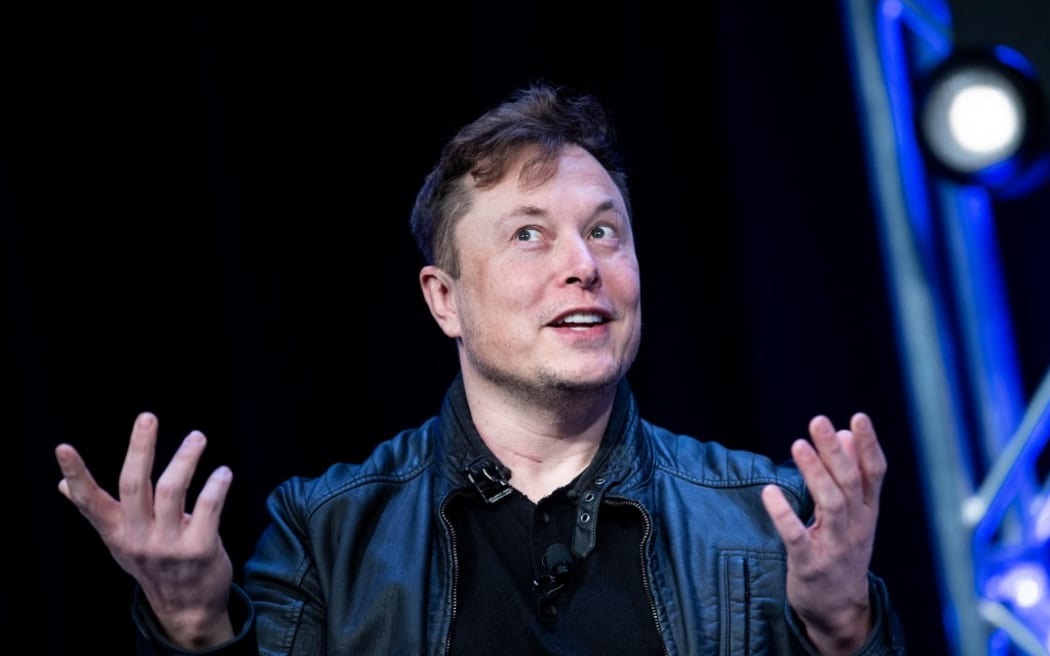
“Make some noise for the richest man in the world,” said the stand-up comedian Dave Chapelle, as he welcomed Elon Musk on stage.
The crowd certainly made some noise, though it wasn’t what Chapelle was expecting.
Boos and jeers rang out between more sparse claps and whoops, with the jeering chorus going on for nearly 10 minutes.
The billionaire Tesla chief executive might have expected a more rapturous welcome in the global tech hub of San Francisco.
But his image has been tarnished after a tumultuous first few months as the owner of the social media platform Twitter, during which he botched the rollout of a new paid-for account verification system, laid off thousands of employees in questionably legal fashion, and generally alienated a lot of people by using his account to engage in near constant right-wing trolling.
He was not the only billionaire tech titan to suffer a precipitous fall from grace in 2022.
It was a year where many of Silicon Valley’s more lofty promises ran into the hard wall of reality.
Mark Zuckerberg has endured a deluge of bad headlines and a sharp dip in Meta’s stock price after sinking $36 billion into a virtual reality ‘Metaverse’ that even his own employees do not use.
Sam Bankman-Fried, the so-called “good guy” of crypto, was arrested earlier this week in the Bahamas over alleged fraud he committed in the lead-up to the collapse of his company FTX. Elizabeth Holmes, founder of the bogus medical tech startup Theranos was jailed for 11 years for fraud last month.
The list goes on. This media negativity might be coming as something of a shock to Silicon Valley’s stars. Though the amount of sceptical coverage they have received has risen over the years, many of them have enjoyed a mostly easy ride from the press and government regulators.
Before its collapse, FTX was able to run ads on US national TV during the Super Bowl without so much as a warning. Bankman-Fried was able to generate fawning media profiles for his supposed commitment to a philosophy known as effective altruism, and his apparently more sensible approach to marketing cryptocurrency.
On Thursday, The New York Post printed his face on its front page alongside the headline ‘Hairy Plotter’.
Crypto, at the very least, has had a harder time from the press than some tech companies – most notably those promising transport revolutions. In 2016, Volvo NZ’s Coby Duggan told RNZ that fully autonomous selfdriving cars would be on the roads by 2020 or 2021.
“That does sound amazing,” the host replied. “It’s so soon.”
If it sounded amazing, it was possibly because the idea people would be replying to emails and applying their makeup in fully autonomous vehicles by now was, to put it mildly, overly ambitious. But Volvo and RNZ were hardly outliers in taking a sunny view on driverless technology back then.
The New Zealand Herald also reported in 2016 that self-driving cars could be on the road by the end of that year. Opinion writer Paul Minett urged the government to delay every road and public transport investment wherever possible in anticipation of the driverless revolution.
Another Herald columnist, Matt Heath, said Auckland’s City Rail Link would likely be obsolete by the time it opens because by then “computer coordinated driverless pods” would “rule the city”. Six years have come and gone and – pandemic delays aside – there was no sign of self-driving cars on our roads. In fact, they look further away than ever.
Ford and Volkswagen shut down their jointly funded autonomous vehicle startup Argo AI in October, saying the technology was still a long way from being brought to market.
Other flawed transitfocused tech companies have been boosted by sympathetic or insufficiently critical media coverage including Uber, which once said it would ease congestion in cities.
In fact the opposite has proved true. But no one has benefited more than Mr Musk. His company Tesla got a rush of good press when it joined the push for driverless vehicles.
It was now arguing in court that its experiment should only be labelled a failure rather than a fraud.
Mr Musk also promised to fix what he called “soul-destroying traffic” by building a network of tunnels underneath and between cities through his startup The Boring Company.
Transport experts dismissed the idea as a farcical distraction, but several cities cancelled their own transit plans and invested in the company and his vision – only to see it cease all communications after running into minor regulatory obstacles or minor cost overruns according to reporting from The Wall Street Journal.
On an episode of the Vox podcast Today, Explained Alissa Walker from the New York website Curbed said The Boring Company saga mirrors an episode of The Simpsons in which a salesman convinces the town of Springfield to fund a shoddy monorail that promptly breaks down.
And Mr Musk’s startup Neuralink, which aims to blend brains and computers, was under federal investigation after killing 1500 animals in experiments.
Mr Musk has got away with peddling exaggerations, half-truths and notruths partly because of his audacity and undiluted self-belief.
Social media has expanded the reach of these kinds of confidence men, allowing them to build cult-like followings without having to win over so much as a slightly sceptical newspaper editor.
• HAYDEN DONNELL is the mediawatch producer at RNZ. The views expressed by the author are not necessarily shared by this newspaper

