
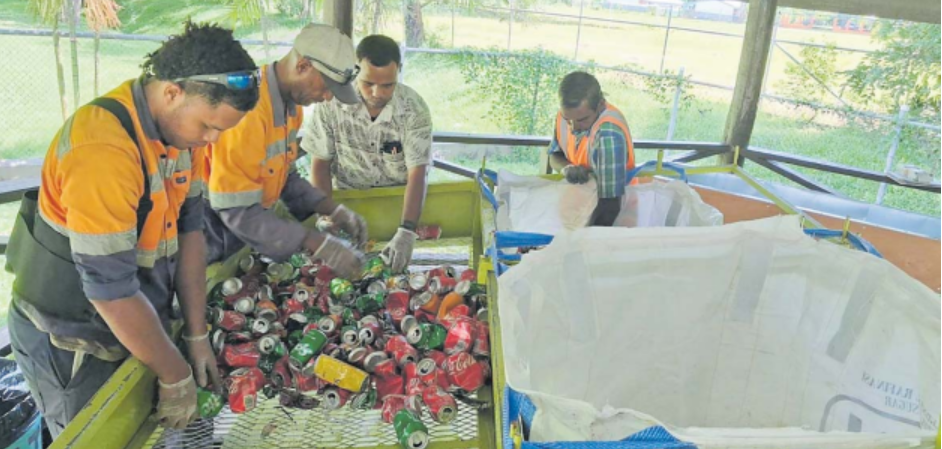
MORE than 7.5 million beverage plastic bottles and aluminium cans have been collected through the Return & Earn Fiji initiative since January this year.
Data released yesterday by Coca-Cola Europacific Partners (CCEP) shows that from January to June this year, a total of 7,595,545 beverage containers were recovered, comprising 4,131,504 plastic bottles and 3,464,041 aluminium cans.
It stated that more than $687,000 was returned to Fijians through refunds and handling fees, with the programme operating across eight of Fiji’s 13 municipalities.
Minister for Local Government and Housing Maciu Nalumisa said the results demonstrated what could be achieved through national leadership and collaboration with municipal councils.
He said the Ministry initiated the programme in municipal councils last year to support its implementation nationwide, adding that the cooperation of councils had been critical to its success and in encouraging public participation in recycling efforts.
“What began as a strategy to divert hundreds of thousands of containers from streets, waterways and municipal landfills has rapidly evolved into a vital supplementary income stream for households,” Mr Nalumisa said.
“‘Return Earn Fiji’ is delivering tangible benefits for our communities, our councils and our environment.
“This is a national initiative that required leadership, coordination and commitment, and I am pleased that our councils have embraced their role in making it work.”
He acknowledged the contribution of municipal councils, beverage producers and all stakeholders in strengthening community participation and said the Coalition Government would continue working with stakeholders to expand the programme nationwide.
In its report, CCEP found collections increased by approximately 176 per cent between the first quarter (January to March) and the second quarter (April to June.
During the first quarter, 2,020,330 containers were collected, increasing to 5,575,215 containers in the second quarter, it stated.
Return & Earn Fiji representative Dwain Qalovaki said the increasing number of containers collected was matched by growing community participation in the programme.
A further eight collection centres are planned to be activated before the end of 2026.

