
SULIASI Nasau remembers when the mangroves held everything together. Not just the coastline, but the kitchen, the medicine cabinet, the wedding ceremony, the roof above one’s head.
Suliasi Nasau is the turaganikoro of Naiseralagi, one of the five partner villages for the Kiwa RESTORE Project in Navitilevu Bay in Ra Province. He has watched the mangrove forests thin over the decades, and he has watched them begin to come back.
The mangrove uses, he lists, are layered and specific. Mangrove wood built the posts of the traditional bures, because it lasted. Dry, it could hold a structure for eight to ten years. The bark produced dark dye pressed into tapa worn by chiefs. The stems were cut and scraped and woven into salusalu, the garlands placed around the necks of guests at ceremonies. And the roots of certain species were used as medicine, specifically as a cough treatment for children.
“Mangroves are used in firewood, housing, clothing and even herbal medicine,” Nasau says. “It has a lot of uses in our traditional lives in the village.”
The forest was also where families fished, where women set their traps and men anchored their canoes.
In the olden days, Nasau says, people knew which trees to cut.
‘They took the mature ones and left the young trees to grow,” he said.
They called it selective cutting. It was not written down anywhere. It was simply understood.
“Traditional knowledge is science, but just given different names,” he says. “Message remains the same when it comes to restoration of mangroves.”
That knowledge did not disappear entirely, but it frayed. Nasau traces the loss of mangroves to several causes. Cyclones and floods stripped away the mangrove forests that had taken decades to establish. Shipping vessels introduced oil spills that killed whole sections of the forest. And then there was the cutting.
In the towns, bundles of mangrove wood sell at roadside stations for four dollars. Six sticks in a bundle. The men doing the cutting are mostly young, and they take the green wood because it is easier to cut than the dry, Nasau says.
“They spoiling them for money,” Nasau says.
He knows what it costs. When the mangrove forest shrinks, so does everything it supports. Crabs, fish, coastal protection, ceremony. The connection between the forest and daily life is direct and measurable, and the people of Navitilevu Bay have measured it the hard way.
Severe Tropical Cyclone Winston changed everything when it made landfall in February 2016. Ra Province was among the hardest hit.
Before the storm, women from Naiseralagi could fill a fifty-kilogram bag with catch in three to four hours. After Winston, eight to nine hours yielded less than ten kilograms. The fish and crabs had gone. So had the seafood on the table.
“Now we depend more on rourou, bele and food we can make from flour,” Naiseralagi Women’s Group Treasurer Siteri Vuru says.
She added fried food bought from town had replaced the seafood.
“For healthier life, we need the mangroves,” Analaisa Dobui, the secretary of the women’s group added.
Analaisa said they shifted where they fished.
They had to go deeper, further out. It was more work and less return.
The restoration work in Navitilevu Bay began under the DFAT’s Fiji Blue Carbon Project and has continued under the Kiwa RESTORE Project, supported by the Kiwa Initiative and implemented by Conservation International. Five villages are involved: Naiseralagi, Barotu, Nanukuloa, Navuniivi, and Matawailevu.
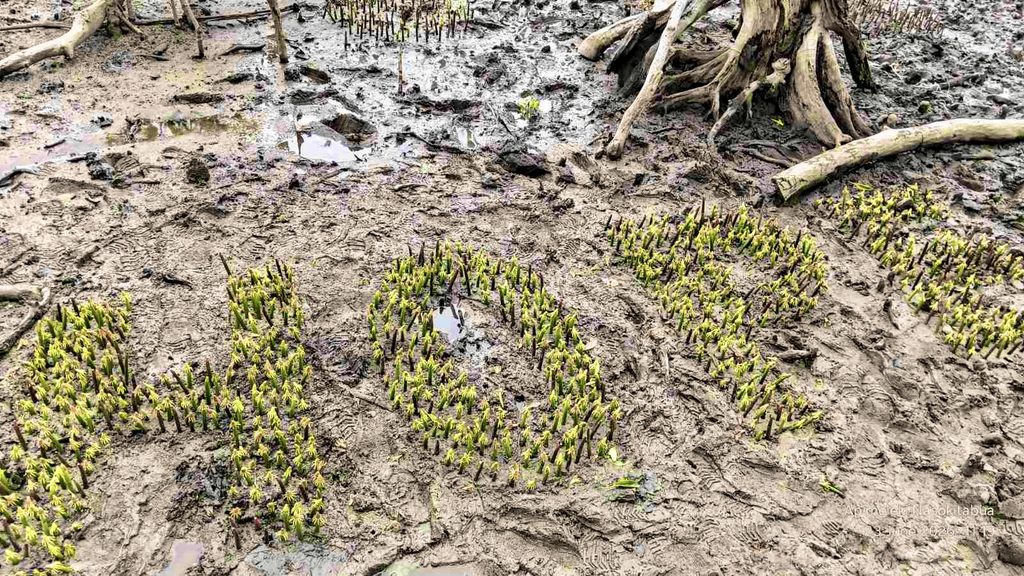
To date, 15.47 of the targeted 20 hectares of mangrove have been restored across the bay. Community members carry out potting exercises and planting. The work is done in partnership with the iTaukei communities – the same people who have always depended on these mangroves.
The signs of recovery are coming in from the water.
“Mud crabs are coming back, they are getting bigger,” Nasau says. “With the restoration now, people are getting good size crab.”
The women say the same. Crabs are returning. Fish are appearing closer to the shore again. They do not have to go as far out as they did in the years after Winston.
There are rules now about size. Small crabs go back into the water. Only the large ones are taken. The community holds that line.
At the village meetings, Nasau reminds people to leave the young growth alone.
He says it the same way his forefathers would have said it, because the instruction has not changed.
“We tell people in the village during the village meeting since we are doing the restoration, please refrain from cutting green mangroves.”
Few people in Naiseralagi can still build a traditional bure. But in some villages, chiefs still sit inside chiefly houses held up by mangrove posts, their walls hung with tapa cloth dyed with mangrove bark, their guests wearing salusalu woven from scraped mangrove stems.
The forest is still there in those places. You just have to know where to look.
“We are very grateful to Conservation International, especially the Kiwa RESTORE Project, for helping us restore our mangrove forests, which is part of our daily livelihood,” Nasau says.
“It has been ten years since TC Winston,” he added.
Ten years. And the crabs are coming back.
The RESTORE Project is funded by the Kiwa Initiative and implemented by Conservation International. The project strengthens the adaptive capacity and economic resilience of Pacific Islanders through Nature-Based Solutions focused on community-based ecosystem restoration in Fiji, Samoa, and Timor-Leste. The Kiwa Initiative is funded by the European Union, Agence française de développement (AFD), Global Affairs Canada, Australia’s DFAT, and New Zealand’s MFAT.
Conservation International protects nature for the benefit of humanity. Visit conservation.org for more information.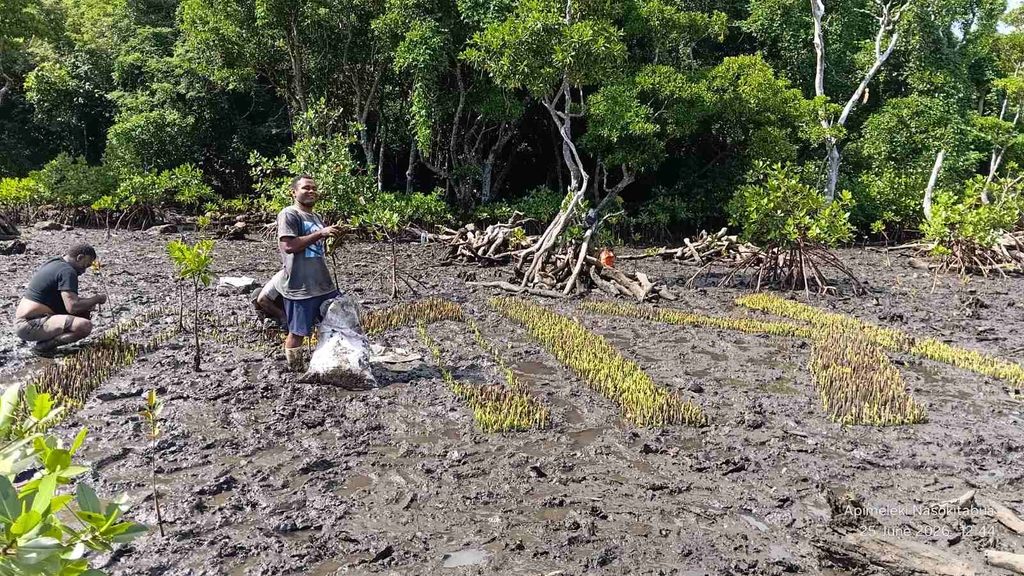
Mangrove restoration underway in Navitilevu Bay. Picture: CONSERVATIONAL INTERNATIONAL
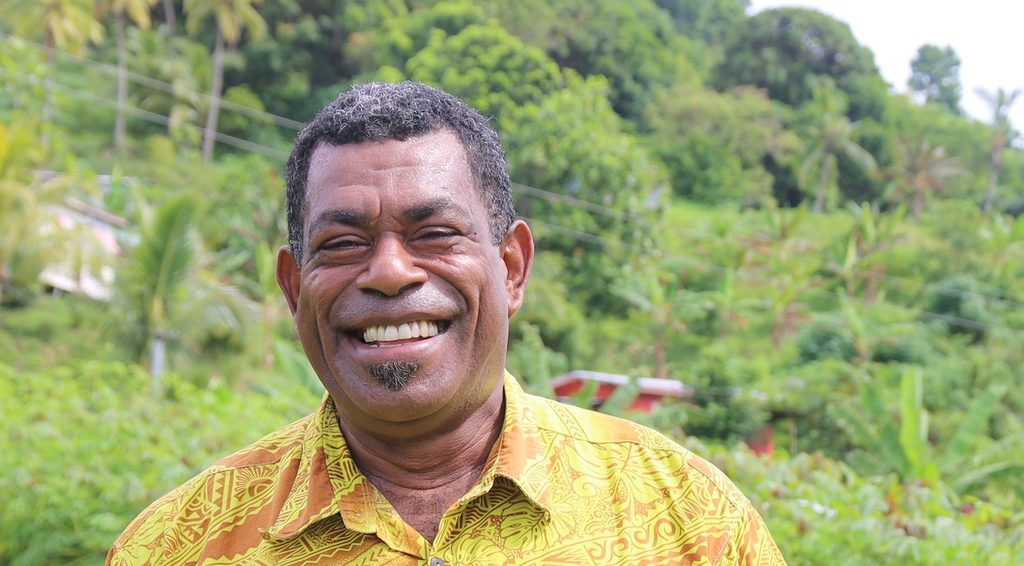
Suliasi Nasau, turaga ni koro of Naiserelagi Village in Ra.
Picture: SHREYA KUMAR/CI
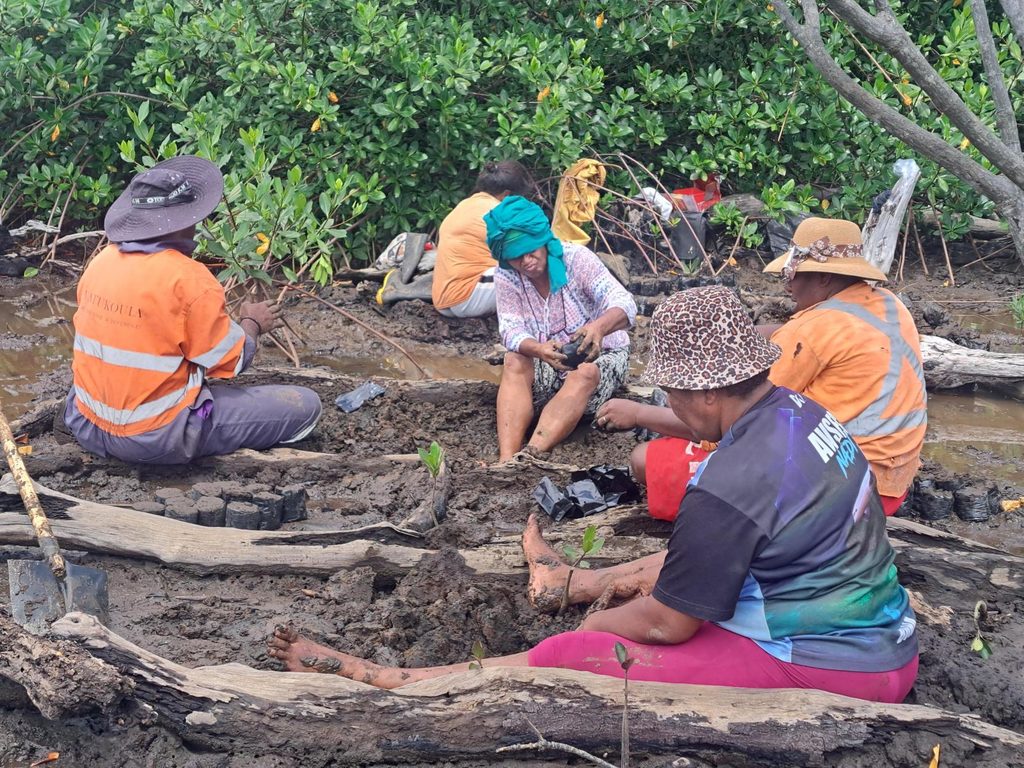
Villagers engage in plotting exercise for RESTORE in-situ nursery in Ra. Picture: CONSERVATION INTERNATIONAL
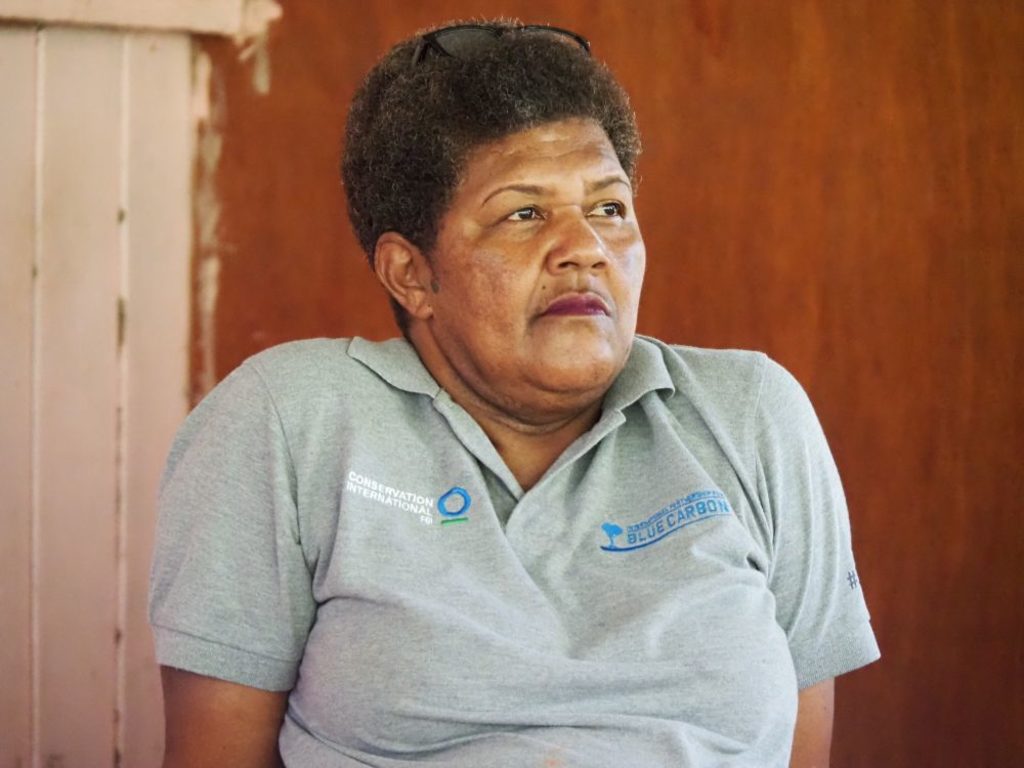
Analaisa Dobui of Naserelagi Village. Picture: SHREYA KUMAR

