
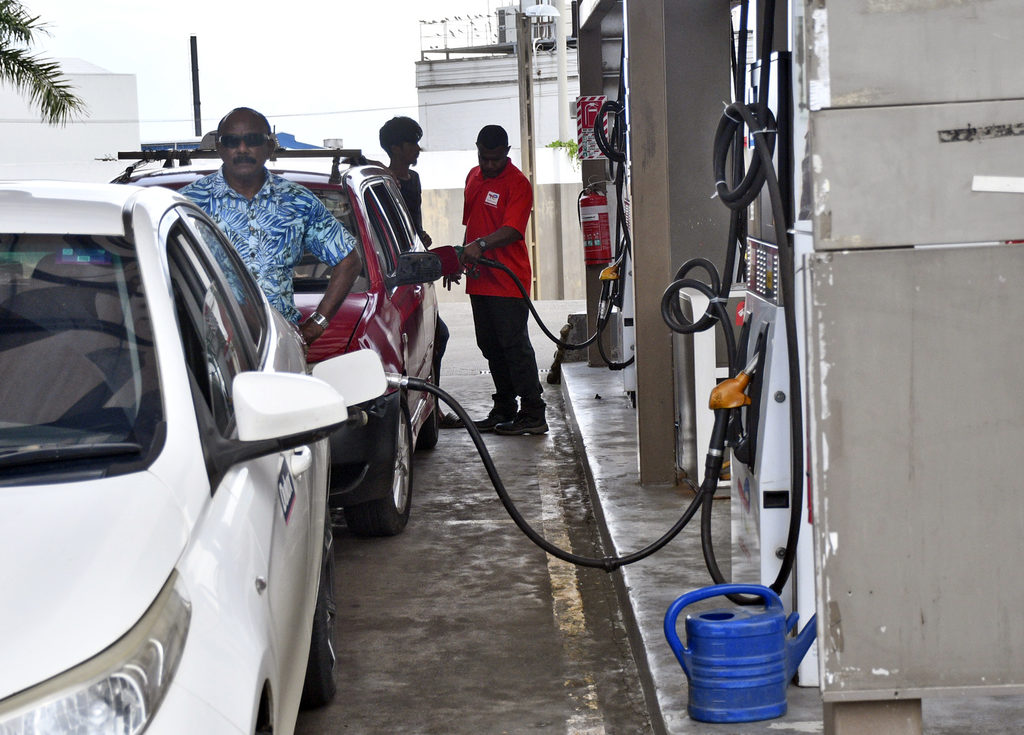
FIJI currently holds an estimated 45-90 days of fuel supply. While this offers short-term security, what happens when we approach the 30-day mark, and global price pressures begin to fully filter through to our shores.
Across major economies such as the United States, the United Kingdom and Australia, forecasts already point to rising fuel costs driven by escalating geopolitical tensions and supply chain disruptions.
Developments linked to tensions around the Strait of Hormuz — one of the world’s most critical oil transit routes — are expected to increase shipping costs due to heightened security risks, crew safety concerns and the need for longer alternative routes.
These are immediate cost drivers that will inevitably reach small, import-dependent economies like Fiji.
If tensions continue
The Governor of the Reserve Bank of Fiji, Ariff Ali — who was a speaker at the Fiji Australia Business Council (FABC) member information session yesterday — highlighted that the current Middle East crisis poses a challenge for the Fijian economy.
He explained that similar to other countries that are net crude oil and gas importers, the notable rise in their prices will have a direct impact on inflation as well on foreign reserves outflows.
“Crude oil prices have increased from around $US66/barrel to above $US100/barrel,” Mr Ali said.
“This increase will translate in almost a 50 per cent increase in domestic fuel prices in May.
“As fuel and gas prices account for 6.9 per cent of the CPI basket, if prices remain at this level till the end of the year, the direct impact of the fuel and gas prices on inflation would be around 3.5 percentage points.”
Prior to the war in the middle east, the RBF projected inflation to be around 2.5 – 3.0 per cent for 2026.
Mr Ali added that the second-round effect of increased freight cost, disruptions to supply chain, etc could further impact domestic prices.
“This will impact both businesses and household consumption and hence the economy. However, if the war ends soon, the impact on inflation will be lower,” Mr Ali said.
The governor added that “while higher oil and gas prices will mean that we will have to pay more for imports, our current level of foreign reserves have buffers”.
Support for Government’s first steps
The Fiji Commerce and Employers Federation (FCEF) welcomes the Government’s steps in appointing a Fuel Controller, establishing a Fuel Advisory Committee, and convening a Cabinet Sub-Committee for Energy.
These measures signal recognition that energy security and price stability require coordinated national oversight.
“We support this initiative, and hope that there will be greater information sharing, consultations and coordination with the private sector, to optimise positive outcomes at this time of heightened uncertainty,” FCEF chief executive officer Edward Bernard said.
Fuel is a foundational input across the entire economy.
As prices rise, the effects cascade rapidly:
• Transportation costs increase, affecting both imports and domestic distribution,
• Production costs climb, particularly in manufacturing, agriculture, and fisheries,
• Logistics and supply chains become more expensive and less predictable,
• Ultimately, the price of goods and services rises for every Fijian – and tourists – impacting Fiji’s tourism industry which accounts for 40 per cent of Fiji’s GDP.
Why private sector input is critical
Fuel prices will directly translate into a higher cost of doing business, which in turn drives up the cost of living.
This is particularly concerning in Fiji, where businesses already face compounding operational pressures – from import duties and compliance costs to infrastructure constraints and productivity challenges.
Compounding this situation further is Fiji’s current cyclone season.
Severe weather events place additional strain on fuel reserves, disrupt supply chains, and can accelerate demand spikes.
At the same time, any delays or losses in shipments increase the cost of the limited supply that does reach our ports, further intensifying pricing pressures.
The critical question now is not whether prices will rise — but how Fiji manages what comes next.
How will limited fuel stocks be prioritised if supply tightens? What criteria will guide allocation across essential services, businesses, and households? And how will we ensure that decisions made today protect both economic continuity and social stability?
These are not decisions that can be made in isolation.
It is imperative that the private sector is actively included in ongoing deliberations with the Fuel Controller, the Fuel Advisory Committee, and the Cabinet Sub-Committee. Businesses are the engine of economic activity, employment, and supply chains.
Their operational realities must inform national strategies to ensure responses are practical, balanced, and effective.
“Businesses need to start planning ahead, looking at ways they can reduce costs – trim the fat as such – spending will decrease in order to ensure that necessities are met, luxuries might be foregone, which will reduce the volume of consumption, hence less revenue and less margins due to competition,” FABC president Himen Chandra said.
n GAYLENE KAMALI is manager Advocacy & Corporate Communication for Fiji Commerce and Employers Federation (FCEF). The views expressed in this article are not necessarily the views of The Fiji Times.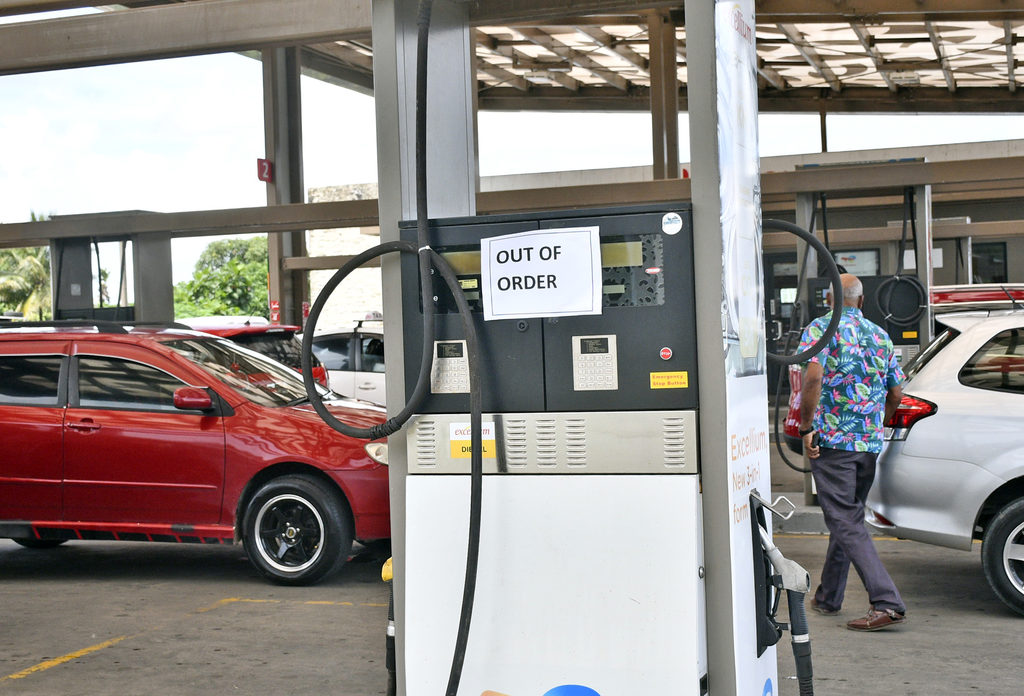
An out-of-order sign on one of the fuel pumps in Suva. Developments linked to tensions around the Strait of Hormuz — one of the world’s most critical oil transit routes — are expected to increase shipping costs. Picture: JONACANI LALAKOBAU
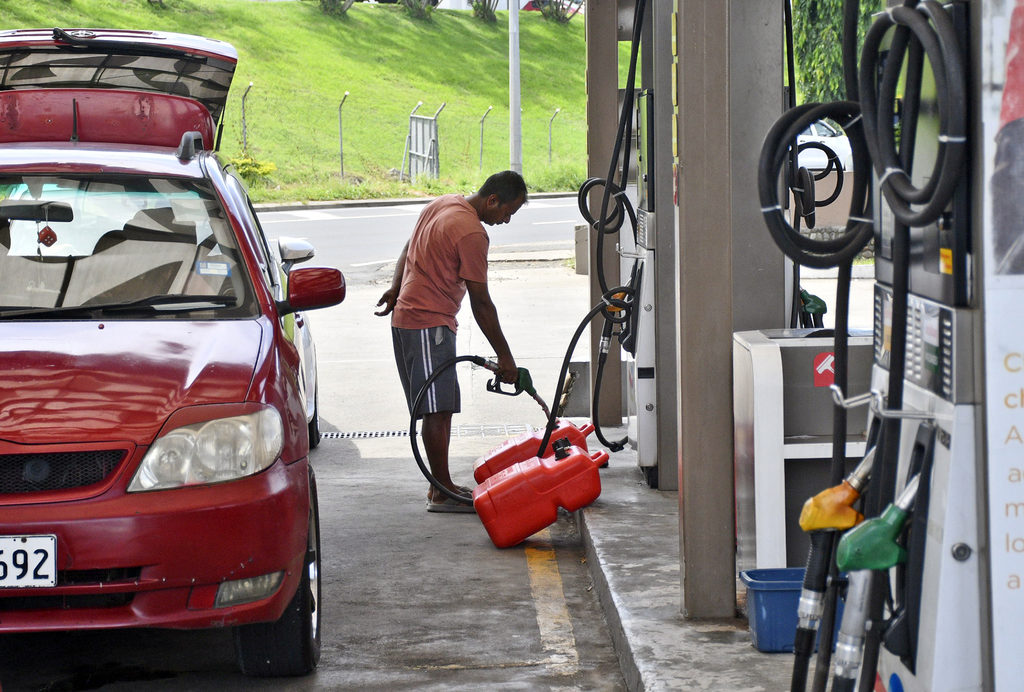
A man is seen filling fuel into two containers at a petrol station in the capital on Monday. Fuel prices will directly translate into a higher cost of doing business, which in turn drives up the cost of living. Picture: JONACANI LALAKOBAU

GAYLENE KAMALI. FOR PICTURE BYLINE

