
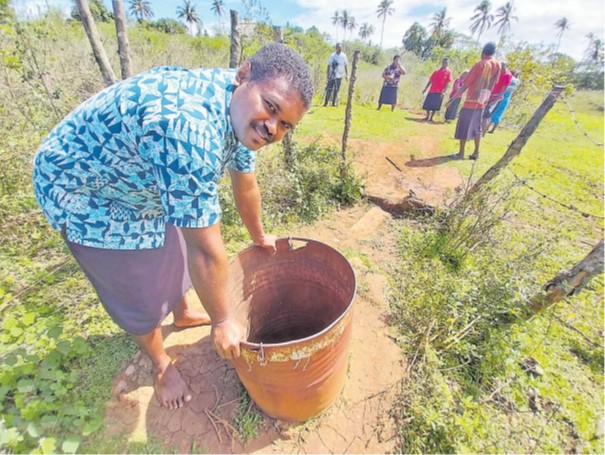
Having clean drinking water is a human right, one that many of us take for granted. In towns and cities, water flows into our homes through pipes at the turn of the tap.
It is convenient and simple. But in the village of Vusama in Nadroga, a few kilometres from the sun-kissed Natadola Beach ,water is a luxury they can only dream of.
Here generations of men, women and children have been born into a community blessed with a rich history but plagued by an endless struggle for clean and safe drinking water.
Vusama’s beachfront, at a place called Bourewa holds what archaeological researchers believe could be the earliest settlement in Fiji.
Its mudflats contain special pits used for cooking sea salt. Furthermore, Vusama is also blessed by some of the most spectacular views!
But beneath these natural and historical wonders, lies a problem that has dominated life at Vusama for generations – the lack of quality and safe drinking water.
Elders’ experience
Elders of the village have been encountering inadequate and inferior supply of water since childhood.
They possess vivid memories of fetching pales of water from the village wells to help with cooking, cleaning and drinking at home.
Many of these trips to the well were done during periods of heavy rain and scorching sunshine.
“Water problem is something we all grew up with and continue to face today,” Asivurusi Naivalulevu told The Sunday Times.
“Our forefathers had been asking assistance from all governments since the Alliance but our pleas have all fallen on deaf ears. Now I’ve become a village elder myself, and I join generations of elders before me in asking Government for the same thing, please the people of Vusama need piped water.”
Taione Lua, 65, said tourists visited Vusama three days a week, mostly to learn about the Fijian culture and villagers’ connection to the early settlers of Bourewa and the age-old tradition of salt making.
Tourists contribute immensely to village development but this economic opportunity could be lost if the persistent water problems and worsening road conditions continue.
“During dry weather, and when our wells and carted water run dry, we get water from a closed borehole and women have to wash our clothes in the Tuva River, a few kilometres from here.”
“When it rains heavily water from our pit toilets seeps back into the well, making water unsafe for drinking.”
Women’s struggles
Among those who suffer most are women, who need a consistent supply of water for washing, cooking, and keeping their homes clean.
Nobody understands the problem better than Alena Mata, who at 87, dreams of the day she would be able to get water by simply turning on a tap.
She said because of water problems, she has to walk a few metres every time to the nearest toilet outside her home, even during the night and wet weather.
“It has always been my dream to turn on water from a tap and I look forward to that day. Right now, I can only plead with authorities to bring water to Vusama homes.”
“Because we don’t have piped water, we cannot have flushed toilets and old people like me will continue to be disadvantaged.”
Mother of four, Taraivini Mosarau, 36, said growing up, she had to fetch water from the well every morning before she went to school and in the afternoon when she returned home.
“Now I am a mother and the problem continues. Sometimes we do not have our bath. Our utensils pile up and at other times, we aren’t able to wash our clothes,” she said.
Women are forced to walk for kilometres to wash clothes in the nearest river during periods of drought. Naina Loqavono, 48, said during her childhood days, men would use sticks to carry buckets on their shoulders to and from the well.
“Now we use qasita (wooden sleighs) to pull 40 gallon drums up the hill to our homes and this is not an easy job.”
“All I would like to say to authorities is to think of the women of Vusama and the struggles we have had to endure for many generations. Please think of our children and elders too.”
Well, bore hole and water carting
Vusama village has one well on each side of the village that have been used for many generations. One is located downhill somewhere near the centre of the village. Initially, men used sticks called ivua to carry buckets from the well to individual homes.
Now, they use bullock-pulled wooden sleds or qasita to cart water drums from the well. Water usage is strictly monitored during a drought, forcing villagers to resort to unhygienic water usage.
“During dry spells, water in the well becomes scarce. Our farm animals depend on the well too, not to mention toads that swim freely inside,” said Naivalulevu.
“When it rains heavily, water from inside our pit toilets and mud from the mangrove swamps fill up the well, making it unsafe for human consumption.”
Some relief was experienced when a bore hole was dug by Government around 2005 but its supply was short lived when it got closed again in 2009 by the Ministry of Health after villagers started to fall ill after drinking from it.
Government now helps by carting water to the village but this happens irregularly.
Home have tanks but they become useless when there is no water.
Villagers have already done traditional presentations to neighbouring vanua where water will be sourced fropm but the ball is in Government’s court. Meanwhile, when cart water runs out villagers will turn to the well again
. When the well gets dirty or dry, households will be forced to use water from the borehole again and go against advice by health authorities.
Hygiene and disease
Former village headman, Saula Nadokonivalu, said renewed attempts to knock on the doors of those in power in an effort to advocate for piped drinking water started when he left the civil service in 2017.
Since then nothing much has changed and today Vusama’s water woes have resulted in poor hygiene, poor sanitation, emergence of strange illnesses, prevalence of skin infections and poor health.
“Because we try to conserve water all the time, our clothes and dishes are often not washed properly, we do not bath properly or may not bath at all on certain days and many of our children have skin diseases.”
“Sometimes we develop stomach illnesses. In fact, four villagers were admitted to hospital and a three-year old child was rushed to the ICU after consuming unsafe drinking water.”
Mr Nadokonivalu also highlighted the problem of poor menstrual health among women and girls.
“The worst affected are our women and girls. Menstruation and poor water supply just don’t go together, it just lowers our women’s dignity as human beings.”
“A few years ago, we had a case where a woman was raped in the night when she walked to the pit toilet on the side of the village.”
Mr Nadokonivalu said all these problems wouldn’t happen if households had piped water and flushed toilets inside their homes.
Rugby star’s plea for the future
Swire Shipping Fijian Drua winger, Taniela Rakuro’s dazzling speed helped his team win games for Fiji on many occasions. But unknown to the rugby world is the young man’s long struggle with water, a burden that he grew up with and has remained to this day.
On Wednesday last week, the young man took time off from his hectic training schedule in Nadi to help his elders campaign for clean and healthy drinking water.
“My people have been asking authorities for decades to install piped water in Vusama but their cries have fallen on deaf ears.”
“My grandparents and parents drank water from the well. As a young I struggled with water problems and I continue to face the same problems as a young man. On behalf my village I would like to call on Government to please help us.”
He said with clean drinking water, Vusama children would grow strong and healthy and many may follow his footsteps in rugby. In the first week of every month, Vusama villagers go through a period of intense soul searching and prayers.
They realise their only hope is to keep the faith. “We have gotten tired of asking Government to help but we haven’t given up on prayers,” Mr Naivalulevu said.
Speaking to villagers last week, during a gathering at the village’s chiefly household, he said men and women of Vusama should not stop asking for divine intervention.
The Minister for Public Works and Transport, Ro Filipe Tuisawau, paid a visit to Vusama a day before The Sunday Times visited while water truck arrived a few hours after our arrival.
Villagers said they were told Government would begin the work of brining piped water to Vusama within 11 months.
But because of false promises made in the past, the people of Vusama can only wait and hope for the best. Their best friend is time, and only time wil tell.

