
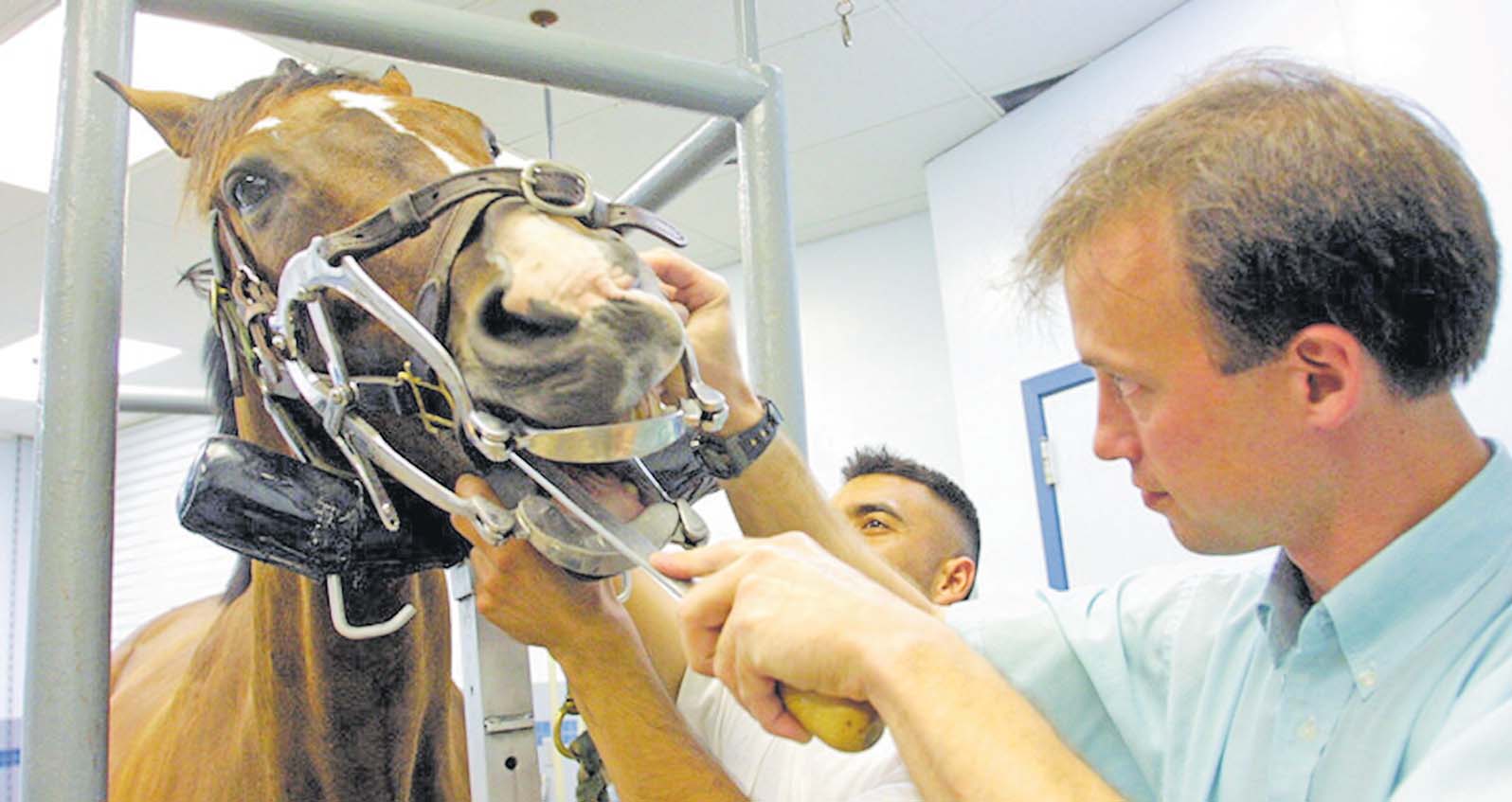
Veterinarians are professionals.
Most medically-orientated professionals are self-disciplined and self-regulatory.
That means having the education, experience, and ethics required to deal with their field whatever they may be.
Should the Fiji National University (FNU) have asked of themselves, and informed the government, before accepting the challenge of a veterinary science program?
Is this the shortest veterinary science program ever because of a terrible lack of due diligence?
Is that group of students tired of the platitudes bleated by FNU and cohorts.
To become a veterinarian it starts with a degree — Doctor of Veterinary Medicine (DVM) is one, generally takes eight years to complete.
Others have shorter programs and have different titles on their degrees, no matter, all are veterinarians.
This is a profession, paid occupation, especially one that involves prolonged specialised university education and training leading to a formal qualification which often includes apprenticeship or internships.
Experience in the veterinary field before training is common in the form of veterinary assistants.
Other related formal training produces veterinary technicians, veterinary nurses and para-vets.
These programs are shorter in length, less intense but nevertheless produce very important workers in the field of animal care.
There are usually rigorous licensing standards and expectation of following laws including radiation safety, pharmacy and veterinary Acts, among others, to obtain the right to practice veterinary medicine.
A current, sound Veterinary Act will also include the paraprofessionals and what their duties, obligations are.
The Fiji Veterinary Surgeon Act really only makes it an offense to say you are a vet when you are not, but does not really say you cannot do veterinary work because it doesn’t say what constitutes veterinary work.
The Veterinary Surgeon Act in Fiji — Laws of Fiji Chapter 257 Veterinary Surgeons Act No. 25 of 1973. (Ordinance No. 20 of 1956.
An Act to make provision for the registration of Veterinary Surgeons (December 17, 1956) references Royal College of Veterinary Surgeons referred to in the Veterinary Surgeons Act, 1881 of the United Kingdom.
Most of its provisions were revoked by a Supplemental Royal Charter of 1967.
As long as the only changes to Fiji’s Veterinary Surgeon Act involved slapping on additions of allowable jurisdictions the animal-related issues occurring in Fiji will persist.
In North America, after obtaining a veterinary degree, there were comprehensive exams for a day and half which gave us upon passing a certificate of qualification.
In 2000 what was NBE and CCT was replaced by North American Veterinary Licensing Examination.
NAVLE. ICVA provides information on the means for obtaining a certificate of qualification for graduates outside North America.
There are fees for all these steps.
After obtaining a veterinary degree, and certificate of qualification, now new vets apply to a jurisdiction (a state in the USA, a province in Canada, a country such as NZ) for a licence.
This requires providing details of our history, where we have lived and worked, police reports, letter of good professional standing etc.
A fee is paid annually and one must make sure to understand the law, rules, regulations and local bylaws of where we are practising.
Continuing education is increasingly, and rightly so, realised as an important part of being in a profession.
Western College of Veterinary Medicine (WCVM) opened in 1965. Prior to that there was one vet school in Canada (Ontario Veterinary College founded in 1862).
Now there are five veterinary colleges in Canada.
These veterinary schools started and were perpetuated with a vision of a few, and a steadfast determination of a growing group of dedicated professionals.
The Western College of Veterinary Medicine holds the status of full accreditation with the American Veterinary Medical Association’s (AVMA) Council on Education (COE).
After an accreditation team’s site visit in October 2017, the AVMA Council on Education confirmed the WCVM’s full accreditation status in April 2018 with the next visit due in 2024.
The Western College of Veterinary Medicine’s Veterinary Medical Centre is an accredited member of the American Animal Hospitals Association (AAHA).
The Caribbean had no veterinary school prior to Ross University School of Veterinary Medicine (RUSVM), founded in 1982.
Now there are three veterinary colleges in the Caribbean.
In 2011, RUSVM was accredited by the American Veterinary Medical Association Council on Education (AVMA-COE) – the Department of
Education’s accrediting body for veterinary education — effectively validating the quality and breadth of the school’s program.
The Ross University Veterinary Teaching Hospital has also received accreditation by the American Animal Hospital Association – the first
teaching hospital to achieve this status outside the US and Canada.
None of these institutions opened, floundered then just gave up with some weak bleating about what to do with the degree.
For a university to open and be serious about operating a vet serious about operating a vet school they must have a dedicated group who will persist and see it through and mentor those along who will continue the dream.
Who were these people here in Fiji?
And the group has to be partly from the profession outside the country.
They have to be listened to, taken seriously and there must be transparency.
Who provided the backdrop of checks and balances here in Fiji?
Being a nonveterinarian VC or a non-veterinarian dean does not automatically imbue the knowledge, ability or capability for such a quest.
Where is a robust government in this?
The graduates of this program, now defunct, had no idea of the complexities involved in providing a comprehensive veterinary education, nor in the pathway which leads to being able to call oneself a veterinarian.
And it would not be realistically expected that they would know.
Sadly neither did the leadership at any level nor did they want to learn, apparently.
A sound veterinary science program in Fiji should have involved other Pacific Island countries due to the complexities of developing such a program.
As soon as the idea is floated, there should be a board of competent people who know what is involved in veterinary education, and the process required to be a professional, and what is expected of the profession.
A sound veterinary science program should have paid attention to outside advice and constructive criticism.
Did they have adequate infrastructure prior to admitting the first class, functioning diagnostic laboratory services, qualified instructors?
What did they have?
Students of veterinary medicine learn of multiple species (dogs, cats, cattle, sheep, goats, pigs, birds, fish and more), anatomy, physiology, medicine and surgery and so much more.
And these should be from a comprehensive group of university scholars and veterinarians.
See Doctor of Veterinary Medicine (DVM) — University Catalogue 2023-24, University of Saskatchewan (usask.ca) for details of the
course content at one university to obtain this degree.
These days of One Health, COV- ID-19, biosecurity issues, invasive species, tuberculosis, etc … it would seem generally apparent how important the veterinary profession is.
And it seems selfevident that this needs more than a wish and a prayer from learned people, and a healthy disregard for keyboard warriors and selfserving promises.
There is something terribly wrong when these young people, who are the future of this country, and I daresay the South Pacific, are dropped like a hot potato because they didn’t fit with someone’s agenda.
• JO OLVER is a doctor of veterinary medicine. The views expressed are those of the author and do not reflect the views of this newspaper.

