
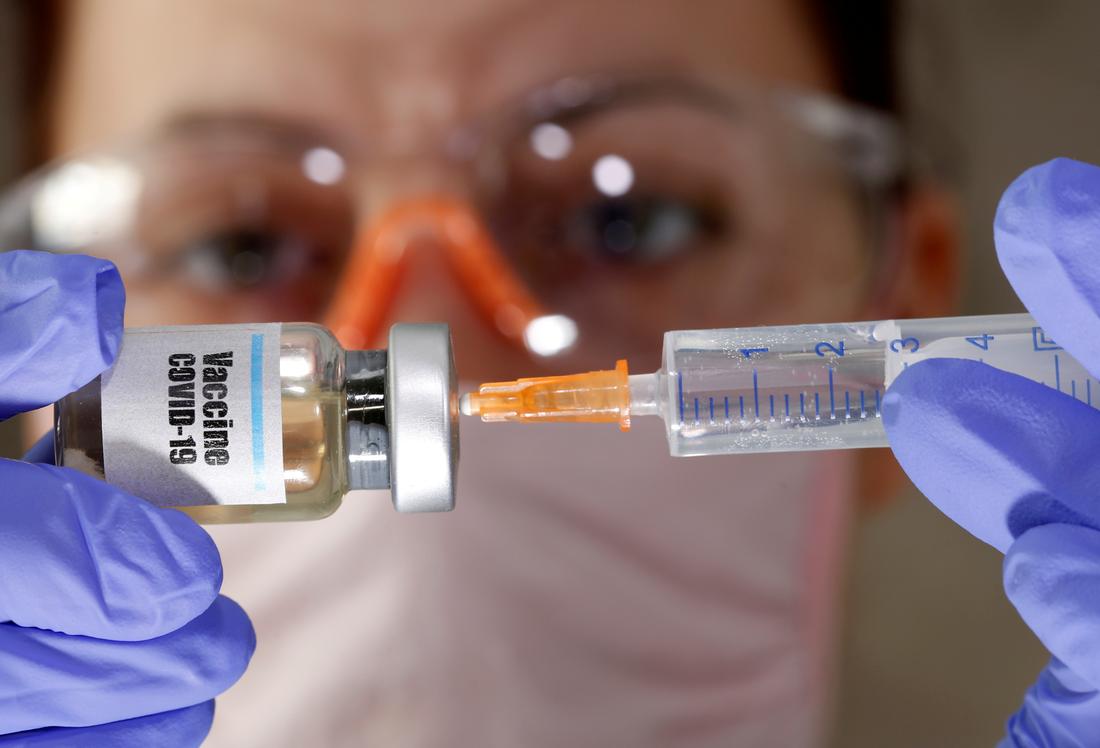
CHICAGO/LONDON (Reuters) – Developing a COVID-19 vaccine in record time will be tough. Producing enough to end the pandemic will be the biggest medical manufacturing feat in history.
That work is underway.
From deploying experts amid global travel restrictions to managing extreme storage conditions, and even inventing new kinds of vials and syringes for billions of doses, the path is strewn with formidable hurdles, according to Reuters interviews with more than a dozen vaccine developers and their backers.
Any hitch in an untested supply chain – which could stretch from Pune in India to England’s Oxford and Baltimore in the United States – could torpedo or delay the complex process.
Col. Nelson Michael, director of the U.S. Army’s Center for Infectious Disease Research who is working on the government’s “Warp Speed” project to deliver a vaccine at scale by January, said companies usually have years to figure this stuff out.
“Now, they have weeks.”
Much of the world’s attention is focused on the scientific race to develop a vaccine. But behind the scenes, experts are facing a stark reality: we may simply not have enough capacity to make, package and distribute billions of doses all at once.
Companies and governments are racing to scale-up machinery to address a critical shortage in automated filling and finishing capacity – the final step in the manufacturing process of putting the vaccine into vials or syringes, sealing them and packaging them up for shipping.
“This is the biggest logistical challenge the world has ever faced,” said Toby Peters, an engineering and technology expert at Britain’s Birmingham university. “We could be looking at vaccinating 60% of the population.”
Several developers, including frontrunner Moderna, are experimenting with new ways to mitigate the extreme cold storage demands of their vaccines, which at present need to be kept at minus 80 degrees Celsius (-112 Fahrenheit).
SiO2 Materials Science is working on producing vials that won’t shatter at super-cold temperatures.
Travel restrictions, meanwhile, are posing more prosaic problems; Johnson & Johnson, which plans to start clinical trials this summer, has struggled to send its vaccine experts to oversee the launch of production sites, for example.

