
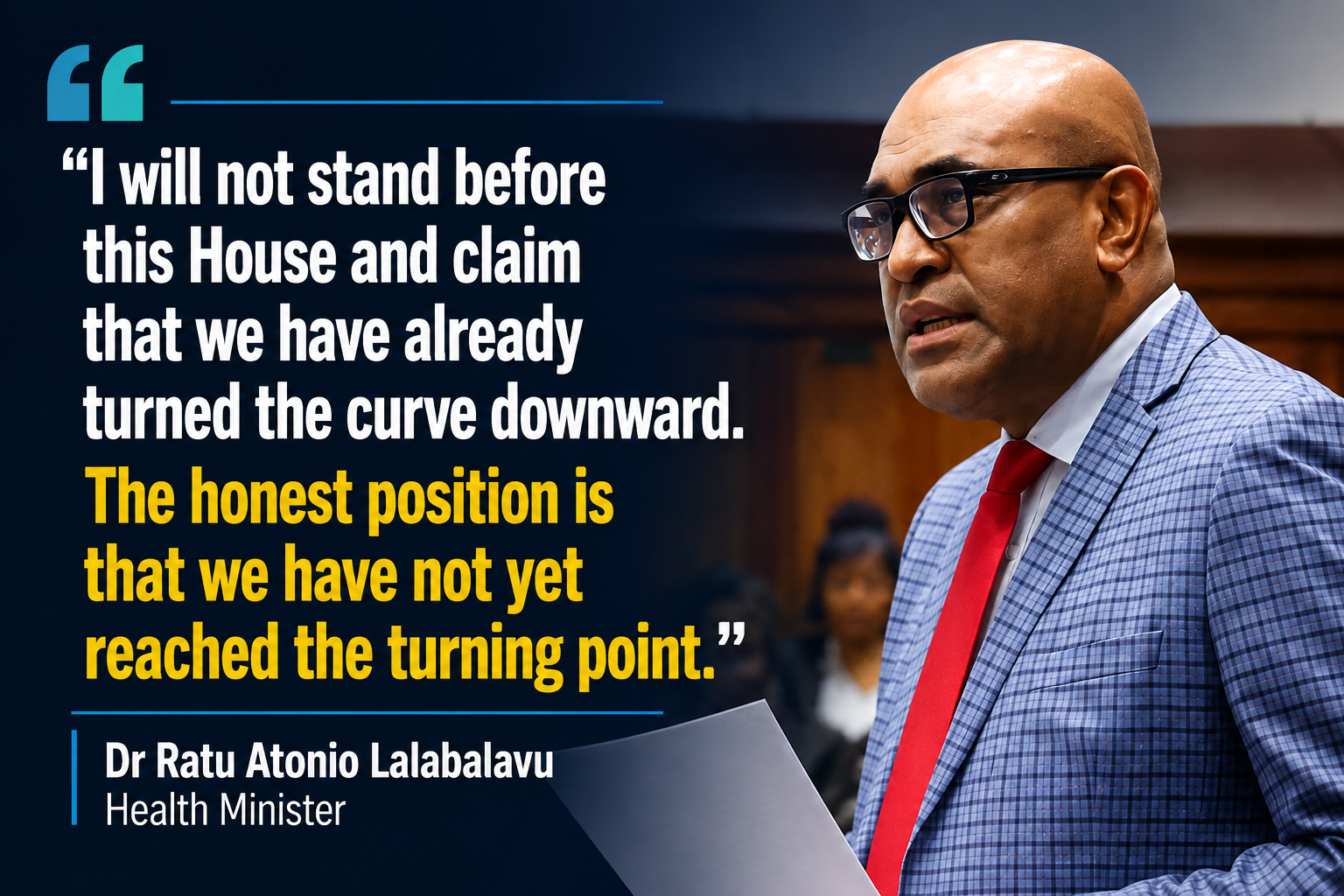
As many as 12,000 people could be living with HIV in Fiji, as the country confronts a generalised epidemic and continues to record rising infections, Health Minister Dr Ratu Atonio Lalabalavu told Parliament last week.
Dr Ratu Lalabalavu said 2026 UNAIDS estimates indicated about 9100 people were living with HIV in 2025, but the actual figure could be considerably higher.
“Let me be direct with this House that Fiji is now in a generalised HIV epidemic,” he said.
“2026 UNAIDS estimates indicate that about 9,100 people were living with HIV in 2025 and possibly as many as 12,000, up from fewer than 700 in 2010.”
He said HIV prevalence among adults aged 15 to 49 had reached 1.6 per cent, crossing the threshold defining a generalised epidemic.
An estimated 1700 new infections occurred in 2025, around three times the level recorded in 2018.
“I will not stand before this House and claim that we have already turned the curve downward,” Dr Lalabalavu said.
“The honest position is that we have not yet reached the turning point.”
Despite the figures, he said progress was being made in identifying people living with HIV.
The number of people who knew their HIV status increased from about 785 in 2022 to 3551 in 2025, while the number receiving treatment grew from around 506 in 2020 to more than 2000 last year.
Dr Lalabalavu stressed the importance of achieving viral suppression.
“A person who is virally suppressed cannot pass HIV. Let me repeat that. A person who is virally suppressed cannot pass HIV,” he said.
“Treatment is therefore also prevention.”
However, he acknowledged Fiji could not yet reliably measure viral suppression nationwide and said improvements to viral-load testing were part of the response.
Dr Lalabalavu also highlighted needle and syringe sharing associated with high-risk drug use as a significant factor in Fiji’s rapid increase in HIV infections.
“The global evidence is clear. The harm reduction programme, including a Needle Syringe Programme, is urgently needed to interrupt this route of transmission,” he said.
The Ministry is working with the law and justice sector on regulations to allow the safe and lawful introduction of harm-reduction programmes, which Dr Lalabalavu said would be scaled up as a priority once regulations were in place.

