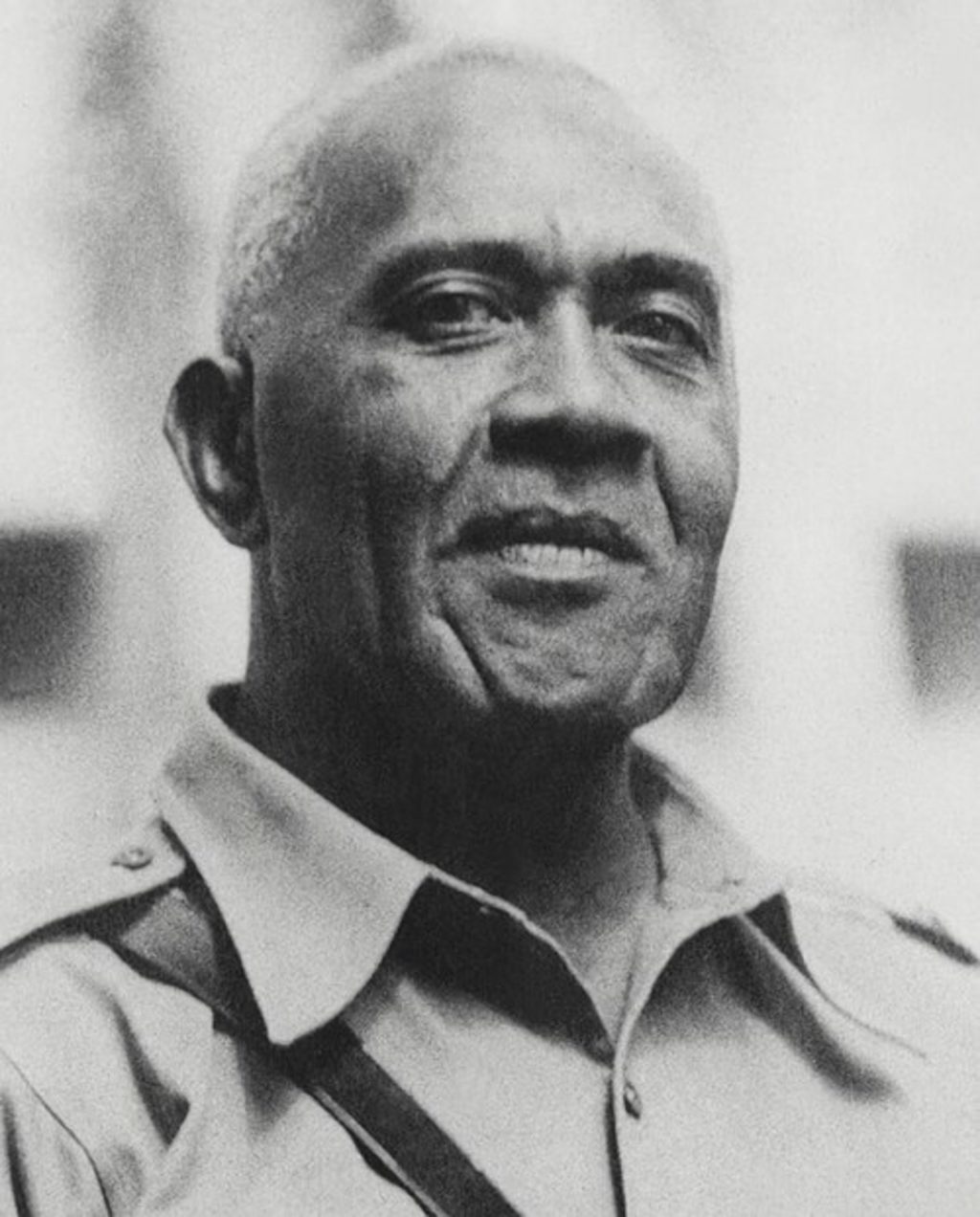
A tribute to Ratu Sukuna Day 2026, The Sunday Times continues with this weekly series based on A Man vs Myth: The Life and Times of Ratu Sukuna written by Professor Steven Ratuva.
Ratu Sukuna had to deal with these diverse groups living in multiple worlds, often ‘separated’ from each other. Ratu Sukuna’s professional life oscillated between these groups, but he made it clear where his loyalty and identity was.
Although he was a chief and saw himself as man of the people, he remained aloof from the ordinary people who treated him with ultimate veneration.
While he enjoyed the rare privilege of entering whites-only private clubs in Suva as well as the feudal luxury of Boron House mansion (lent to him by European plantation owner James Boron), ordinary Taukeis were not even allowed into public bars and lived in villages in semi-subsistence poverty.
While he enjoyed the fruits of his Oxford training, ordinary Taukeis were denied higher education. In short, Ratu Sukuna lived in his unique world while his own people lived in another.
One of the ironies of Ratu Sukuna’s life was that, although loyally immersed into British education and cultural life, he was never fully accepted by the British as an equal.
At most he would have been accepted as simply a very good imitator of British high-class accent and English eccentricity.
The treatment he received by the colonial regime confirms that he was regarded as an honorary European.
The colonial discriminatory laws that discouraged the Taukei from fraternising with whites did not apply to him (Norton 2013). Thus, for Scarr to simply state that Sukuna was a man living in ‘two worlds’ (British and Fijian) was an understatement and a simplistic assessment of the multiple worlds Sukuna encountered and engaged with in various ways and degrees.
Sukuna lived a life of paradoxes. The first paradox was his unrestrained accommodation of British high-class culture through his Oxford education, Oxford accent, acceptance of British decorations including a knighthood and living a life closer to that of the British than to a Fijian.
But he was not fully accepted by the British who still saw him as an inferior native. In one instance, it was said that he overhead Juxon Barton, the colonial secretary, referring to him in a Suva club as a ‘nigger’ (Snow 1997:66).
The second paradox was that while he tried to fit into the Taukei community, he really did not gel in well because he was too well-educated and thus culturally too close to the British and ordinary Taukeis found it hard to approach him.
Although Sukuna was not the highest ranked chief in Fiji, his British education and status within the colonial hierarchy easily overshadowed those of higher rank, such as the Vunivalu.
In a way, this position of relative autonomy from both groups worked well to his advantage because it enabled him to oscillate between the two groups with ease and to his convenience. He was able to see the Taukei situation from the British vantage point as well as see the British world from the prism of the Taukei.
No one else around his time, British or Taukei, was able to do this effectively. Sukuna’s utilitarian and adaptive disposition enabled him to use multipronged approaches to the multiple worlds he engaged with.
The ‘Other’ History
Because Scarr’s biography is too narrowly focused on Ratu Sukuna himself and his immediate circle of kinship and colonial political actors, it provides minimal illumination on the socioeconomic, sociopolitical, sociocultural and cosmological situation of the Taukei community.
It would have been a great opportunity to shed light on the dynamics on the ground, but this chance slipped by mutely. A significant historical moment would have been the contestation between competing Taukei ideologies.
Around Ratu Sukuna’s as well as his father’s time, political persecution of dissenters such as Apolosi Ranawai, a commoner entrepreneur who wanted to introduce his vision for an alternative development path for Fijians though his Viti Kabani (Fiji company), was common.
As Robert Nicole argues, there was a deliberate and systematic cleansing of grassroots expressions of autonomous views and organisations through a collaborative punitive campaign between the comprador chiefs and British colonial state (Nicole 2010).
Despite the façade of his humanitarian imagery, Sukuna continued with this ‘pacification’ process to subdue unconventional Taukei views and impose the comprador chiefly views as universally representing indigenous interests.
This arbitrary imposition of dominant values, under the ideology of i tovo vakaturaga (chiefly way) became the accepted norm. Anyone who acted and behaved in contrary ways was considered ‘un-Fijian’.
This process, referred to by Pierre Bourdieu and J.C. Passeron (1990) as ‘cultural arbitrary’ became the ideological cornerstone of the so-called native policy. 6 Fijian administration was used by the colonial state and the comprador chiefs as cultural leverage to invalidate and silent dissenting views as well as represent and impose chiefly ‘cultural arbitrary’ as universal.
Power (in both the Bourdieuan and Foucauldian senses) was reconfigured and reinstitutionalised to serve the interests of the comprador chiefly class and their allies and annihilated the political capacity of those who dared to resist. It was in the context of this process of ‘internal colonialism’ that Ratu Sukuna emerged and thrived as the undisputed champion of the Fijian cause.
He benefited immensely from the pacification process of which his father was a champion. a person born into the right family, at the right place and at the right time, and that gave him the advantage which catapulted him to uncontested heights.
The failure of the book to highlight the ‘other’ history of Fiji serves to reinforce the myths about Ratu Sukuna and provides an imbalanced viewof Taukei history.
If Ranawai’s Viti Kabani had been allowed to carry out its entrepreneurial endeavours freely, Fijian history would have taken a different trajectory because the Taukei groundswell of support would have shifted, thus changing the balance of power considerably.
As is common in imperial and elite history, the narrative is very male focused—there is little gendered narrative. The colonial world is portrayed as a world of tough frontier men overshadowing the significance of women who only exist as behind-the-scene associates to provide social accompaniment and supporting cast to the husband in public occasions (Knapman 1986).
Ratu Sukuna’s wife, Lady Maraia, as she was fondly known, is simply treated as a feminine shadowy figure in the shadow of Ratu Sukuna. In the biography, there is only one ‘substantial’ (one page) encounter with the commoner woman who acted as confidant, wife and servant (Scarr 1980:83).
Ratu Sukuna’s decision not to marry a woman of high rank, although raised eyebrows and sent tsunamis of gossip around Fijian villages, was because of his desire to have a woman to serve him in his busy schedules rather than a woman who, due to high rank, may not be in a position to carry out daily domestic duties.
STEVEN RATUVA is a distinguished Professor, author, an award-winning political sociologist and global interdisciplinary scholar. This article was sourced from: Ratuva, S. 2017. Man vs Myth: The Life and Times of Ratu Sukuna. Fijian Studies: A Journal of Contemporary Fiji 13:3–15. Republished with the kind permission of the Fiji Institute of Applied Studies.Note from the author: I took leave from the University of the South Pacific (USP) in 2002–03 to take up a fellowship position in the State, Society and Governance in Melanesia program (now the Department of Pacific Affairs) at The Australian National University (ANU). I returned to USP to join the Pacific Institute of Advanced Studies in Development and Governance. Since then, and even after leaving USP for New Zealand, I have maintained a close relationship with ANU.
Part 4 next week